US Republican leader sparks outrage over Texas Hanuman statue, defends 'false god' remark
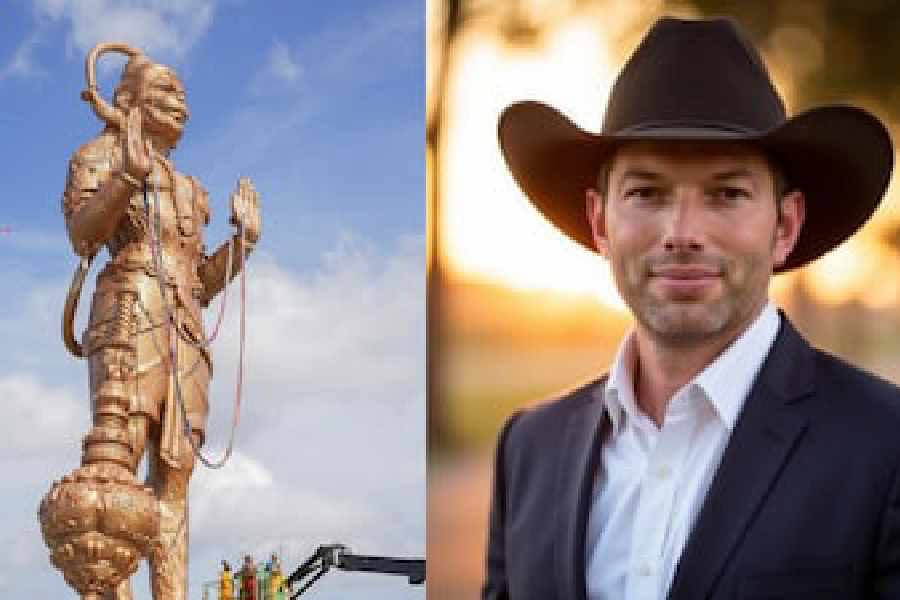
Texas: In Texas, U.S. Republican Senate candidate Alexander Duncan has ignited controversy after calling the 90-foot Lord Hanuman statue at the Sri Ashtalakshmi Temple a “false Hindu God.” In his original post, Duncan wrote: “Why are we allowing a false statue of a false Hindu God to be here in Texas? We are a CHRISTIAN nation!” The comment drew immediate backlash from Indian-American communities and the Hindu American Foundation (HAF), who condemned it as anti-Hindu and inflammatory.
Facing criticism, Duncan attempted to defend his remarks, claiming he was merely “asking a question” and not opposing Hinduism. He argued that Americans should question idol worship and emphasised that his post was consistent with his Christian beliefs. Duncan’s campaign manager echoed this, asserting that he had not advocated policies to restrict Hindu religious practices and that his free speech was protected under U.S. law.
The HAF rejected his defense, with director Suhag A Shukla responding: “You are not just asking questions, you are spreading hatred against Hinduism. The First Amendment already allows freedom of religion, yet you portray Hinduism as a ‘false tradition.’”
The Hanuman statue, North America’s tallest, has faced criticism from some U.S. conservatives who labelled it “foreign” or “demonic.” Mainstream media coverage, including Newsweek, has also been criticised by Hindu groups for insensitivity.
This controversy comes amid broader concerns about religious intolerance and discriminatory rhetoric affecting Indian-Americans, a key voter demographic in U.S. elections. Analysts say such incidents could influence the community’s traditional political leanings, highlighting the delicate balance between free speech and respect for cultural diversity.
Let the Truth be known. If you read VB and like VB, please be a VB Supporter and Help us deliver the Truth to one and all.
Lebanon appoints new representative for talks with Israel, rejects linkage to Iran
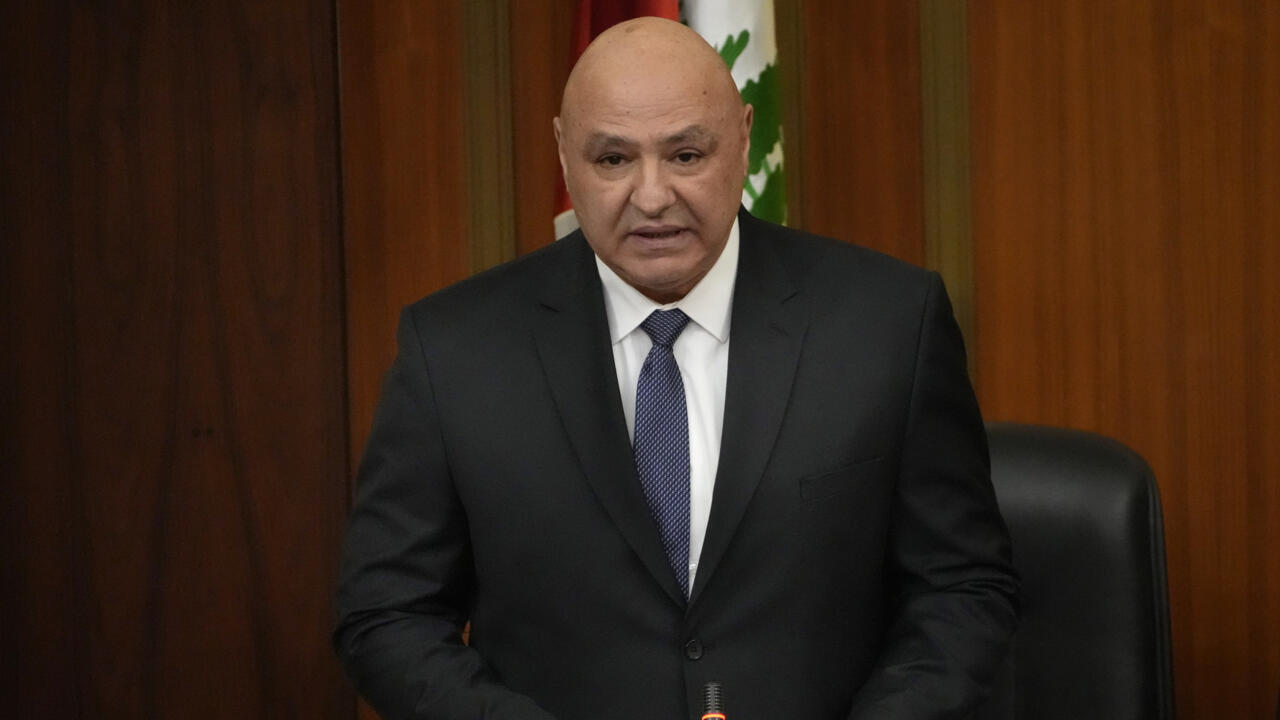
Beirut: Lebanon’s has moved to underline its independent position in ongoing regional developments, amid attempts to link the country to the broader conflict involving Iran, the United States and Israel.
President Joseph Aoun, while announcing the appointment of former US ambassador Simon Karam as Lebanon’s representative in talks with Israel, made it clear that Karam would be the sole representative for Lebanon and that there would be no substitute.
The move comes in response to what the Lebanese officials see as efforts by Iran to tie Lebanon’s situation to the wider regional conflict. Iran had indicated that there would be no ceasefire involving the US, Israel and Iran unless it also included a ceasefire in Lebanon.
Some groups, including Hezbollah and its supporters, had expressed support for linking the situations, citing concerns that the Lebanese government has limited leverage in negotiations with Israel. Lebanon is not formally a party to the conflict, and its army is considered weak.
However, others, including Prime Minister Nawaf Salam, have opposed this approach. They view Iran’s stance as an attempt to influence Lebanon’s internal affairs and see it as undermining the country’s sovereignty.
Officials backing the government’s position say the move is aimed at reaffirming Lebanon’s sovereignty and ensuring that decisions about peace and ceasefire within the country are not dictated externally.
They also see it as a safeguard, so that any breakdown in talks between the US, Israel and Iran does not automatically lead to renewed conflict in Lebanon.