Washington, April 18: US President Donald Trump's administration carried out a retaliatory strike on Syria last week even though intelligence agencies did not have absolute certainty that the Assad regime had used the nerve agent sarin against civilians, a media report said.
The decision to proceed with the strikes on the night of April 13 met a standard of evidence needed that officials felt they could accept, intelligence and defence sources told CNN on Tuesday.
Administration officials were adamant that whatever was used by Syrian President Bashar al-Assad's forces to attack civilians in Douma on April 7 was a chemical agent and that alone justified taking action.
The lack of complete information played a role in deciding not to strike a larger set of targets including airfields, aircraft and helicopters, a defence official told CNN.
Other factors, like Russian positioning, also played a role in the decisions.
On Tuesday afternoon, Secretary of Defence James Mattis and Joint Chiefs Chair Joseph Dunford held a classified briefing for senators on the Syria strike that was launched in coordination with France and the UK.
Before the briefing, officials would not comment on whether the intelligence had become more certain post-strike.
Witnesses reported seeing at least one helicopter overhead at the time of the Syrian attack that had taken off from an airfield.
But at the time, intelligence officials did not have a full picture of the event, which would have included intercepts of conversations and verified paths that helicopters flew, the sources told CNN.
Prior to the US strike, full confirmation could not be made of whether Syria had used sarin in its attack.
"It's a hard, long process, especially in an attack like this without physical access to victims, site. Therefore we had to work with closest allies quickly to ensure we had confidence in the intelligence picture, enabling policymakers to choose best course of action," an intelligence official told CNN.
The Trump administration determined a "standard of evidence had been met", the official added.
Let the Truth be known. If you read VB and like VB, please be a VB Supporter and Help us deliver the Truth to one and all.
Lok Sabha seats in southern states to increase from 129 to 195: Amit Shah
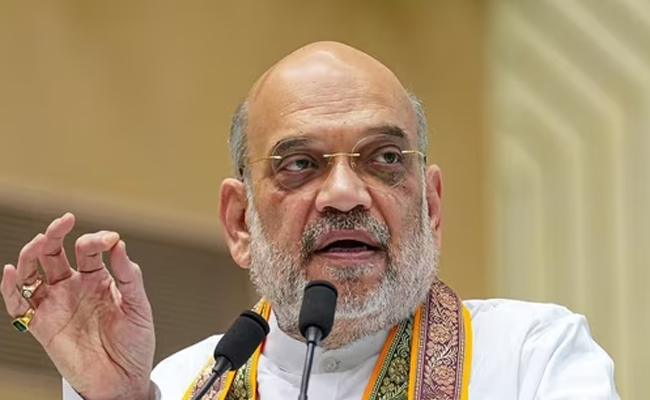
New Delhi (PTI): Union Home Minister Amit Shah on Thursday said a "completely false" narrative is being spread that the representation of southern states will go down in the Lok Sabha after its strength is increased to 816 seats following the implementation of women's reservation and delimitation of constituencies.
Intervening in the debate in Lok Sabha on the three bills introduced for amendment of the women's quota law and to set up a delimitation commission, Shah said the fact is that the number of seats will go up and power will grow.
He said the number of Lok Sabha seats in the five southern states will go up from the present 129 to 195 seats while the percentage of power will increase from 23.76 per cent to 23.87 or almost 24 per cent.
"Lok Sabha seats in Karnataka will increase to 42 from the present 28; in Andhra Pradesh, the number of Lok Sabha sets will increase to 38 from 25; in Telangana, it will be 26 from present 17; in Tamil Nadu, the number of Lok Sabha seats will go up to 59 from the present 39; and in Kerala, it will be 30 seats from the present 20," he said.
Shah strongly rejected the opposition suggestion that the government will indulge in some kind of "mischief" during the delimitation exercise, saying the NDA government has not made any changes in the existing law.
"The delimitation bill is exactly like the previous law brought by your government. There is no change, not even a comma or a full stop," he said.
Explaining how the total number of seats in the new Lok Sabha is fixed at 816, the home minister said it is exactly 50 per cent more than the current total seats.