US, Taliban sign historic deal on Afghanistan's future
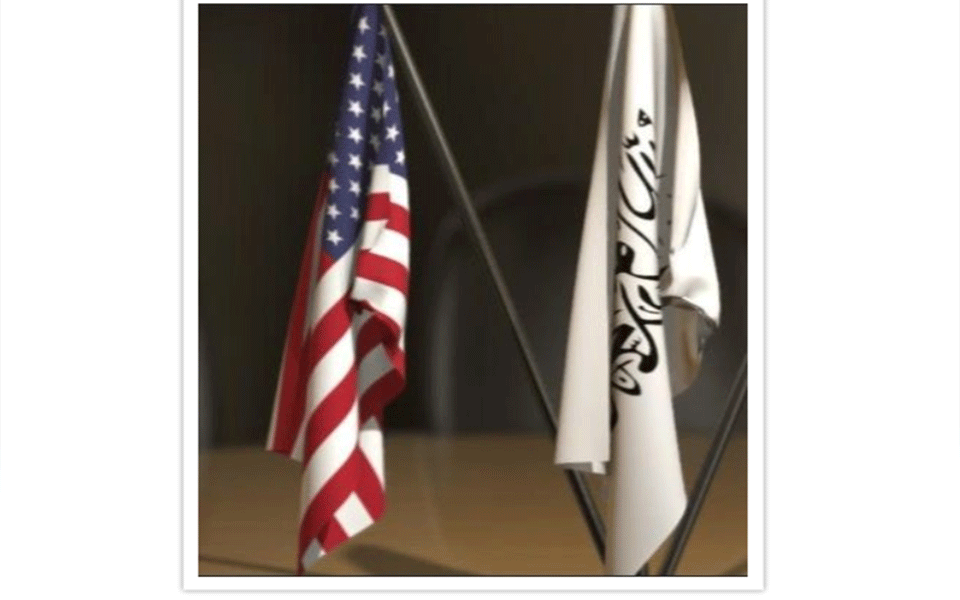
Doha: The United States signed a landmark deal with the Taliban on Saturday, laying out a timetable for a full troop withdrawal from Afghanistan within 14 months as it seeks an exit from its longest-ever war.
The agreement is expected to lead to a dialogue between the Taliban and the Kabul government that, if successful, could ultimately see an end to the grinding 18-year conflict.
Taliban fighter-turned-dealmaker Mullah Baradar signed the accord alongside Washington's chief negotiator Zalmay Khalilzad, at a gilded desk in a conference room in a luxury Doha hotel.
The pair then shook hands, as people in the room shouted "Allahu Akbar" (God is greatest).
US Secretary of State Mike Pompeo looked on as the two inked the deal, after urging the insurgents to "keep your promises to cut ties with Al-Qaeda".
On the eve of the signing, President Donald Trump urged the Afghan people to embrace the chance for a new future.
"If the Taliban and the government of Afghanistan live up to these commitments, we will have a powerful path forward to end the war in Afghanistan and bring our troops home," he said.
But the position of the Afghan government, which has been excluded from direct US-Taliban talks, remains unclear and the country is gripped by a fresh political crisis amid contested election results.
The Doha accord was drafted over a tempestuous year of dialogue marked by the abrupt cancellation of the effort by Trump in September.
The signing comes after a week-long, partial truce that has mostly held across Afghanistan, aimed at building confidence between the warring parties and showing the Taliban can control their forces.
The United States and its allies will withdraw all their forces from Afghanistan within 14 months if the Taliban abide by the terms of the accord.
After an initial reduction of troops to 8,600 within 135 days of Saturday's signing, the US and its partners "will complete withdrawal of all remaining forces from Afghanistan" within 14 months.
NATO Secretary General Jens Stoltenberg heralded the agreement as a "first step to lasting peace".
"The way to peace is long and hard. We have to be prepared for setbacks, spoilers, there is no easy way to peace but this is an important first step," the Norwegian former prime minister told reporters in Kabul.
Since the US-led invasion that ousted the Taliban after the September 11, 2001 attacks, America has spent more than 1 trillion in fighting and rebuilding in Afghanistan.
About 2,400 US soldiers have been killed, along with unknown tens of thousands of Afghan troops, Taliban fighters and Afghan civilians.
The insurgents said they had halted all hostilities Saturday in honour of the agreement.
"Since the deal is being signed today, and our people are happy and celebrating it, we have halted all our military operations across the country," Taliban spokesman Zabihullah Mujahid told.
Any insurgent pledge to guarantee Afghanistan is never again used by jihadist movements such as Al-Qaeda and the Islamic State group to plot attacks abroad will be key to the deal's viability.
The Taliban's sheltering of Al-Qaeda was the main reason for the US invasion following the 9/11 attacks.
The group, which had risen to power in the 1990s in the chaos of civil war, suffered a swift defeat at the hands of the US and its allies. They retreated before re-emerging to lead a deadly insurgency against the new government in Kabul.
After the NATO combat mission ended in December 2014, the bulk of Western forces withdrew from the country, leaving it in an increasingly precarious position.
While Afghans are eager to see an end to the violence, experts say any prospective peace will depend on the outcome of talks between the Taliban and the Kabul government.
But with President Ashraf Ghani and rival Abdullah Abdullah at loggerheads over contested election results, few expect the pair to present a united front, unlike the Taliban, who would then be in a position to take the upper hand in negotiations.
Let the Truth be known. If you read VB and like VB, please be a VB Supporter and Help us deliver the Truth to one and all.
Power struggle in ruling Cong has 'created massive confusion' in Karnataka: BJP leader Ashoka
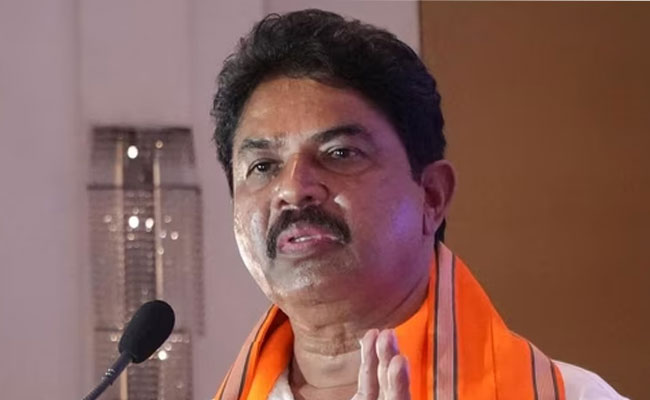
Bengaluru (PTI): BJP leader R Ashoka on Friday claimed that the ongoing power struggle between Chief Minister Siddaramaiah and his deputy D K Shivakumar has created massive confusion in Karnataka.
He remarked that the proverb “when two people fight, the third one benefits” has come true, as AICC President Mallikarjun Kharge is also now making efforts to become Chief Minister.
Speaking to reporters here, Ashoka said the entire government has turned into a house of confusion due to the alleged power tussle.
Kharge’s new statement has only added to the chaos, he said.
Congress chief Mallikarjun Kharge had on Friday said that no date has been fixed yet to discuss possible leadership change in Karnataka.
This came a day after Kharge said there was no change of CM in Karnataka "for now" and that the leadership issue in the state would be resolved soon.
The BJP leader said that Kharge too has aspirations and that he was cheated earlier.
"Perhaps he has received a green signal from the Congress high command to become CM. Everyone is already saying Kharge should become CM. Kharge himself has declared, “I am ready to become CM.” Despite many attempts in the past, he never became CM. Now he is trying to seize the opportunity," the Leader of Opposition in the state assembly said.
According to him, the situation in Congress has perfectly become a case of “two people fighting, third one benefits.”