US to immediately provide raw materials required for manufacturing Covishield in India
sending life-saving supplies
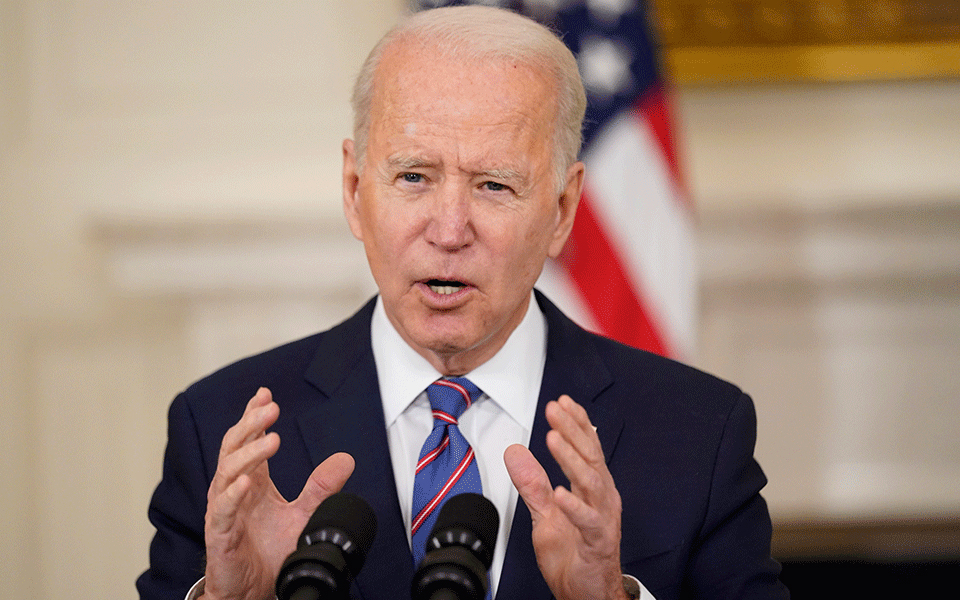
Washington: The US has assured India that it will immediately provide the specific raw materials required for manufacturing the Covishield vaccine, with a top White House official saying that the Biden administration was working around the clock to deploy all resources and supplies to bolster the country's fight against the deadly COVID-19 spike.
The Biden administration has come under criticism from several quarters, including from members and supporters of the Democratic Party, for not releasing surplus COVID-19 vaccines to India when the country is experiencing its worst-ever public health crisis.
India has urged the US to supply the raw materials for manufacturing the Covishield vaccine.
Expressing deep sympathy for the people of India following the recent spike in COVID-19 cases, US National Security Advisor (NSA) Jake Sullivan, in a telephonic call with his Indian counterpart Ajit Doval on Sunday, affirmed America's solidarity with India.
Just as India sent assistance to the United States as our hospitals were strained early in the pandemic, the United States is determined to help India in its time of need, Emily Horne, spokesperson of the US NSA said after the phone call between Sullivan and Doval.
Building on the seven-decade health partnership between the United States and India -- including battles against smallpox, polio and HIV -- they resolved that India and the United States will continue to fight the global COVID-19 pandemic together, Horne said.
Observing that the US is working around the clock to deploy available resources and supplies, Horne said that the US has identified sources of specific raw material urgently required for Indian manufacture of the Covishield vaccine that will immediately be made available for India .
To help treat COVID-19 patients and protect the front-line health workers in India, the US has identified supplies of therapeutics, rapid diagnostic test kits, ventilators, and Personal Protective Equipment (PPE) that will immediately be made available for India, she said.
Horne said the US also is pursuing options to provide oxygen generation and related supplies on an urgent basis.
US President Joe Biden and Vice President Kamala Harris have assured India and its people of providing all assistance, including urgently sending necessary medical life-saving supplies and equipment, to help the country combat the deadly coronavirus crisis.
Just as India sent assistance to the United States as our hospitals were strained early in the pandemic, we are determined to help India in its time of need, Biden said in a tweet on Sunday.
The US is working closely with the Indian government to rapidly deploy additional support and supplies during an alarming COVID-19 outbreak. As we provide assistance, we pray for the people of India including its courageous healthcare workers, Harris said in a tweet.
The tweets by Biden and Harris are the first reactions by the top American leadership after the recent outbreak of deadly COVID19 pandemic in India. The two have been criticised by friends of India in the US, including some of their own party leaders, for the slow response to the American help to their natural ally.
US Defence Secretary Austin Lloyd has also directed the Pentagon to provide all necessary support to Indian healthcare workers battling the worsening coronavirus situation in the country.
The men and women of the Department of Defense stand by our Indian partners in their hour of need. We are in this fight together, Austin said in a statement on Sunday.
Austin said he has directed the department to use every resource at its disposal, to support US interagency efforts to rapidly provide India's frontline healthcare workers with the materials they need. We are currently assessing the equipment we can both procure and draw from our own inventory in the coming days and weeks.
In the next few days, we will provide transportation and logistics assistance to deliver needed supplies to India, including oxygen-related equipment, rapid testing kits, and personal protective equipment, Austin said.
The US Development Finance Corporation (DFC) is funding a substantial expansion of manufacturing capability for BioE, the vaccine manufacturer in India, enabling BioE to ramp up to produce at least 1 billion doses of COVID-19 vaccines by the end of 2022.
Additionally, the US is deploying an expert team of public health advisors from the Center for Disease Control (CDC) and the United States Agency for International Development (USAID) to work in close collaboration with the US Embassy, India's health ministries, and India's Epidemic Intelligence Service staff.
USAID will also quickly work with the CDC to support and fast-track the mobilisation of emergency resources available to India through the Global Fund, Horne added.
India is struggling with a second wave of the pandemic with more than 3,00,000 daily new coronavirus cases being reported in the past few days, and hospitals in several states are reeling under a shortage of medical oxygen and beds.
India's tally on Monday climbed to 1,73,13,163 while active cases crossed the 28-lakh mark, with 3,52,991 people testing positive for coronavirus infection in a day, the highest so far, the Health Ministry said.
The death toll increased to 1,95,123 with a record 2,812 new fatalities, it said
Let the Truth be known. If you read VB and like VB, please be a VB Supporter and Help us deliver the Truth to one and all.
Double-decker electric bus gutted in fire at Kurla BEST depot
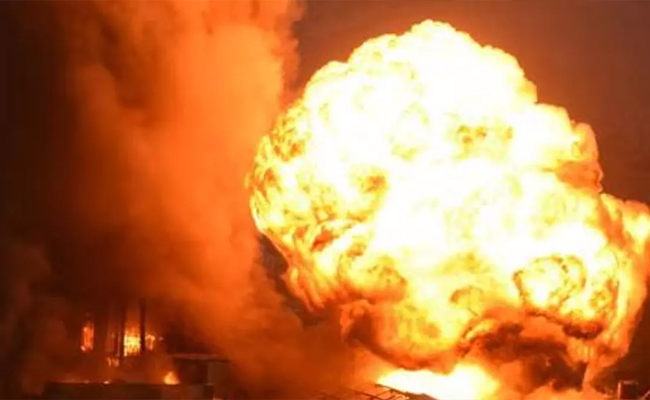
Mumbai (PTI): An empty double-decker electric bus was gutted in a fire during servicing at a BEST depot in Mumbai's Kurla area on Sunday, officials said, adding that nobody was injured.
The blaze broke out inside the Kurla BEST bus depot near Kanakia Building at 4.14 pm, according to preliminary information from the Mumbai Fire Brigade.
The parked bus was unoccupied at the time of the incident.
Fire brigade personnel rushed to the spot and brought the blaze under control. The exact cause of the fire was yet to be ascertained, they said.
No injuries were reported in the incident, officials added.
The Brihanmumbai Electricity Supply and Transport (BEST) Undertaking has hired 50 electric double-decker buses from Switch Mobility in its fleet of around 2,700 buses.