US withdrawal from Iran nuclear deal benefits no one: Rouhani
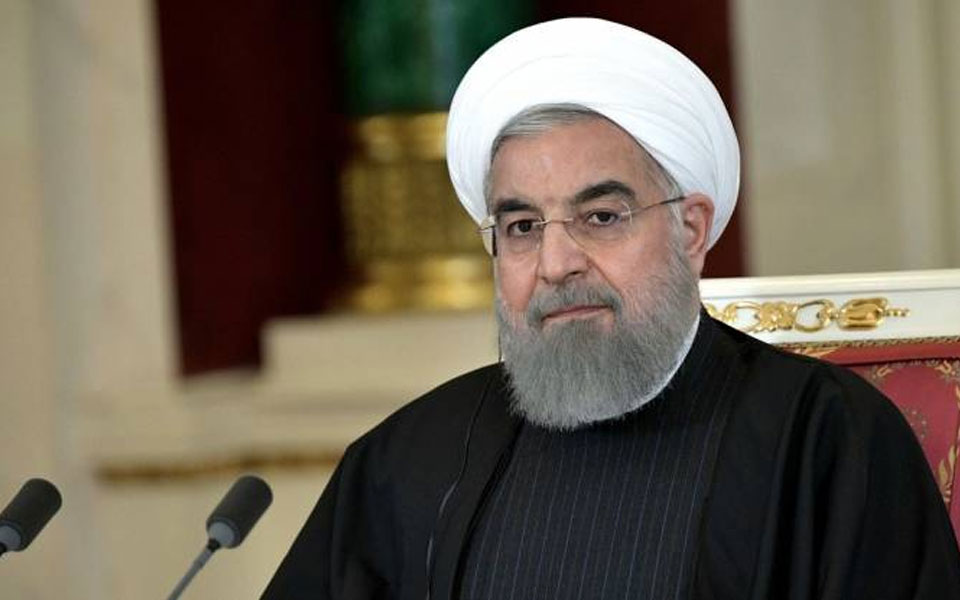
Vienna, July 5 : Iranian President Hassan Rouhani, who's on a visit here on Wednesday, said that no one will get benefits from US withdrawal from the nuclear deal.
"Not the US, not any other country would benefit from this decision to withdraw from the accord," he said.
He told a press conference that Tehran would prefer to stay in the deal and continue to cooperate and meet its obligations, if the remaining signatories respect its interests, Xinhua reported.
Rouhani was in Vienna on Wednesday on his second leg of his European tour, which also brought him to Switzerland.
As the United States is reinstating sanctions on Iran, Rouhani is trying to seek supports from EU countries to secure Tehran's interests under the nuclear deal.
Iran signed the landmark nuclear deal (Joint Comprehensive Plan of Action) with the United States, Britain, France, Russia and China plus Germany in 2015 to halt its nuclear weapons program in exchange for sanctions relief.
However, US President Donald Trump decided on May 8 to quit the deal and vowed to re-impose sanctions, including oil embargo, on Tehran, on grounds that the deal had failed to prevent Iran from developing nuclear weapons or supporting terrorism in the region.
The US withdrawal from the landmark nuclear deal has been widely criticized, as some of its major European allies have been working to prevent the 2015 deal from falling apart.
Rouhani also discussed other issues in the Middle East region with Austrian Chancellor Sebastian Kurz.
Let the Truth be known. If you read VB and like VB, please be a VB Supporter and Help us deliver the Truth to one and all.
Two injuries, one DNF, a DQ as India end messy World Relays campaign
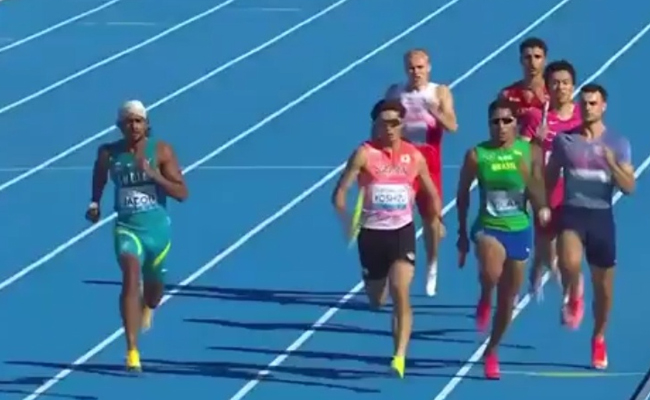
Gaborone (Botswana) (PTI): Amoj Jacob and Ragul Kumar got injured during the men's 4x400m and 4x100 races respectively as India ended their World Athletics Relays campaign in disappointment on the second day of competitions here on Sunday.
The Indian camp had high hopes of making the 2027 World Championships in the men's 4x400m relay but the team did not finish (DNF) the race as Jacob suffered cramps and pulled out of the race after taking the baton from the first leg runner Dharamveer Choudhary. Rajesh Ramesh and Vishal TK were to run in the third and fourth legs.
Those teams which could not qualify for the 2027 Beijing World Championships by reaching the final round of each of the six relay events on Saturday were given another chance in the second qualification round on Sunday.
The top two teams in each of the two heats (in all six relay events) booked the Beijing ticket on Sunday.
India will now have to try and qualify for the World Championships through the Top Lists of the World Athletics, which is a long and tedious process.
In the men's 4x100m race, third leg runner Ragul Kumar fell down the track after failing to hand over the baton inside the exchange zone to fourth leg runner Gurindervir Singh, which clearly showed the lack of coordination among the runners.
Harsh Santosh Raut and Animesh Kujur ran the first two legs.
The Indian quartet was disqualified and Kumar was seen being taken away from the Field of Play with the help of the volunteers.
It was a comedy of errors in the case of the women's 4x100m race, which saw the baton being dropped during an exchange between first leg runner Tamanna and second runner Nithya Gandhe, though the Indians finished the race in 53.09 seconds.
Gandhe started running quite a distance, but after realising that the baton was not in her hand, she turned and ran back to pick it up.
The only silver-lining for the Indian contingent was the national record time in the mixed 4x100m relay race, though the quartet of Ragul Kumar, Nithya Gandhe, Animesh Kujur and Sneha SS finished sixth in heat number two with a time of 41.35 seconds, bettering the previous national mark of 42.30 seconds set in March in Chandigarh.
The mixed 4x400m relay quartet of Theerthesh P Shetty, Kumari Saloni, Nihal William and Rashdeep Kaur ended at fifth in heat number one with a time of 3 minutes and 19.40 seconds.
On Saturday, all the five Indian relay teams had failed to make it to the respective final rounds and thus missed out on the 2027 World Championships berths.