USD 1.66 bn in security aid to Pak suspended: Pentagon
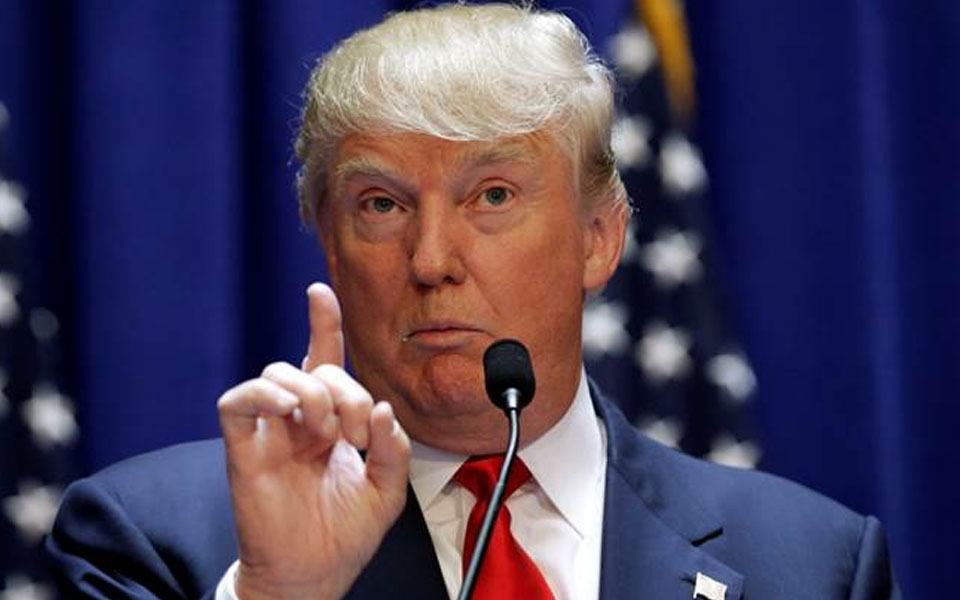
Washington, Nov 21: The US has suspended USD 1.66 billion in security assistance to Pakistan after President Donald Trump's directive, the Pentagon has said, in what experts believe is a strong signal of American frustration.
The Pentagon's statement came days after President Trump said that Pakistan does not do "a damn thing" for the US, alleging that its government had helped al-Qaeda chief Osama bin Laden hide near its garrison city of Abbottabad.
"USD 1.66 billion of security assistance to Pakistan is suspended," Col Rob Manning, spokesman of the Department of Defence, told reporters in an email response to questions on Tuesday.
No further breakdown of the suspended security assistance to Pakistan was provided.
According to David Sedney, who served as Deputy Assistant Secretary Defence for Afghanistan, Pakistan and Central Asia during the previous Obama administration, the blocking of military assistance to Pakistan, which began in January this year, is a strong signal of American frustration.
"But, so far Pakistan has taken no serious steps to address the core US concern - that Pakistan tolerates and often encourages groups which use violence against Pakistan's neighbours," Sedney told PTI.
"Pakistan's leaders have promised cooperation, but beyond words, serious cooperation has not happened, therefore President Trump is frustrated and so are most Americans," he said in response to a question.
"This frustration does not ignore the suffering that Pakistani people have undergone. It just asks Pakistan to recognise that it should act to help stop the suffering of others," said the Senior Associate at the Center for Strategic and International Studies think-tank.
Previously, Sedney was at the Department of State and the National Security Council, as well as Acting President of American University of Afghanistan. He was part of the Pentagon when Laden was killed in a raid by US commandos in Pakistan's Abbottabad.
Over the last few days, Trump has said that people in Pakistan knew about the presence of Laden.
"I agree with the views of Carlotta Gall of the New York Times who reported in her book 'The Wrong Enemy' that a very small group of very senior Pakistani military leaders knew about Laden's presence in Pakistan. I have not seen any evidence that his presence in Abbottabad was widely known by many in Pakistan," Sedney told PTI in an interview.
While Pakistan has suffered terribly from terrorism by Islamic extremists, Islamabad has also enabled extremist groups that attack its neighbours, he observed.
After years of dithering, in recent years, Pakistan's security forces have moved strongly against the extremists that threaten the Pakistani state, Sedney said.
"What the US seeks, what President Trump is asking for, is for Pakistan to take the same kind of measures against the Taliban, Lashkar-e-Taiba and against all groups in Pakistan that threaten Pakistan's neighbours," he said.
"But, we still see the Taliban moving weapons, fighters and money through Pakistan. We still see Taliban commanders taking refuge in Pakistan, keeping their families in Pakistan, holding meetings and conducting training in Pakistan and shipping explosives from Pakistan into Afghanistan," Sedney alleged, adding that leaders of sanctioned organisations acting freely in Pakistan and speaking publicly in favour of violence.
If Pakistan took some strong measures against the Taliban, peace would come to Afghanistan quickly, he said.
US Secretary of State Mike Pompeo has roped in former top American diplomat Zalmay Khalilzad for peace talks with the Taliban. Both Afghanistan and Pakistan would benefit from a huge "peace dividend", he asserted.
"Similarly, if Pakistan took strong measures against groups which act against India, Pakistan would harvest huge economic benefits from better economic ties with India," Sedney added.
Ties between the US and Pakistan strained after Trump, while announcing his Afghanistan and South Asia policy in August last year, hit out at Pakistan for providing safe havens to "agents of chaos" that kill Americans in Afghanistan and warned Islamabad that it has "much to lose" by harbouring terrorists.
In September, the Trump administration cancelled USD 300 million in military aid to Islamabad for not doing enough against terror groups like the Haqqani Network and the Taliban active on its soil.
Let the Truth be known. If you read VB and like VB, please be a VB Supporter and Help us deliver the Truth to one and all.
Brothers awaiting board exam results drown in canal

Erode (Tamil Nadu) (PTI): Minor brothers who were awaiting their board exam results have drowned in a canal in this district while spending their Summer holidays at their aunt's place, police said.
According to Arachalure Police, Santhosh, aged 17, and his younger brother Sanjai, aged 15, natives of Musiri village in Tiruchirapalli district, came to Gopaliparai hamlet near Arachalure to their Aunt's house a couple of days ago after writing their annual 12th and 10th examinations, respectively.
The police said on Friday that both boys went to the nearby Lower Bhavani Project canal to take a bath. It was alleged that while taking a bath, both boys went to a deeper area of the canal and went missing.
As they didn't return home, even two hours after they left, their aunt grew suspicious and informed the Fire and Rescue Services, Chennimalai. A rescue team from the department rushed to the spot. After a few minutes of searching, they located the dead bodies of the brothers and sent them to the hospital. Arachalure police registered a case of death due to drowning and are investigating.