Vatican Cardinal condemns Israel’s actions in Gaza as “ongoing massacre”
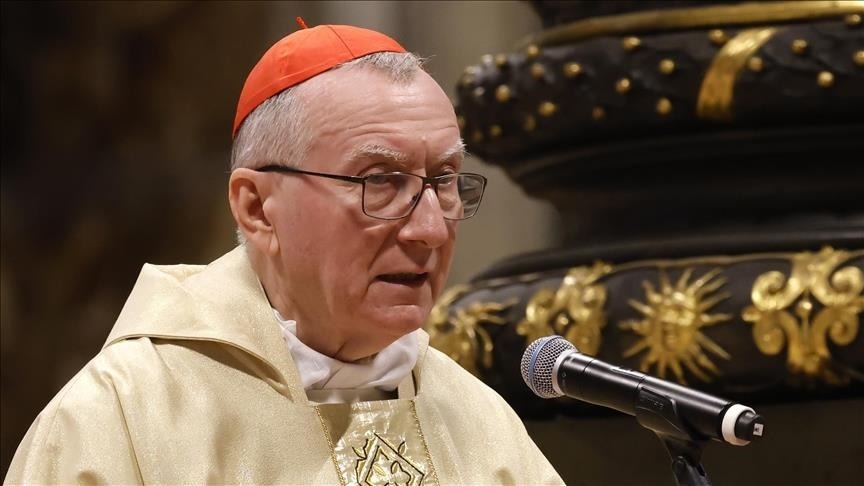
Vatican City: The Vatican’s top diplomat, Cardinal Pietro Parolin, has strongly criticised Israel’s military campaign in Gaza, describing it as an “ongoing massacre” of a defenceless population. His remarks, published on Monday, mark one of the Catholic Church’s most severe condemnations of Israel’s actions since the war began.
Speaking on the eve of the second anniversary of Hamas’s October 7, 2023 attacks on Israeli communities, Parolin called those attacks “inhuman and indefensible” and urged Hamas to release all remaining hostages. However, he maintained that Israel’s response had violated the principle of proportionality.
“Those who are attacked have a right to defend themselves, but even legitimate defence must respect proportionality,” said Parolin, who serves as the Vatican’s Secretary of State and one of Pope Leo’s closest aides. “The war waged by the Israeli army to eliminate Hamas militants disregards the fact that it is targeting a largely defenceless population, already pushed to the brink, in an area where buildings and homes are reduced to rubble.”
Parolin further stated that the international community appeared “powerless” and that nations with real influence had “failed to act to stop the ongoing massacre.” He questioned the morality of continuing to supply weapons “being used against civilians,” though he did not name specific countries.
Since the 2023 Hamas-led assault that killed 1,200 people and saw 251 taken hostage, Israel’s retaliatory campaign in Gaza has reportedly killed more than 67,000 people, most of them civilians, according to Gaza health authorities.
Under Pope Leo, elected in May following the death of Pope Francis, the Vatican has intensified its criticism of Israel’s blockade and military actions, urging greater humanitarian access and pressing the issue in diplomatic meetings, including a September discussion with Israeli President Isaac Herzog.
Parolin concluded, “It’s not enough to say that what is happening is unacceptable and then continue to allow it to happen.”
Let the Truth be known. If you read VB and like VB, please be a VB Supporter and Help us deliver the Truth to one and all.
4 workers die after being buried under coal slurry in Jharkhand's Dhanbad

Dhanbad (Jharkhand) (PTI): At least four workers died after being buried under coal slurry in Jharkhand's Dhanbad district on Saturday, a police official said.
The incident took place at Moonidih coal washery in the command area of Bharat Coking Coal Limited (BCCL).
"Bodies of all four workers were dug out of debris during a rescue operation," Putki police station in-charge Waqar Hussain told PTI.
The incident took place when coal slurry was being loaded into trucks by workers, during which a large chunk of slurry fell and trapped several workers underneath, officials said.
The deceased have been identified as Manik Bauri, Dinesh Bauri, Deepak Bauri, and Hemlal Gope.
Meanwhile, the family members of the deceased and local villagers placed the bodies in front of the washery gate and began a protest.
They demanded compensation, jobs for dependents and action against those responsible for the incident.
Police and administration officials are trying to pacify the protesters, an official said.