Vijay Mallya files for permission to appeal against extradition order
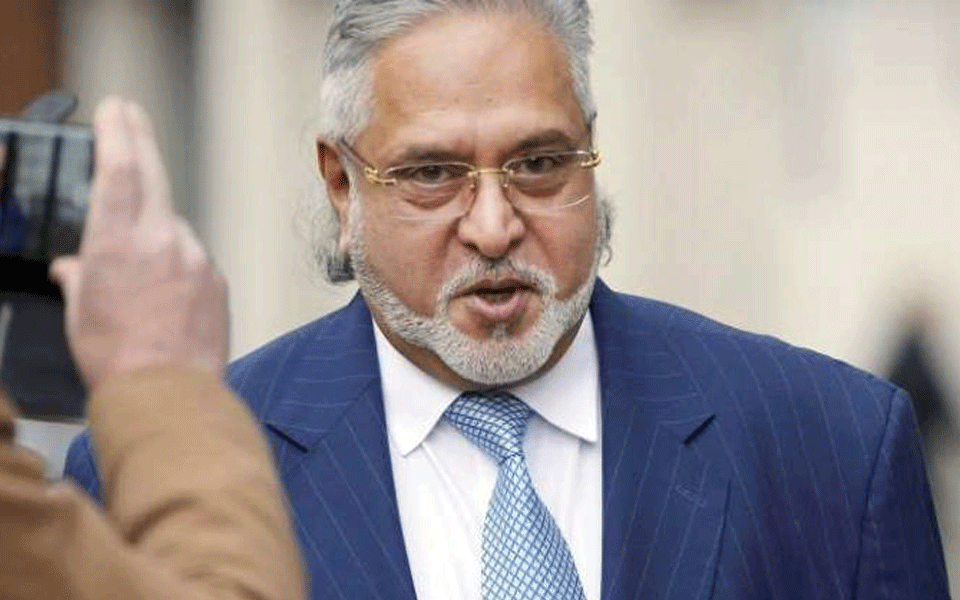
London : Embattled liquor baron Vijay Mallya, wanted in India on alleged fraud and money laundering charges amounting to an estimated Rs 9,000 crores, has filed his application in the UK High Court, seeking permission to appeal against an extradition order signed by the British Home Secretary.
The 63-year-old businessman, who remains on bail on an extradition warrant in the UK, made the application in the Administrative Court division of the High Court on Thursday, 10 days after Home Secretary Sajid Javid signed off on the order triggering a 14-day window for his appeal application.
The application has been sent for a judge on papers decision, which is expected any time between two to four weeks, a UK court representative said.
A judge on papers decision will involve a High Court judge determining the merits of the application and if it is accepted, the case will proceed to a substantive hearing in the next few months' time.
In the event that Mallya's application is rejected at this stage, he will have the option to submit a renewal form .
The renewal process will lead to a 30-minute oral hearing during which Mallya's legal team and the Crown Prosecution Service (CPS) - on behalf of the Indian government - will renew their respective claims for and against an appeal for a judge to determine if it can proceed to a full hearing.
The process, to be heard in the Royal Courts of Justice in London, could take months as the listing of a hearing will depend on the availability of judges and other factors.
Following the outcome at the High Court level, both sides could apply for the right to appeal to the Supreme Court, which would involve at least another six weeks. However, that process is more complex as the UK High Court must certify that the appeal involves a point of law of general public importance, and either the High Court or the Supreme Court gives leave for the appeal to be made.
Mallya and his legal team have not made a renewed comment in relation to the appeal but soon after the UK home secretary had signed off on the Westminster Magistrates' Court order in favour of extradition on February 4, the businessman had taken to social media to confirm his plans to seek an appeal.
After the decision was handed down on December 10, 2018 by the Westminster Magistrates Court, I stated my intention to appeal. I could not initiate the appeal process before a decision by the Home Secretary. Now I will initiate the appeal process, he said in a Twitter statement earlier this month.
The former boss of the now-defunct Kingfisher Airlines took to Twitter again this week to call on Prime Minister Modi to accept his settlement offer in relation to the airline's loan default.
I respectfully ask why the Prime Minister is not instructing his Banks to take the money I have put on the table so he can at least claim credit for full recovery of public funds lent to Kingfisher, he said, adding that his offer to the Karnataka High Court should not be dismissed as frivolous because it is a perfectly tangible, sincere, honest and readily achievable offer .
Mallya has been based in the UK since March 2016 and remains on bail on an extradition warrant executed by Scotland Yard in April 2017.
In her verdict at the end of a year-long extradition trial in December last year, Judge Emma Arbuthnot had ruled that the flashy billionaire had a case to answer in the Indian courts.
The court had also dismissed any bars to extradition on the grounds of the prison conditions under which the businessman would be held, as the judge accepted the Indian government's assurances that he would receive all necessary medical care at Barrack 12 in Mumbai's Arthur Road Jail.
India and the UK have an Extradition Treaty signed in 1992 and in force since November 1993. So far only one successful extradition has taken place from the UK to India under the treaty - that of Samirbhai Vinubhai Patel, who was sent back to India in 2016 to face trial in connection with his involvement in the post-Godhra riots of 2002.
Let the Truth be known. If you read VB and like VB, please be a VB Supporter and Help us deliver the Truth to one and all.
Power struggle in ruling Cong has 'created massive confusion' in Karnataka: BJP leader Ashoka
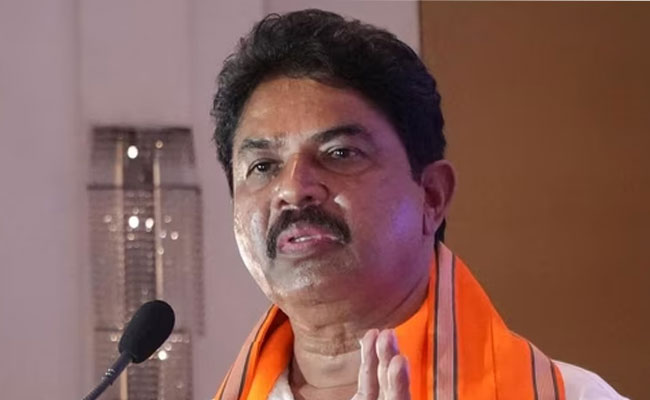
Bengaluru (PTI): BJP leader R Ashoka on Friday claimed that the ongoing power struggle between Chief Minister Siddaramaiah and his deputy D K Shivakumar has created massive confusion in Karnataka.
He remarked that the proverb “when two people fight, the third one benefits” has come true, as AICC President Mallikarjun Kharge is also now making efforts to become Chief Minister.
Speaking to reporters here, Ashoka said the entire government has turned into a house of confusion due to the alleged power tussle.
Kharge’s new statement has only added to the chaos, he said.
Congress chief Mallikarjun Kharge had on Friday said that no date has been fixed yet to discuss possible leadership change in Karnataka.
This came a day after Kharge said there was no change of CM in Karnataka "for now" and that the leadership issue in the state would be resolved soon.
The BJP leader said that Kharge too has aspirations and that he was cheated earlier.
"Perhaps he has received a green signal from the Congress high command to become CM. Everyone is already saying Kharge should become CM. Kharge himself has declared, “I am ready to become CM.” Despite many attempts in the past, he never became CM. Now he is trying to seize the opportunity," the Leader of Opposition in the state assembly said.
According to him, the situation in Congress has perfectly become a case of “two people fighting, third one benefits.”