Virus kills member of council advising Iran's supreme leader
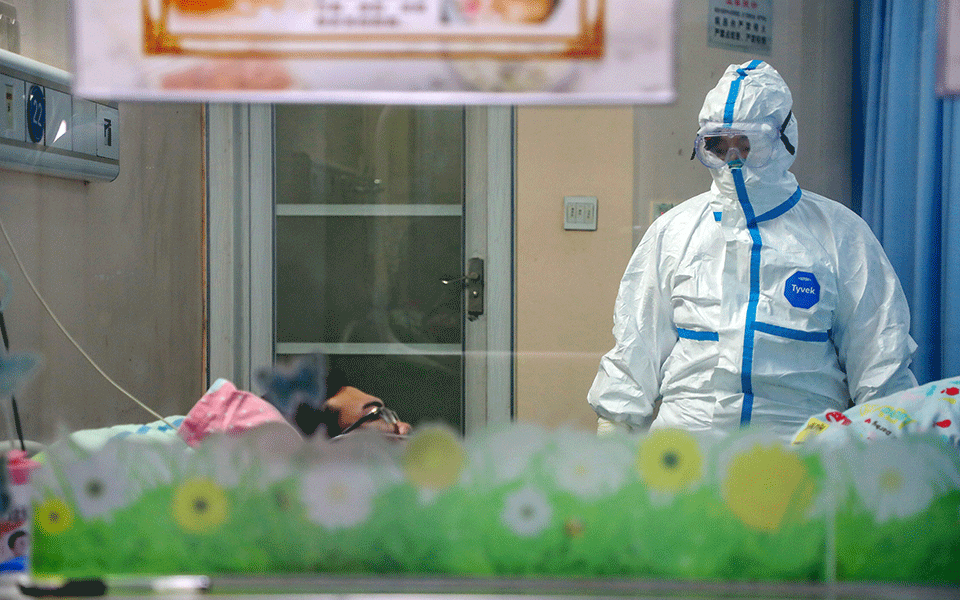
Tehran: A member of a council that advises Iran's supreme leader died on Monday after falling sick from the new coronavirus, state radio reported, becoming the first top official to succumb to the illness that is affecting members of the Islamic Republic's leadership.
The death of Expediency Council member Mohammad Mirmohammadi came as Iran announced the virus had killed 66 people among 1,501 confirmed cases in the country.
Iran has the highest death toll in the world after China, the epicenter of the outbreak. Mirmohammadi died at a north Tehran hospital of the virus, state radio said. He was 71. The council advises Supreme Leader Ayatollah Ali Khamenei, as well as settles disputes between the top cleric and parliament.
His death comes as other top officials have contracted the virus in Iran.
Those sick include Vice President Masoumeh Ebtekar, better known as "Sister Mary," the English-speaking spokeswoman for the students who seized the US Embassy in Tehran in 1979 and sparked the 444-day hostage crisis, state media reported.
Also sick is Iraj Harirchi, the head of an Iranian government task force on the coronavirus who tried to downplay the virus before falling ill.
Iran has reported 978 confirmed cases of the new virus with 54 deaths from the illness it causes, called COVID-19. Across the wider Mideast, there are over 1,150 cases of the new coronavirus, the majority of which are linked back to Iran.
Experts worry Iran's percentage of deaths to infections, around 5.5 per cent, is much higher than other countries, suggesting the number of infections in Iran may be much higher than current figures show.
Iranian government spokesman Ali Rabiei, himself addressing journalists by teleconference over concerns about the virus, acknowledged the challenges remaining for the Islamic Republic.
"We will have two difficult weeks ahead," he said.
Trying to stem the outbreak of the new coronavirus, Iran also on Monday held an online-only briefing by its Foreign Ministry. China as well has held similar teleconference briefings.
Foreign Ministry spokesman Abbas Mousavi opened the online news conference addressing the outbreak, dismissing an offer of help for Iran by US Secretary of State Mike Pompeo.
Iran and the US have seen some of the worst tensions since its 1979 Islamic Revolution in recent months, culminating in the American drone strike that killed a top Iranian general in Baghdad and a subsequent Iranian ballistic missile counterattack against US forces.
"We neither count on such help nor are we ready to accept verbal help," Mousavi said. He added Iran has always been "suspicious" about America's intentions and accused the US government of trying to weaken Iranians' spirits over the outbreak.
Judiciary chief Ebrahim Raisi acknowledged some people had begun stockpiling medical supplies for profit in the country, urging prosecutors to show "no mercy for hoarders."
"Hoarding sanitizing items is playing with people's lives and it is not ignorable," Raisi said.
Raisi also urged officials to grant maximum leave to prisoners. Activists have raised concern about the spread of the new coronavirus in Iran's prisons.
The British Embassy meanwhile has begun evacuations over the virus.
"Essential staff needed to continue critical work will remain, the British Foreign Office said. "In the event that the situation deteriorates further, the ability of the British Embassy to provide assistance to British nationals from within Iran may be limited."
While Iran has closed schools and universities to stop the spread of the virus, major Shiite shrines have remained open despite civilian authorities calling for them to be closed. The holy cities of Mashhad and Qom in particular, both home to shrines, have been hard-hit by the virus.
Shiites often touch and kiss shrines as a sign of their faith. Authorities have been cleaning the shrines with disinfectants.
Police have arrested one man who posted a video showing himself licking the metal enclosing the Imam Reza shrine in Mashhad, the most-important Shiite saint buried in the country, according to reports by semiofficial news agencies.
In the video, the man said he licked the metal to "allow others to visit the shrine with peace of mind."
Meanwhile on Monday, the virus outbreak saw itself dragged into the yearslong boycott of Qatar by four Arab nations over a political dispute.
A prominent columnist at Dubai's government-owned Al-Bayan newspaper on Twitter falsely described the virus as being a plot by Qatar to hurt the upcoming Expo 2020 world's fair in Dubai and Saudi Arabia.
Noura al-Moteari later described the tweet as satire" to The Associated Press after it gained widespread attention.
The Dubai Media Office similarly described the tweet as being written in a cynical style while distancing the Arabic-language daily from al-Moteari.
Noura is a freelance writer and is not an employee of Al-Bayan nor does she represent the publication's views, it told the AP. "That being said, this has no relevance to any social media policy being practiced by the publication nor the state."
The tweet comes after Qatar expressed disappointment on Sunday that nearly all of its Gulf neighbours snubbed invitations to attend the weekend peace signing ceremony between the US and the Taliban.
Let the Truth be known. If you read VB and like VB, please be a VB Supporter and Help us deliver the Truth to one and all.
Power struggle in ruling Cong has 'created massive confusion' in Karnataka: BJP leader Ashoka
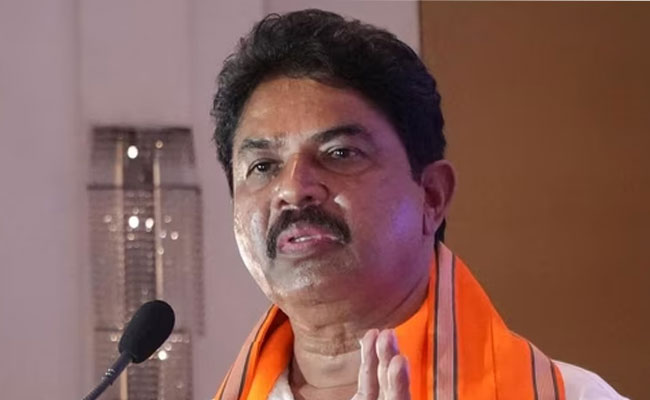
Bengaluru (PTI): BJP leader R Ashoka on Friday claimed that the ongoing power struggle between Chief Minister Siddaramaiah and his deputy D K Shivakumar has created massive confusion in Karnataka.
He remarked that the proverb “when two people fight, the third one benefits” has come true, as AICC President Mallikarjun Kharge is also now making efforts to become Chief Minister.
Speaking to reporters here, Ashoka said the entire government has turned into a house of confusion due to the alleged power tussle.
Kharge’s new statement has only added to the chaos, he said.
Congress chief Mallikarjun Kharge had on Friday said that no date has been fixed yet to discuss possible leadership change in Karnataka.
This came a day after Kharge said there was no change of CM in Karnataka "for now" and that the leadership issue in the state would be resolved soon.
The BJP leader said that Kharge too has aspirations and that he was cheated earlier.
"Perhaps he has received a green signal from the Congress high command to become CM. Everyone is already saying Kharge should become CM. Kharge himself has declared, “I am ready to become CM.” Despite many attempts in the past, he never became CM. Now he is trying to seize the opportunity," the Leader of Opposition in the state assembly said.
According to him, the situation in Congress has perfectly become a case of “two people fighting, third one benefits.”