War Far Away, Pain Right At Your Door
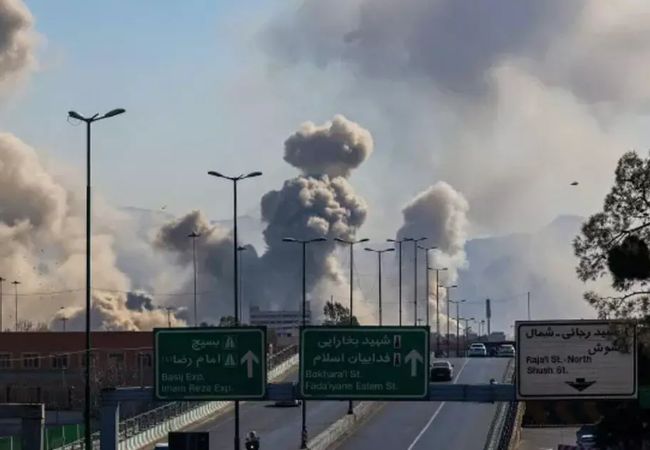
There is a war burning in West Asia — far from India's borders, far from our daily worries. But here is something nobody is telling you clearly — that war is quietly walking towards your kitchen, your house, your farm, and your factory. You may not see it coming. But you will feel it.
Let us talk simply, the way one neighbour explains to another.
West Asia — the region that includes countries like Saudi Arabia, UAE, Qatar, Kuwait, Iraq, and Iran — is not just the world's petrol pump. It is also a massive warehouse of raw materials that India depends on heavily. India bought goods worth nearly ₹8.3 lakh crore from this region in 2025 alone. That is not a small number. That is the foundation of many things you use every single day.
Now, missile and drone attacks are hitting energy facilities in the Gulf. Ships are scared to sail. The Strait of Hormuz — a narrow sea passage through which a huge chunk of the world's oil and gas travels — is under serious threat. If that route closes, the impact will not just stop at petrol prices. It will go much deeper.
Your home could become costlier to build.
India gets 68% of its limestone from West Asia. Limestone is the main ingredient in cement. No cement, no construction. And even if cement is available, its price will shoot up. Gypsum — which is used for plastering your walls, making false ceilings, and giving your home that smooth finish — also comes 62% from the same region. If ships stop, your dream home project either stops or burns a bigger hole in your pocket.
Your food could become expensive too.
India imports about 65% of its sulphur from West Asia. Sulphur may not be something people notice in daily life, but it is used to make sulphuric acid, which is essential for producing phosphate fertilisers. Fertilisers feed our crops, and crops feed us. If sulphur supply is disrupted for a month or more, production of phosphate fertilisers in India could be affected.
At the same time, if LNG or sulphur supplies are disrupted for a month or more, India’s overall fertiliser production — including urea and phosphate fertilisers — could face disruptions, potentially affecting farmers in the coming season.
Less urea means farmers may struggle during the next sowing season. When farmers struggle, food production can suffer. And when food production falls, food prices rise — something households, especially those on tight budgets, feel immediately.
The steel in your city's roads and bridges is also at risk.
India gets nearly 59% of its Direct Reduced Iron — a key raw material to make steel — from West Asia. Steel is everywhere. It is in the beams of buildings under construction, in the infrastructure projects your city is waiting for, in the auto parts and machinery. Industry people are already saying that while alternative sources exist for materials like limestone and DRI, the real killer is the rising and unstable price of oil and gas. Most steel plants run on LPG and LNG. When gas prices go up, the cost of making steel goes up, and ultimately, that cost passes on to you.
Even the shine on your jewellery is at risk.
India's diamond cutting and polishing industry — which employs lakhs of workers, mostly in Gujarat — gets more than 40% of its rough diamonds from West Asia. If conflict disrupts that trade, those workers feel the pinch first. Jobs slow down. Incomes fall.
So what is being done?
India is already adjusting. Refiners are buying more oil from Russia at discounted prices. Fertiliser companies are looking at Southeast Asia for sulphur. Limestone can potentially come from Thailand or Vietnam. But these alternatives take time, cost more to ship, and cannot replace West Asia overnight.
The fertiliser sector has some breathing room for now since it is currently the off-season for farming. But experts are clearly warning — if disruption continues beyond one month, the next crop season will feel the squeeze. That means the farmer in Punjab, the vegetable grower in Maharashtra, the paddy cultivator in Andhra — all of them could face higher input costs with no guarantee of better prices for their produce.
There is a quiet truth here that needs to be said plainly. Wars do not stay in the places they start. They travel through trade routes, through shipping lanes, through price tags in your local market. This one is no different.
Every brick that costs more, every bag of fertiliser that gets delayed, every power bill that climbs higher — these are not just economic numbers. These are real burdens on real families who are already managing tight budgets, rising expenses, and uncertain futures.
The war may be far away. But its shadow is already falling on us — slowly, silently, and surely.
(Girish Linganna is an award-winning science communicator and a Defence, Aerospace & Geopolitical Analyst. He is the Managing Director of ADD Engineering Components India Pvt. Ltd., a subsidiary of ADD Engineering GmbH, Germany.)
Disclaimer: The views and opinions expressed in this article are solely those of the author. They do not necessarily reflect the views, policies, or position of the publication, its editors, or its management. The publication is not responsible for the accuracy of any information, statements, or opinions presented in this piece.
Let the Truth be known. If you read VB and like VB, please be a VB Supporter and Help us deliver the Truth to one and all.
Court can reject anticipatory bail but cannot direct accused to surrender: SC
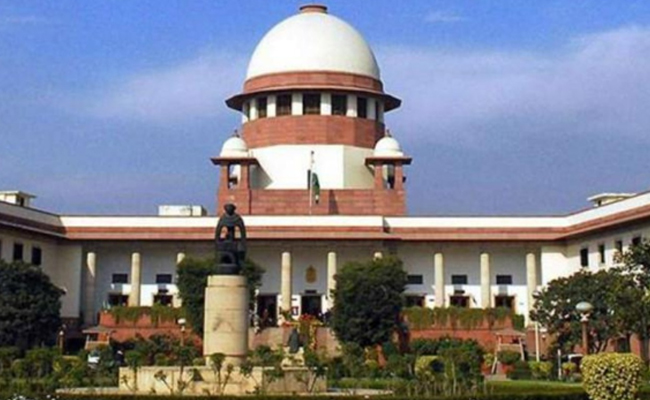
New Delhi (PTI): A court can reject anticipatory bail of an accused but it has no jurisdiction to direct him to surrender before the trial court, the Supreme Court has said.
A bench of Justices J B Pardiwala and Ujjal Bhuyan made the observation while hearing a plea filed by a man accused of cheating and forgery.
"If the court wants to reject the anticipatory bail, it may do so, but the court has no jurisdiction to say that the petitioner should now surrender," the bench said.
The Jharkhand High Court had rejected anticipatory bail plea of the accused and asked him to surrender and seek regular bail.
In this case, a complaint had been filed before a magistrate alleging offences under Sections 323 (voluntarily causing hurt), 420 (cheating), 467 (forgery of valuable security), 468 (forgery for purpose of cheating), 471 (using forged document) and 120B read with 34 of the IPC, in connection with a land dispute.
The high court had dismissed the second anticipatory bail application of the accused on the ground that no new circumstances were shown.
It had relied on its earlier order rejecting his first anticipatory bail plea, in which the court directed the petitioner to surrender before the trial court and seek regular bail in terms of the decision in Satender Kumar Antil v. CBI.
The top court said such a direction was wholly without jurisdiction and said that if a court chooses to reject anticipatory bail, it may do so, but it cannot compel the accused to surrender.