'We get along with India very well, but....': Trump amid tarrif dispute
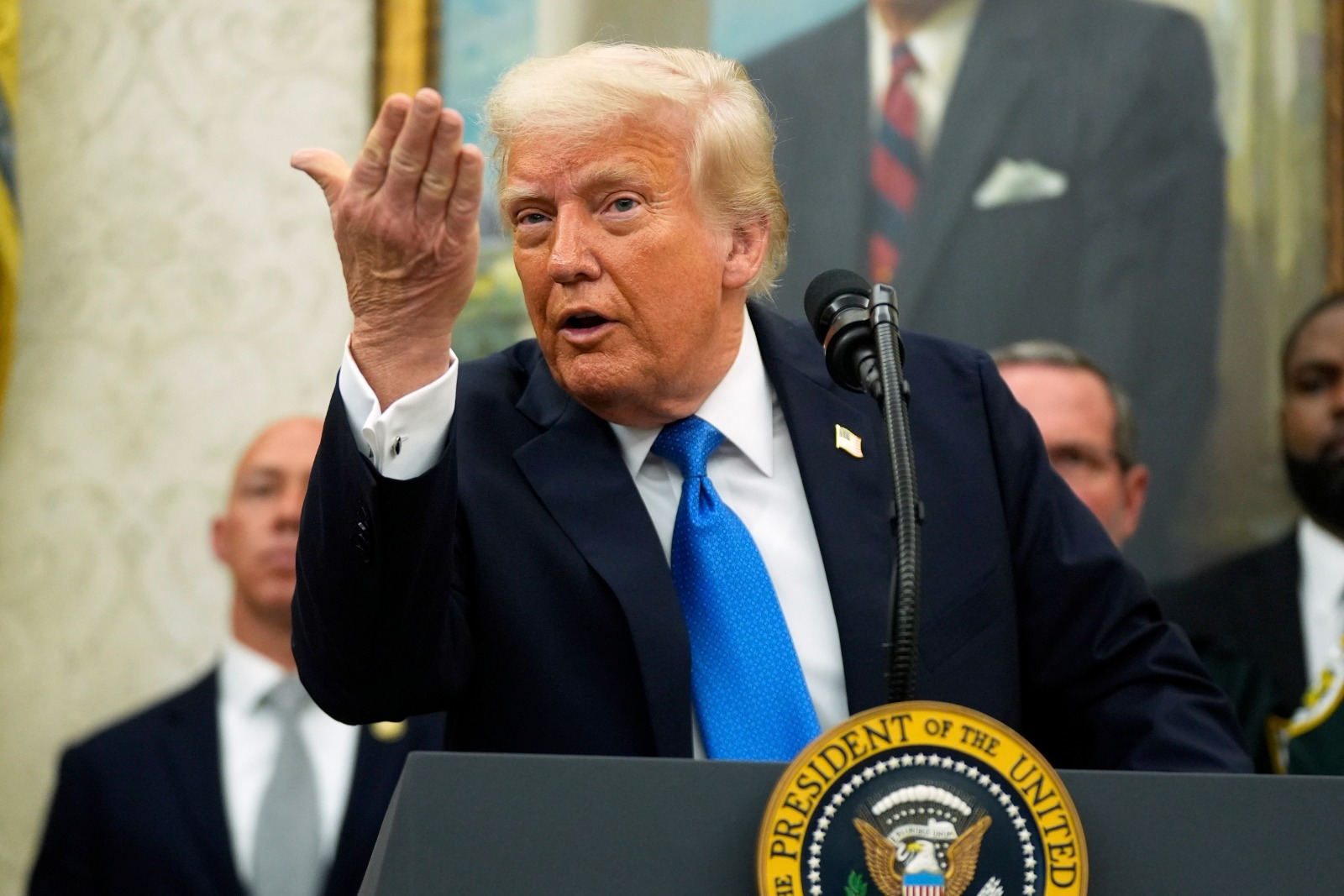
New York/Washington(PTI): President Donald Trump has said the US gets along with India “very well” but the relationship was "one-sided" for many years since New Delhi was charging Washington “tremendous tariffs”.
“No, we get along with India very well,” Trump said in the White House on Tuesday in response to a question on whether he is considering taking away some of the tariffs imposed on India.
Trump’s comments come amid a strain in ties between New Delhi and Washington after the US imposed 50 per cent tariffs on India, among the highest in the world.
He said that for many years, the relationship between India and the US was “one-sided” and that changed when he assumed office.
“India was charging us tremendous tariffs, about the highest in the world,” Trump said, adding that the US was therefore not doing much business with India.
“But they were doing business with us because we weren't charging them, foolishly, we weren't charging them,” he said, adding that India was pouring its products into the US.
“They'd send it in, pour it into our country. Therefore it wouldn't be made here, which is a negative, but we would not send in anything because they were charging us 100 per cent tariffs,” Trump said.
The US president cited the example of the Harley Davidson motorcycles, saying the company couldn't sell into India because there was a 200 per cent tariff on a motorcycle.
"So what happens? Harley Davidson went to India and built a motorcycle plant, and now they don't have to pay tariffs, same thing as us,” he said.
On Monday, Trump claimed that India has now "offered" to cut its tariffs to nothing, “but it’s getting late”, as he said that India buys most of its oil and military products from Russia and very little from the US.
The Trump administration has imposed 25 per cent reciprocal tariffs on India and an additional 25 per cent levies for Delhi’s purchases of Russian oil, bringing the total duties imposed on India to 50 per cent, with effect from August 27.
Prime Minister Narendra Modi has asserted he can't compromise on the interests of farmers, cattle-rearers, small-scale industries, cautioning "pressure on us may increase, but we will bear it".
India has called the tariffs imposed by the US “unjustified and unreasonable”.
New Delhi said that, like any major economy, it will take all necessary measures to safeguard its national interests and economic security.
In 2024-25, the bilateral trade in goods between the two countries stood at USD 131.8 billion (USD 86.5 billion exports and USD 45.3 billion imports).
Let the Truth be known. If you read VB and like VB, please be a VB Supporter and Help us deliver the Truth to one and all.
Delhi to adopt fully digital system for time bound traffic challan disposal
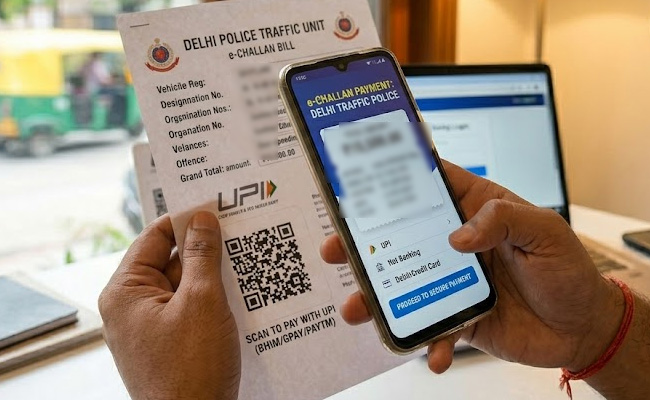
New Delhi (PTI): The Delhi government will soon implement amended Central Motor Vehicles Rules, 1989, making the traffic challan process completely digital and time-bound, to curb violations and enhance road safety, Chief Minister Rekha Gupta said on Sunday.
Under the new framework, avoiding challans will no longer be possible and timely resolution will be mandatory for all citizens. Importantly, violators will not be able to approach courts directly to contest a challan without first going through the prescribed process, said a Delhi CMO statement.
Anyone committing five or more traffic violations within a year will be classified as a "serious offender" and will risk suspension or disqualification of their driving licence under the amended rules, it said.
Gupta noted that the issuance of challans will now be fully modernised.
Police or authorised officers can issue challans either physically or electronically. In addition, violations captured through cameras and digital surveillance systems will automatically generate challans. The e-challans will be delivered within three days to the violators through their mobile numbers, and a physical notice will be delivered within 15 days.
Once a challan is issued, the violator will have 45 days to either pay the fine or challenge it before a grievance redressal officer through the online portal, supported by documentary evidence. If no action is taken within this period, the challan will be deemed accepted, and payment must be made within the next 30 days, the statement said.
If a challenge is rejected, the individual can either pay the fine within 30 days or approach the court after depositing 50 per cent of the challan amount.
Failure to act within the stipulated time will result in the challan being treated as accepted, with payment required within 15 days thereafter.
Payments can be made through electronic modes. The grievance redressal officer will be required to upload a decision on the portal within 30 days, it said.
The chief minister made it clear that once deadlines lapse, daily electronic notices will be issued. Continued non-payment will lead to restrictions on all vehicle-related services, including payment of taxes and processing of driving licence or registration-related requests.
The vehicle will be flagged on the official portal as 'not to be transacted,' effectively blocking any further transactions until the dues are cleared. In cases where necessary, and subject to court orders, police or authorised officers may also impound vehicles involved in violations.
All challans will be issued in the name of the registered vehicle owner, who will be notified via SMS, email or other digital means, it added.