Weak evidence for accuracy of COVID-19 antibody tests: Study

Boston: A review of studies has found major weaknesses in the evidence base for diagnostic accuracy of COVID-19 antibody tests, particularly for point-of-care tests performed directly with a patient, outside a laboratory, and does not support their continued use.
Serological tests to detect antibodies against COVID-19 could improve diagnosis and may be useful tools for monitoring levels of infection in a population, but it is important to formally evaluate whether there is sufficient evidence that they are accurate, the researchers said.
The study, published n The BMJ, set out to determine the diagnostic accuracy of antibody tests for COVID-19. The researchers, including those from Harvard Medical School in the US and University of British Columbia, Canada, searched medical databases and preprint servers from January 1 to April 30, for studies measuring sensitivity and specificity of a COVID-19 antibody test compared with a control test.
Sensitivity measures the percentage of people who are correctly identified as having a disease, while specificity measures the percentage of people who are correctly identified as not having a disease, they said. Of 40 eligible studies, most (70 per cent) were from China and the rest were from the UK, US, Denmark, Spain, Sweden, Japan and Germany.
The researchers noted that half of the studies were not peer-reviewed and most were found to have a high or unclear risk of bias -- problems in study design that can influence results. Only four studies included outpatients and only two evaluated tests at the point of care, they said.
When sensitivity results for each study were pooled together, they ranged from 66 per cent to 97.8 per cent depending on the type of test method used, meaning that between 2.2 per cent and 34 per cent of patients with COVID-19 would be missed, according to the researchers.
Pooled specificities ranged from 96.6 to 99.7 per cent, depending on the test method used, meaning that between 3.4 per cent and 0.3 per cent of patients would be wrongly identified as having COVID-19, they said. The study found that pooled sensitivities were consistently lower for the lateral flow immunoassay (LFIA) test compared with other test methods.
The LFIA test is the potential point-of-care method that is being considered for 'immunity passports. The researchers explained that, if an LFIA test is applied to a population with a COVID-19 prevalence of 10 per cent, for every 1,000 people tested, 31 who never had COVID-19 will be incorrectly told they are immune, and 34 people who had the disease will be incorrectly told that they were never infected.
Pooled sensitivities were also lower with commercial test kits (65 per cent) compared with non-commercial kits (88.2 per cent) and in the first and second week after symptom onset compared with after the second week, they said. The researchers point to some limitations, such as differences in study populations and the potential for missing studies. However, study strengths include thorough search strategies and assessment of bias, they said.
"These observations indicate important weaknesses in the evidence on COVID-19 serological tests, particularly those being marketed as point-of-care tests," the researchers said. "While the scientific community should be lauded for the pace at which novel serological tests have been developed, this review underscores the need for high-quality clinical studies to evaluate these tools," they added.
"This is a detailed and thorough assessment of antibody tests that were developed and published in the first few months of the pandemic," said Sanjeev Krishna, Professor at St George's, University of London.
"Like most diagnostic tests that need to be developed with urgency, the first products may lack robustness through poor evaluation methodologies or poor test performance, but many tests can be improved with time," said Krishna, who was not involved in the study. He noted that it is important not to dismiss them from the start, as antibody tests will take their place in the suite of diagnostic tests that are needed to understand and manage the COVID-19 pandemic.
Alexander Edwards, Associate Professor at the University of Reading said some important points are highlighted in the study about the way that antibody tests are validated or evaluated. For example, he said, the accuracy that any study publishes will depend a lot on the population used.
"Many studies are incomplete because they select only very specific groups of samples. But it takes time and a lot of resources to collect all different types of sample needed to fully define the performance of an antibody test," Edwards added.
Let the Truth be known. If you read VB and like VB, please be a VB Supporter and Help us deliver the Truth to one and all.
MP cruise boat tragedy: Search ops expanded to trace four missing passengers
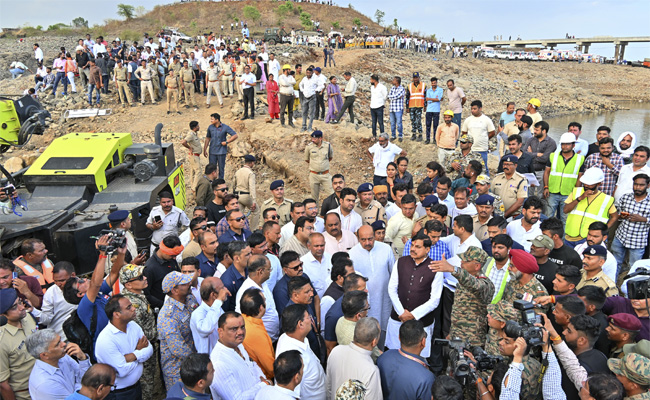
Jabalpur (PTI): Army divers and disaster response teams on Saturday expanded their search at Bargi Dam in Madhya Pradesh to locate a man and three children still missing after the cruise boat tragedy that claimed nine lives two days ago, officials said.
With 28 of the 41 identified passengers onboard the ill-fated cruise boat rescued safely, police are preparing to register an FIR in connection with the accident that occurred at the reservoir in Jabalpur district on Thursday evening, they said.
The search radius has been expanded to 5 km in the backwaters of the Bargi Dam, located downstream of the Narmada River, area sub-divisional officer of police (SDOP) Anjul Ayank Mishra told PTI.
Nine people drowned in the incident, while 28 were rescued, and efforts are ongoing to trace the missing persons, he said.
ALSO READ: Alleging unauthorised sorting of postal ballot covers, TMC files complaint with EC
According to the police, more than 200 rescuers, including around 20 Army divers airlifted from Agra, began the search operation at 5 am on Saturday to trace Kamraj, an employee of the Ordnance Factory in Khamaria, his son Tamil (5), Vijay Soni (6) and Mayuram (5).
Mishra said that an inquest case has been registered and the post-mortem of nine deceased persons has been completed.
"Our priority is to search for the missing persons. We will soon register an FIR," he said.
Investigators have said that CCTV footage near the boarding point showed 43 people heading towards the ill-fated boat, and the names of 41 persons, who boarded the vessel, have been ascertained so far.
Collector Raghvendra Singh confirmed that a search is underway for four missing persons.
The rescue operation, being carried out by the National Disaster Response Force (NDRF), State Disaster Response Force (SDRF) and local divers, was briefly affected around 9 am due to strong winds.
The state government on Friday ordered a probe into the incident and dismissed three crew members after survivors alleged negligence and safety lapses, including failure to provide life jackets.
The government also banned the operation of similar vessels in the state.
The boat, operated by the state tourism department, sank during a sudden storm around 6 pm on Thursday, and the wreckage was retrieved from the dam water on Friday, after the rescuers confirmed that there were no more bodies inside.
Eyewitnesses have said that strong winds made the water choppy, prompting passengers to raise an alarm and ask the crew to steer the vessel towards the riverbank.
A survivor alleged negligence by the crew and described a last-minute scramble for life jackets.