Western Nations and human rights groups accuse China of massive Uyghur crimes
United Nations, May 13: Human rights groups and Western nations led by the United States, Britain and Germany accused China of massive crimes against the Uyghur minority and demanded unimpeded access for U.N. experts at a virtual meeting on Wednesday denounced by China as politically motivated and based on lies.
China's U.N. Mission sent notes to many of the U.N.'s 193 member nations last week urging them not to participate in the anti-China event.
And China's U.N. Ambassador Zhang Jun sent text messages to the 15 Western co-sponsors of the meeting expressing shock at their support, urging them to think twice and withdraw it.
He warned that if they don't, it will be harmful to our relationship and cooperation.
At the meeting, Britain's U.N. Ambassador Barbara Woodward called the situation in Xinjiang one of the worst human rights crises of our time.
The evidence, from a growing number of credible sources including satellite imagery, survivor testimony and publicly available Chinese Government documents is of grave concern, said Woodward, who previously was the UK ambassador in China.
The evidence points to a program of repression of specific ethnic groups. Expressions of religion have been criminalized and Uyghur language and culture are discriminated against systematically and at scale.
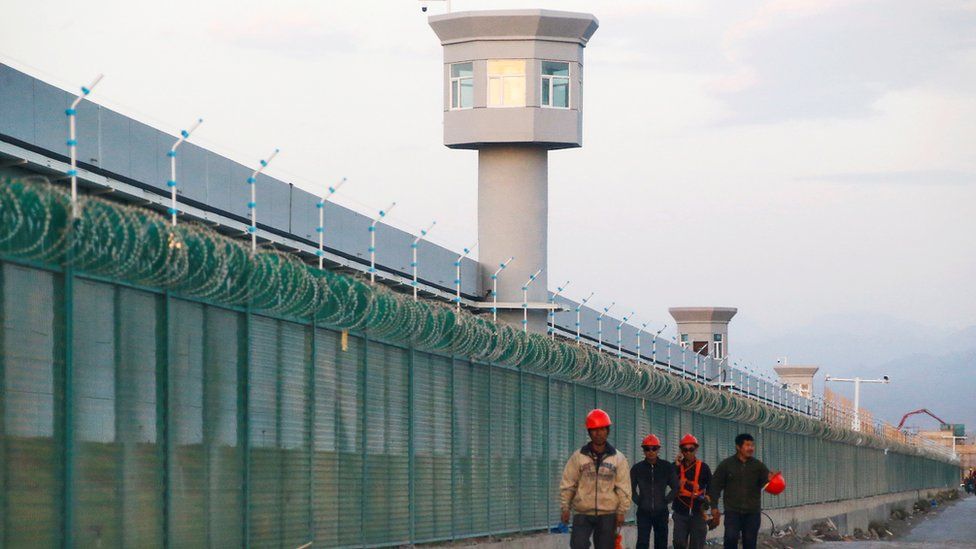
In recent years, an estimated 1 million people or more have been confined in camps in Xinjiang, according to foreign governments and researchers. Most are Uyghurs, a largely Muslim ethnic group.
Authorities have been accused of imposing forced labor, systematic forced birth control and torture.
The Chinese government has flatly rejected the allegations. It has characterized the camps, which it says are now closed, as vocational training centers to teach Chinese language, job skills and the law in order to support economic development and combat extremism. China saw a wave of Xinjiang-related terrorist attacks through 2016.
Organizers said there were 152 participants in Wednesday's event, including 51 countries, and speaker after speaker called on China to end its abuses against the Uyghurs.
Germany's U.N. Ambassador Christoph Heusgen thanked all the co-sponsors who came together despite some massive Chinese threats.
He urged them to remain committed until the Uyghurs can live again in freedom, until they are no longer detained, no longer victims of forced labor and other human rights abuses, until they can exercise freedom of religion and freedom of speech.
Heusgen appealed to China to respect the Universal Declaration of Human Rights and tear down the detention camps.
If you have nothing to hide, why don't you finally grant unimpeded access to the (U.N.) High Commissioner for Human Rights? he asked.
U.S. Ambassador Linda Thomas-Greenfield said the Biden administration will keep standing up and speaking out until China's government stops its crime against humanity and the genocide of Uyghurs and other minorities in Xinjiang.
And we will keep working in concert with our allies and our partners until China's government respects the universal human rights of all its people, she said.
Uyghur human rights activist Jewher Ilhan spoke about her father Ilham Tohti, a noted economist who has called for autonomy for Xinjiang and is serving a life sentence on separatist-related charges. We don't even know if he's alive, she said.
Hundreds of thousands, even millions of Uyghurs are still being targeted, said Ilhan, who now lives in the United States.
The fate of my father and my community is in the world's hands now. We all need to join together and take action to stop this humanitarian crisis from continuing.
A Chinese diplomat countered, saying: I make it clear that China is here to tell the truth, it doesn't mean in any way we recognize this event.
He then showed a short video and said: The truth is, its not about human rights in Xinjiang, it's about using Xinjiang as a political tool to contain China. The U.S. and some of its allies make a presumption of guilt, and then fabricate so-called evidence.
Human Rights Watch Executive Director Kenneth Roth, whose organization recently concluded that China's atrocities amount to the crime against humanity of persecution, said the challenge is what to do about it.
Beijing clearly calculates that through censorship, propaganda, intimidation, and threats it can somehow avoid accountability, he said, pointing many actions including its extraordinary lengths of disinviting people from Wednesday's event, its endless charade that has prevented Human Rights Commissioner Michelle Bachelet from visiting Xinjiang, and U.N. inaction.
Roth expressed disappointment that Bachelet, who was invited to the event, turned down the invitation.
I'm sure she's busy. We all are. But I have a similar global mandate to defend human rights and I couldn't think of anything more important to do than to join you here today. I certainly wasn't deterred by the commute -- all the way to my laptop, he said.
The good news is that the tide seems to be turning, he said, pointing to more countries condemning China's crimes. But he said more must be done.
Roth called for a U.N. Human Rights Council resolution on Xinjiang, for moving discussions to the U.N. Security Council, for seeking avenues to justice including the use of universal jurisdiction, and for considering creation of an international investigative mechanism similar to those for Syria and Myanmar.
Let the Truth be known. If you read VB and like VB, please be a VB Supporter and Help us deliver the Truth to one and all.
Fire at mass marriage event attended by Dy CM Shivakumar, nobody affected
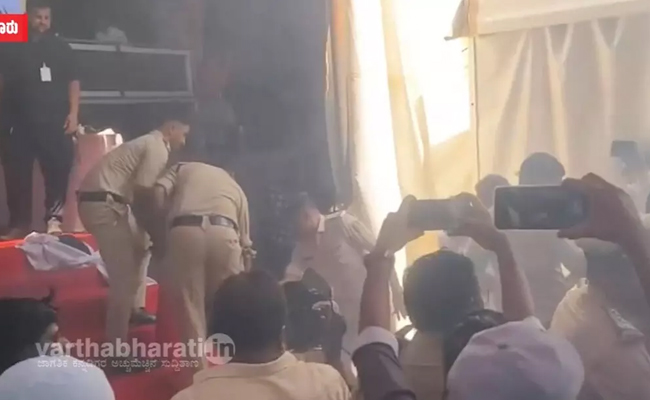
Raichur (Karnataka) (PTI): Fire broke out near the stage of the mass marriage event that was attended by Deputy Chief Minister D K Shivakumar here, police said on Sunday.
Nobody was affected, and the fire was immediately put out, they said.
The fire was noticed shortly after Shivakumar and other dignitaries left the stage, and Forest Minister Eshwaran Khandre was speaking to the media at the venue in Sindhanur, officials said.
According to officials, wires, speakers, and cloth materials near the stage caught fire, allegedly due to a short circuit.
Police personnel present at the spot quickly swung into action and extinguished the fire.
The programme was halted for some time and resumed later, they said.
Several ministers, legislators and political leaders from the region, and actor Sudeep had attended the event.