White Smoke signals new Pope elected after Francis' death

Vatican City: The Roman Catholic Church has a new pope. White smoke billowed from the chimney of the Sistine Chapel on Thursday evening, accompanied by the ringing of St. Peter’s Basilica’s bells, signalling that the College of Cardinals has elected a successor to Pope Francis.
The announcement came on the first full day of voting by the 133 cardinal electors, who began their conclave behind the Vatican’s ancient walls on Wednesday. At around 6:08 p.m. local time (1608 GMT), the much-anticipated white smoke confirmed that the cardinals had reached the required two-thirds majority needed to select the new pontiff.
A wave of joy and applause swept through the crowd gathered in St. Peter’s Square as they witnessed the historic moment. Many had been waiting for hours, watching the chimney for signs of a decision.
The identity of the newly elected pope and the name he has chosen will be officially announced from the central balcony of St. Peter’s Basilica shortly. He is also expected to deliver his first address and blessing to the faithful assembled in the square.
The conclave was called following the death of Pope Francis on April 21. Francis, who led the Church’s 1.4 billion followers for 12 years, had left behind a mixed but impactful legacy. Known for his push for reform, he encouraged dialogue on complex issues like the role of women in the Church and greater acceptance of LGBT Catholics. His papacy was marked by a vision to modernise the Church while maintaining its core spiritual values.
Though there were no clear favourites ahead of the vote, speculation centred on Italian Cardinal Pietro Parolin, who served as the Vatican’s Secretary of State under Francis, and Filipino Cardinal Luis Antonio Tagle. Others considered possible candidates included French Archbishop Jean-Marc Aveline, Hungarian Cardinal Peter Erdo, American Cardinal Robert Prevost, Italian Archbishop Pierbattista Pizzaballa, and Filipino Bishop Pablo Virgilio David.
The decision of the cardinals, who had been cut off from the outside world and sworn to secrecy during the conclave, reflects the Church’s next direction. They were tasked with choosing between continuing the progressive path laid by Francis or shifting back towards a more conservative leadership.
During the voting process, which started with an inconclusive round on Wednesday evening and continued through two more rounds on Thursday morning, the cardinals remained secluded. Their only connection with the outside world was through the colour of the smoke signals — black for no decision and white when a new pope is elected.
Traditionally, it takes an average of around seven ballots to elect a pope. Pope Francis was chosen after just five rounds in 2013. The precise number of rounds taken this time has not been disclosed yet.
The world now awaits the formal appearance of the new pope, who will step out to greet the global Catholic community and outline the tone of his papacy.
Let the Truth be known. If you read VB and like VB, please be a VB Supporter and Help us deliver the Truth to one and all.
Kerala polls: ‘People rejected 10 years of misrule’, says AICC gen secy
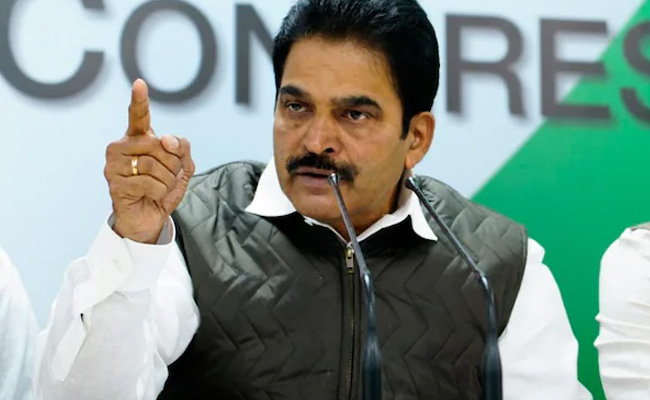
Thiruvananthapuram (PTI): AICC General Secretary K C Venugopal on Monday said the Congress-led UDF’s sweeping victory in the Kerala Assembly polls was a clear verdict against the “arrogance”, corruption, and nepotism of the CPI(M)-led LDF government headed by CM Pinarayi Vijayan.
Addressing a press conference as counting of votes for all 140 Assembly constituencies neared completion, Venugopal said the outcome reflected public anger against what he termed “10 years of misrule” by the Left government.
He claimed that Vijayan’s victory in his home constituency, Dharmadam, was “only technical”, alleging that the CM trailed the UDF candidate in the initial rounds of counting and failed to secure a majority in his own village.
“He just escaped. He suffered a setback even in his home turf. He was the only person who did not realise the people’s mood in this election,” Venugopal said.
Alleging that the CPI(M) and the LDF had resorted to “communal and opportunistic politics”, he further claimed that the ruling front had entered into a “secret understanding” with the BJP in a bid to retain power for a third consecutive term.
He said that when a government driven by power and arrogance attempts to align with anyone to stay in office, even its own cadre turns against it.
Referring to the results, Venugopal said that while the UDF expected rebel CPI(M) leaders, including K Kunhikrishnan in Payyannur, to impact the vote share, their victories came as a surprise.
Describing the UDF’s performance as a “historic victory”, he attributed it to coordinated teamwork, grassroots mobilisation, and the dedication of party workers, adding that the alliance accepted the mandate “with humility”.
Venugopal also credited Rahul Gandhi’s campaign guarantees, calling them a “trump card” that helped voters focus on real issues and reject what he described as the LDF’s “false narratives”.
He claimed that the Congress witnessed one of its lowest levels of rebellion in this election, which contributed to the alliance’s strong performance.
The senior Congress leader further alleged that the BJP managed to win two seats with the help of the CPI(M), and asserted that forces attempting to divide society on communal lines should “learn a lesson” from Kerala’s verdict.
“This is the real Kerala story,” he said.
On the question of the next Chief Minister, Venugopal said the party leadership would decide at the earliest after due consultations.
The counting of votes began on Monday morning for all 140 Assembly constituencies in Kerala, where the Congress-led UDF secured a decisive majority, defeating the CPI(M)-led LDF, which was seeking an unprecedented third consecutive term in office.
Congress MP Rahul Gandhi (@RahulGandhi) posts, "Thank you to my brothers and sisters in Keralam for a truly decisive mandate. Congratulations to every UDF leader and worker for a hard-fought, well-run campaign. As I said before, Keralam has the talent, Keralam has the potential… pic.twitter.com/6T4IZbEmp4
— Press Trust of India (@PTI_News) May 4, 2026