Who is Prof. Mohammad Marandi busting Western Media narratives amid war
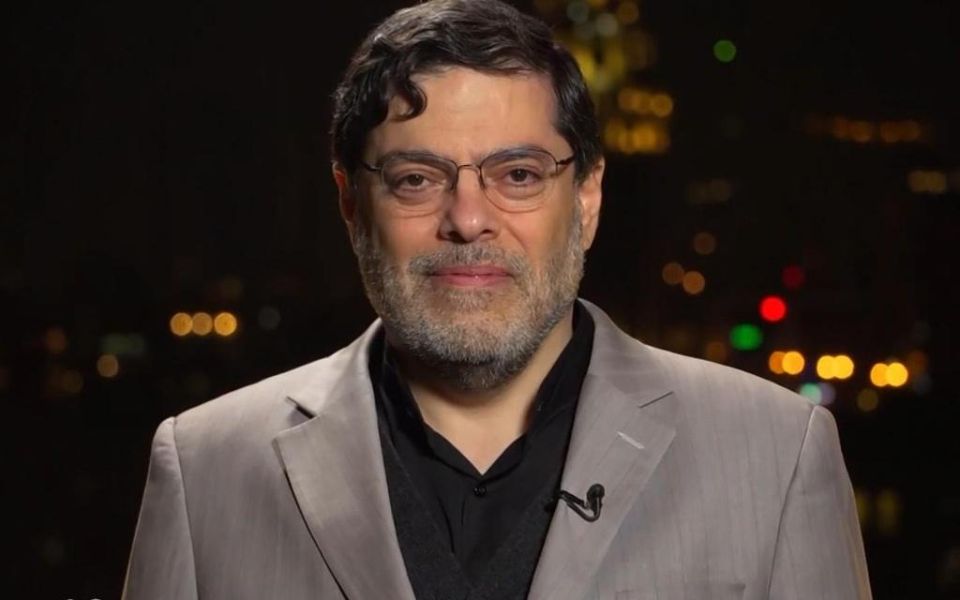
Mohammad Marandi is an Iranian-American academic, political commentator and media figure who has become widely visible during the ongoing tensions involving the United States, Iran and Israel.
He was born in the United States in 1966 but moved to Iran as a teenager. During the Iran-Iraq War, he volunteered to fight and survived chemical attacks. Later, he completed his higher education in the UK, earning a PhD from the University of Birmingham.
Today, he serves as a professor at the University of Tehran, where he specialises in English literature and Orientalism. Over the years, he has also been closely linked to Iran’s political establishment and has worked as an adviser to Iran’s nuclear negotiation team.
Marandi is a familiar face on global television. He regularly appears on networks like BBC, CNN, Al Jazeera and others, where he speaks on Iran, Middle East politics and global power dynamics.
His role in global media debates
Here’s the thing. Marandi is not just an academic sitting in a university. He is part of a wider information battle.
He has been described by some Western and Iran-based outlets as one of the strongest English-language defenders of the Iranian government narrative.
Because he speaks fluent English and understands Western media language, he often becomes Iran’s most recognisable voice in international debates. In many cases, he appears in live discussions where Western journalists question Iran’s actions.
What this really means is that he operates at the intersection of academia, politics and media — a space where narratives are shaped in real time.
How he challenges Western media narratives
During the US–Iran–Israel tensions, Marandi has built a reputation for directly pushing back against what he calls biased or selective reporting.
His approach usually follows a few patterns:
1. Questioning Western framing
He often argues that Western media presents conflicts in a one-sided way, especially when it comes to Israel and Iran. In debates, he highlights what he sees as double standards — for example, how civilian casualties or military actions are reported differently depending on which side is involved.
2. Reversing the narrative
Instead of responding defensively, Marandi frequently flips the argument. He shifts focus toward US foreign policy, sanctions, or Israel’s military actions, arguing that these are underreported or justified too easily in Western coverage.
3. Using live TV confrontations
There have been instances where he has openly challenged journalists during live interviews, rejecting their assumptions or calling out what he describes as misleading questions. These moments often go viral on social media and are used to amplify his message.
4. Positioning Iran as reacting, not initiating
A key part of his messaging is that Iran is responding to pressure, aggression or provocation, rather than acting as the primary aggressor.
Why he is effective in this space
Marandi’s influence comes from a mix of factors:
He understands Western media language and debate formats
He appears calm and assertive in high-pressure interviews
He speaks directly to international audiences, not just Iranian viewers
He simplifies complex geopolitical arguments into clear talking points
This combination makes him a strong presence in televised debates, especially when discussions turn confrontational.
Criticism and controversy
At the same time, his role is heavily debated.
Some critics describe him as a spokesperson or “mouthpiece” for the Iranian government, arguing that his arguments align closely with official state positions.
Others say his appearances are part of a broader information strategy, where countries use academics and analysts to influence global opinion — especially during conflicts.
This is not unique to Iran. Many countries, including the US and its allies, rely on experts, think-tank analysts and former officials to shape narratives in global media.
The bigger picture: Information war alongside military conflict
The ongoing tensions between the US, Iran and Israel are not just about missiles, strikes or military moves. There is also a parallel battle over perception.
Figures like Marandi play a role in that battle.
On one side, Western media outlets frame events through their own political and strategic lens. On the other side, voices like Marandi challenge that framing and present Iran’s version of events to the world.
What this really means is that modern conflicts are fought on two fronts:
On the ground, through military action
On screens, through narratives, interviews and public opinion
And in that second battlefield, Prof. Mohammad Marandi has become one of the most visible and active voices representing Iran’s side.
Let the Truth be known. If you read VB and like VB, please be a VB Supporter and Help us deliver the Truth to one and all.
Man arrested with Rs 2.54-crore heroin in Mumbai

Mumbai (PTI): Police have arrested a man and seized over 500 grams of heroin worth Rs 2.54 crore in the illicit market from him in Mumbai, officials said on Friday.
The police's Anti-Narcotics Cell (ANC) made the drug seizure in Santacruz in the western suburbs. The operation was conducted by the Kandivali unit of the ANC on Thursday as part of a special crackdown against drug trafficking in the area, they said.
Acting on specific inputs, an ANC team conducted a raid in Santacruz (East) and intercepted a man. During a search, the team recovered 508 grams of high-grade heroin from his possession, an official said.
The seized contraband, a highly addictive, opioid drug derived from morphine, is estimated to be worth Rs 2.54 crore in the international market, he informed.
Following the seizure, a case was registered against the man under relevant sections of the Narcotic Drugs and Psychotropic Substances (NDPS) Act, 1985, and he was formally placed under arrest in the early hours of Friday.
The police are currently investigating the source of the drug and trying to identify the intended recipients of the consignment, he said.