Who is Zohran Mamdani New York City’s new Mayor? Everything you need to know
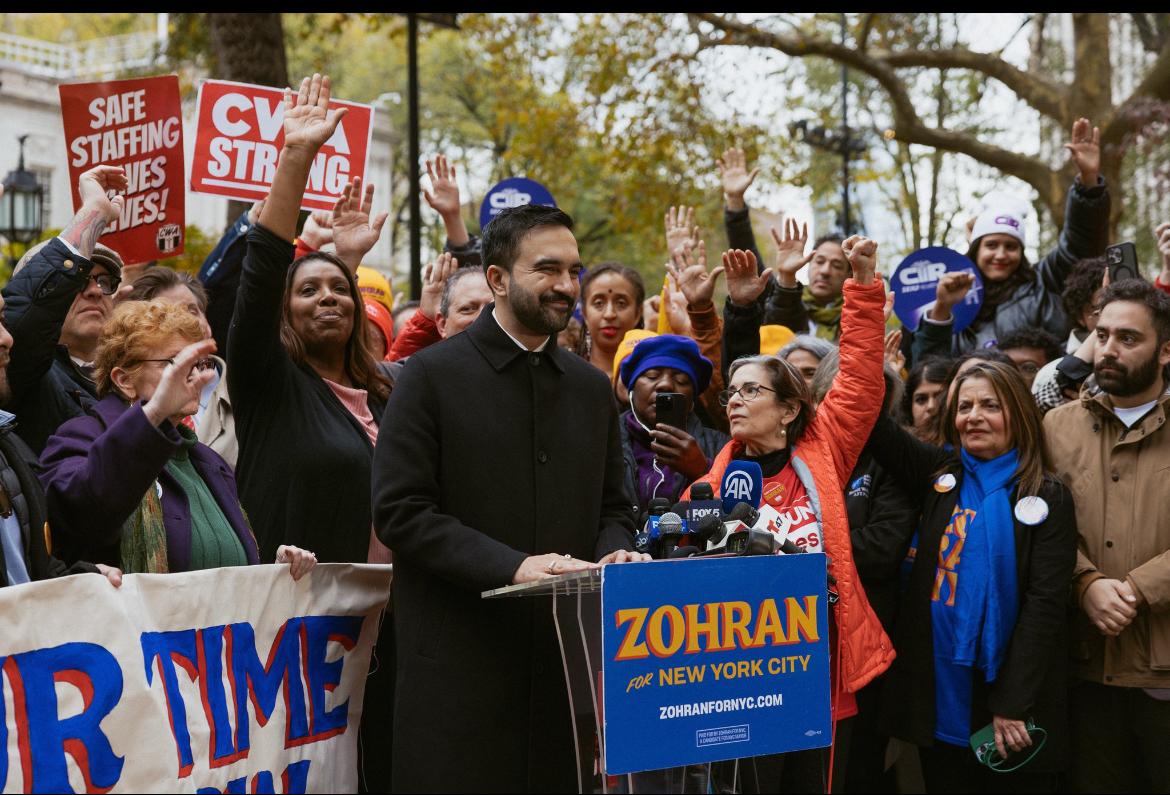
New York City – With the official results now in, Zohran Kwame Mamdani has been declared the new mayor of New York City, marking a historic milestone for the city and a dramatic turn in its political landscape.
Early life and background
Mamdani was born on October 18, 1991, in Kampala, Uganda.His parents are academician Mahmood Mamdani and filmmaker Mira Nair. The family moved to South Africa for a period before settling in New York when Mamdani was about seven years old. He completed high school at The Bronx High School of Science and earned a Bachelor of Arts in Africana Studies from Bowdoin College. Before entering elected office, Mamdani worked as a housing-counselor helping low-income homeowners in Queens fight foreclosure and eviction.
Political career
Mamdani entered electoral politics in 2020, when he ran for and won the seat representing the 36th District in the New York State Assembly (covering Astoria, Ditmars-Steinway and Astoria Heights in Queens). He took office on January 1, 2021. In the Assembly, his focus has been on housing affordability, tenants’ rights, public transit and other progressive issues.
In 2025, he challenged for the mayoralty of New York City. He emerged victorious in the Democratic primary, defeating former Governor Andrew Cuomo. With the general election now concluded and results confirmed, he becomes the first person of South Asian origin and the first Muslim mayor of New York City.
Platform and priorities
During his campaign, Mamdani pledged to address the high cost of living in the city. Key policy promises included:
• Free bus transit (eliminating fares) and transit relief.
• Major expansion of affordable housing and rent-freeze or strong rent protections for stabilized units.
• Tax increases on very high earners and large corporations to fund expanded public services such as free childcare.
• A focus on public safety reform and building services rather than purely relying on policing.
What this really means is the city is now poised for an agenda that strongly emphasises economic justice, transit accessibility and housing reform.
Controversies and challenges
Mamdani’s meteoric rise has not been without scrutiny. Some of the key issues include:
• Critics pointed to his relatively short professional experience and questioned whether he has sufficient governance experience to manage a city the size of New York.
• He has faced allegations from Hindu-American organisations that he made “Hinduphobic” remarks. These groups say his past statements and temple visits raise questions about his inclusivity.
• During a Diwali outreach event, Mamdani took a public dig at Indian Prime Minister Narendra Modi, saying he was raised with a vision of pluralistic India and earlier referenced Modi as a “war criminal”.
• His national-scale clash with former President Donald Trump featured prominently in the race; Mamdani cast himself as a progressive immigrant leader prepared to counter Trump’s style and policies.
These controversies signal that his mayoralty will face both intense support and intense opposition.
Mamdani's victory is historic for several reasons: his immigrant background, his South Asian heritage, his identification with the democratic-socialist wing of the Democratic Party, and the scale of his policy ambitions. What this really means is the city will see bold campaigns on housing and transit, and national attention on how a progressive mayor navigates the complex machinery of New York City government and the interplay with state and federal authorities.
At the same time, his agenda will encounter institutional resistance from business interests, from state government, and from those who doubt his experience. Whether he can turn promises into delivery will define his tenure.
Let the Truth be known. If you read VB and like VB, please be a VB Supporter and Help us deliver the Truth to one and all.
Man jumps to death from 22nd floor of posh Noida society; depression suspected
Noida (PTI): A 37-year-old man allegedly died by suicide after jumping from the 22nd floor of a posh residential society in Sector 107 here, police said on Monday.
The incident took place on Sunday in Prateek Edifice Society under the jurisdiction of the Sector-39 police station. The deceased has been identified as Sajjal Mehrotra, a company director who lived in the society with his family.
"On Sunday afternoon, he jumped from the balcony of his flat on the 22nd floor," a police official said.
Family members and security guards rushed him to a nearby hospital, where doctors declared him dead, police said, adding that no suicide note has been found.
Prima facie, the deceased was suffering from depression, officials said, adding that other aspects of the case are being investigated.
The body has been sent for post-mortem and further legal formalities are underway.
Police said the man got married about 10 years ago and is survived by his wife and two children. No complaint has been received from the family in connection with the incident.
(Assistance for overcoming suicidal thoughts is available on the state’s health helpline 104, Tele-MANAS 14416.)