Widespread face mask use could prevent second COVID-19 wave: study
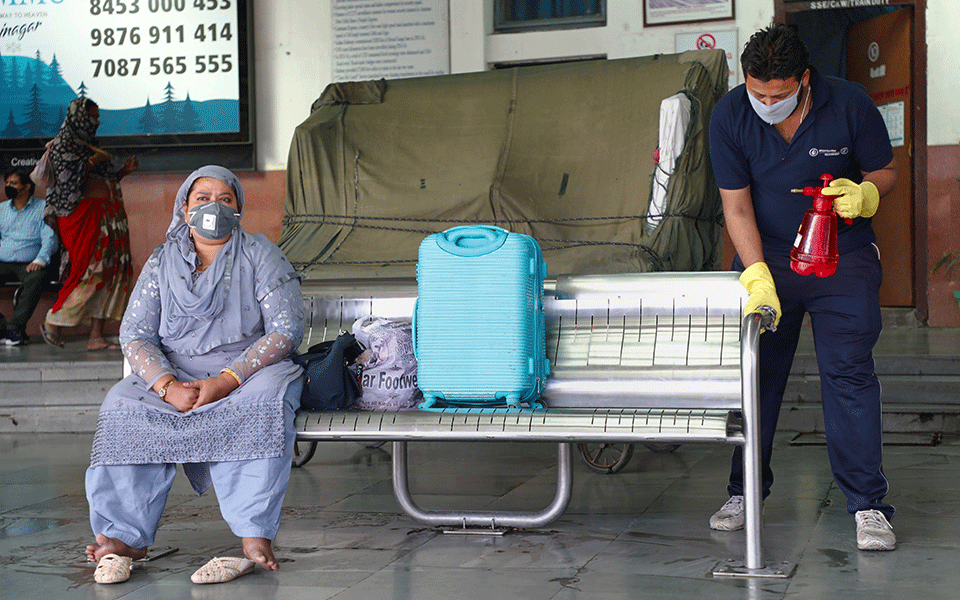
London: Population-wide use of face masks combined with lockdowns could prevent further waves of the novel coronavirus that causes COVID-19, according to a modelling study.
The findings, published in the journal Proceedings of the Royal Society A, suggest that lockdowns alone will not stop the resurgence of SARS-CoV-2.
The study also shows that even homemade masks with limited effectiveness can dramatically reduce transmission rates if worn by enough people, regardless of whether they show symptoms.
"Our analyses support the immediate and universal adoption of face masks by the public," said lead author Richard Stuttfrom from the University of Cambridge in the UK.
"If widespread face mask use by the public is combined with physical distancing and some lockdown, it may offer an acceptable way of managing the pandemic and re-opening economic activity long before there is a working vaccine," Stuttfrom said.
The researchers worked to link the dynamics of virus spread between individuals with population-level models, to assess different scenarios of facemask adoption combined with periods of lockdown.
The reproduction or 'R' number -- the number of people an infected individual passes the virus onto -- needs to stay below 1.0 for the pandemic to slow, they said.
The study found that if people wear masks whenever they are in public it is twice as effective at reducing 'R' than if masks are only worn after symptoms appear.
In all modelling scenarios, routine face mask use by 50 per cent or more of the population reduced COVID-19 spread to an R less than 1.0, flattening future disease waves and allowing less-stringent lockdowns, the researchers said.
Viral spread reduced further as more people adopted masks when in public, they said.
Hundred per cent mask adoption combined with on/off lockdowns prevented any further disease resurgence for the 18 months required for a possible vaccine, according to the study.
The models suggest that a policy of total face mask adoption can still prevent a second wave even if it isn't instigated until 120 days after an epidemic begins, the researchers said.
Let the Truth be known. If you read VB and like VB, please be a VB Supporter and Help us deliver the Truth to one and all.
UP Cong chief Ajay Rai hospitalised after fainting, stable
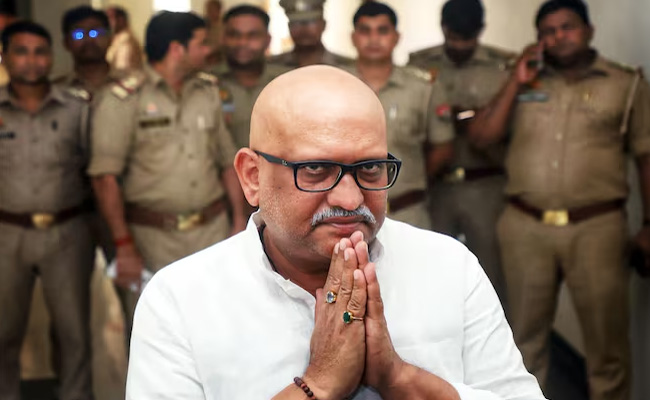
Lucknow (PTI): Uttar Pradesh Congress president Ajay Rai was hospitalised here after he fell unconscious due to low sodium levels, party leaders said on Saturday.
They said he was admitted to Medanta Hospital on Friday evening and is stable.
"Ajay Rai was admitted to Medanta Hospital in Lucknow at around 6 pm on Friday after he fell unconscious as his sodium levels had dropped. He fell unconscious at his residence in Lucknow. For the entire day, he was engaged in party programmes and had also gone to the airport," Uttar Pradesh Congress spokesperson Anshu Awasthi told PTI.
Congress in-charge of Uttar Pradesh Avinash Pande told PTI, "Now, he (Ajay Rai) is stable and I am also reaching Lucknow."
Medanta Hospital Director Dr Rakesh Kapoor told PTI that Rai collapsed at his home on Friday evening and was subsequently admitted to the hospital's emergency ward.
Medical examinations revealed that Rai was suffering from a sodium deficiency and elevated blood pressure. Doctors administered immediate treatment and he is doing significantly better now, Kapoor said.
A team of doctors is monitoring his health. Rai is conversing with others and his condition is stable, he added.
In a post on X late Friday night, Prime Minister Narendra Modi wished Rai a speedy recovery.
Rai hails from Varanasi and had contested the 2024 Lok Sabha elections against Modi from the parliamentary constituency. The Congress appointed him as the Uttar Pradesh unit chief in 2023.