Will welcome any Indian peace initiative for de-escalating tensions with US: Iran
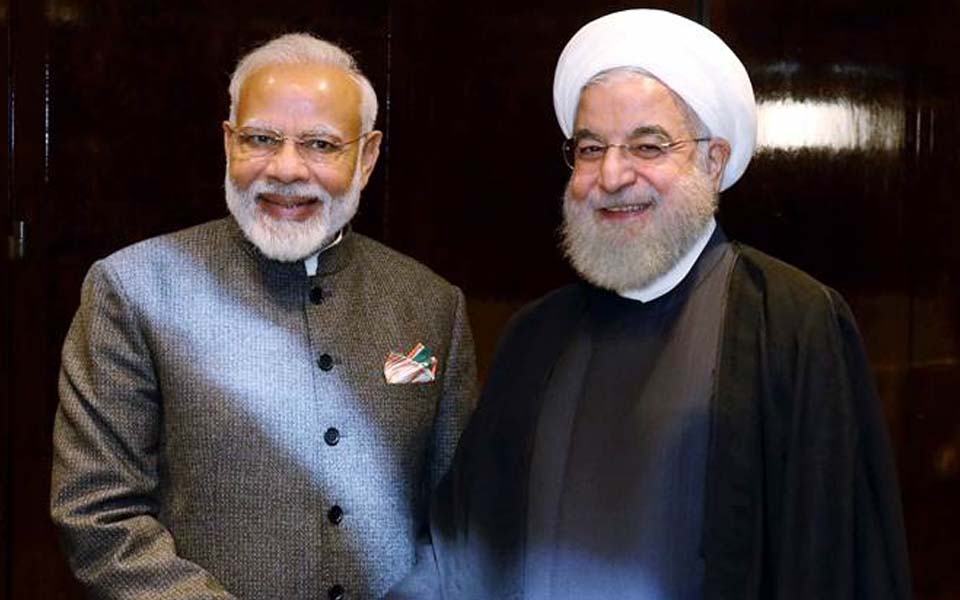
New Delhi, Jan 8: Iran will welcome any peace initiative by India to de-escalate tensions with the US following the killing of Iranian military commander Qasem Soleimani, the Iranian envoy here said on Wednesday while asserting that his country wants peace not war.
Iran's Ambassador to India Ali Chegeni also expressed the hope there would be no further escalation in hostilities between his country and the US.
The ambassador's comments came hours after Iran launched over a dozen ballistic missiles targeting at least two bases where US military and coalition forces' are stationed in Iraq. Tehran said it was a "slap in the face" of America.
"India usually plays a very good role in (maintaining) peace in the world. India belongs to this region. We welcome all initiatives from all countries, especially India as a good friend for us, to not allow escalation (of tensions)," Chegeni told reporters after a condolence meeting for Soleimani at the Iranian Embassy here.
"We are not for war, we are looking for peace and prosperity for everybody in this region. We welcome any Indian initiative or any project that can help peace and prosperity in this world," he said.
Maj Gen Soleimani, 62, the head of Iran''s elite al-Quds force and architect of its regional security apparatus, was killed when a US drone fired missiles into a convoy that was leaving the Baghdad International Airport early on Friday. The strike also killed the deputy chief of Iraq''s powerful Hashed al-Shaabi paramilitary force.
On the Iranian attack on US targets in Iraq, Chegeni said his country retaliated under its right to defend.
Amid spiralling US-Iran tensions over the killing of Soleimani, External Affairs Minister S Jaishankar on Sunday had a conversation with his Iranian counterpart Javad Zarif and US Secretary of State Mike Pompeo, voicing India's concerns over the escalation of tensions.
India has reached out to several stakeholders in the region over the security situation prevailing in the Middle East.
Jaishankar has also separately spoken with Omani Foreign Minister Yusuf Alawi, UAE Foreign Minister Sheikh Abdullah bin Zayed Al Nahyan, as well his Jordanian and Qatari counterparts Ayman Safadi and Mohammed bin Abdulrahman Al Thani respectively, on the tense situation in the region.
Noting that India is a "good friend", Chegeni said, "My minister (Javad Zarif) talked to Dr Jaishankar, they had a very good discussion. Recently we had the joint economic commission in Tehran...We see a very good future for the relationship. We have no problem with India."
He said Iran and India can jointly work for peace in the world.
Asked if Indian officials have reached out to the Embassy with a condolence message, the Iranian envoy said the embassy had opened a condolence book for two days and he expects Indian officials to come but it is "up to the Indian side".
"Usually we have good relations and sympathy between the two countries," he said.
The Iran Embassy here has been seeing a steady stream of envoys coming and expressing condolences on the death of Soliemani.
Concerns have mounted across the globe over fast-deteriorating diplomatic ties between the US and Iran, and the spiralling tensions in the Gulf after Soleiman was killed.
Soleimani's killing was the most dramatic escalation yet in spiralling tensions between Iran and the US.
Talking about the US drone strike that killed Soleimani, Chegeni said, "He was in a third country. So this is very important for the world to not allow such an inhuman, illegal act which is against international rights."
"He (Soleimani) was the one who removed the threat of ISIS from the world. Why you should kill him. That means you are supporting terrorists. If Gen Soleimani didn't act against ISIS, what would have happened to India, to Europe, and to all of the world because ISIS was really anti-human," he said.
The world owes a debt to "anti-terrorist hero" Soleimani, he said.
"That is why my country today officially retaliated based on the legitimate rights we have....We are not for war. We are not for escalation, but defending is our right," Chegeni said.
"Everyone has the right to defence, even animals and trees...," he asserted.
"This is not revenge, this was the right of our people. All the Iranian people asked for retaliation, early morning at the same time our national hero was attacked... we attacked the military bases," he said.
Let the Truth be known. If you read VB and like VB, please be a VB Supporter and Help us deliver the Truth to one and all.
Mamata visits Bhabanipur EVM strong room, warns against counting irregularities
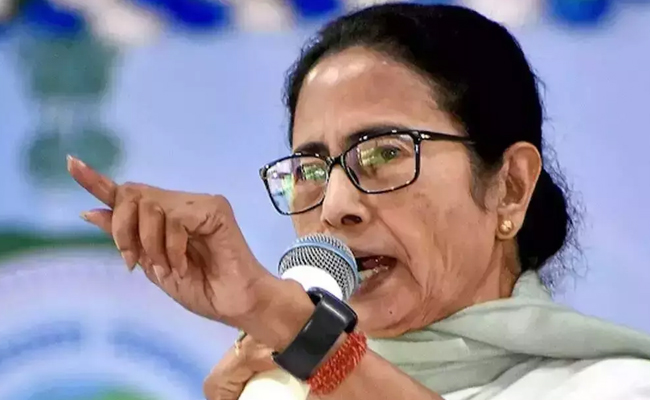
Kolkata (PTI): West Bengal Chief Minister and TMC supremo Mamata Banerjee early Friday warned against any attempt to tamper with the counting process, hours after she visited an EVM strong room in Bhabanipur, alleging possible malpractice.
Banerjee, who emerged around 12:07 am after spending nearly four hours at the counting centre for her Bhabanipur constituency housed in Sakhawat Memorial School in south Kolkata, said only one person would be allowed inside the designated counting area.
"Either the candidate or one agent can stay upstairs. I have also suggested installation of a CCTV camera for the media," she told reporters.
Stressing the need for transparency, she said, "It is essential to maintain transparency. People’s votes must be protected. I rushed here after receiving complaints. The central forces initially did not allow me to enter."
Sounding a stern note ahead of the May 4 counting, she added, "If there is any plan to tamper with the counting process, it will not be tolerated."
On Thursday evening, Banerjee had reached the Bhabanipur Assembly segment counting centre, which houses the strong room for EVMs used in the April 29 polling, citing suspicion of tampering with the machines.
She entered the premises along with her election agent and remained inside for hours, even as Kolkata Mayor and TMC candidate from the Kolkata Port segment Firhad Hakim reached the spot but could not meet her.
"I reached here upon learning that the chief minister has arrived. But I couldn’t meet her since she was already inside the premises, exercising her right as a candidate to visit strong rooms. I wasn’t allowed there. I will not be able to confirm what exactly is transpiring inside," Hakim said.
The development coincided with protests by TMC candidates Kunal Ghosh and Shashi Panja outside the Khudiram Anushilan Kendra in north Kolkata, where they staged a sit-in alleging irregularities and possible tampering of EVMs stored in strong rooms, leading to face-offs between TMC and BJP supporters.
Earlier in a video message, Banerjee had urged party leaders, workers and polling agents to maintain a 24-hour vigil on EVM strong rooms, alleging that the BJP could attempt to tamper with the machines before counting begins.
Her remarks come amid heightened political tension in the state following a fiercely contested Assembly election, with parties closely monitoring arrangements and raising concerns over transparency.