World records 2nd-warmest April; Global temperature remains 1.5 deg C above pre-industrial levels
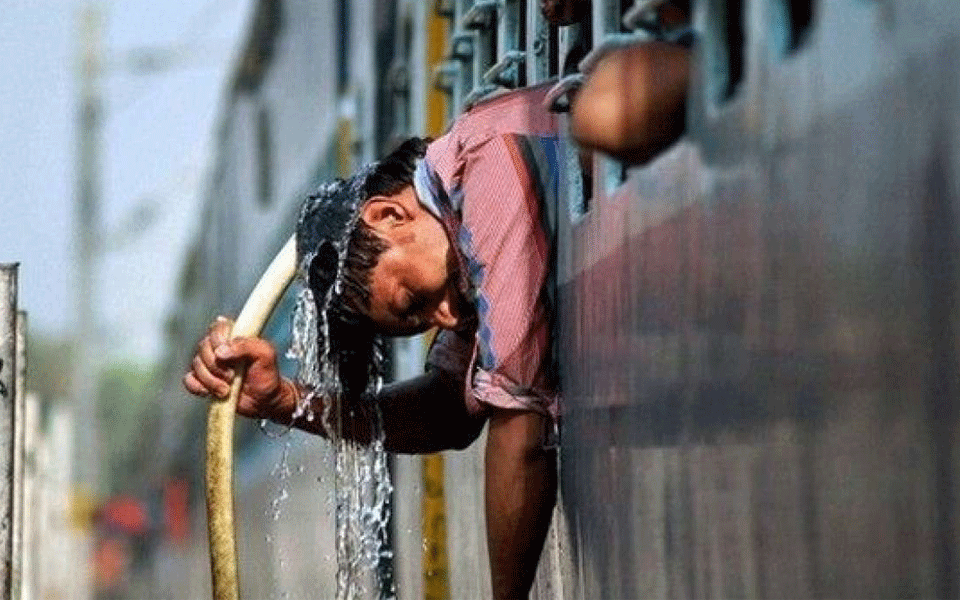
New Delhi (PTI): Last month was the second-warmest April globally, with the past 12 months being 1.58 degrees Celsius warmer than at the start of the industrial revolution, according to European climate agency Copernicus.
The agency said April's global average surface air temperature of 14.96 degrees Celsius was 0.60 degree Celsius above the 1991–2020 average for the month.
April 2025 was 0.07 degree Celsius cooler than April 2024 and 0.07 degree Celsius warmer than the third-warmest April recorded in 2016, it said.
"April 2025 was 1.51 degrees Celsius above the estimated 1850-1900 average used to define the pre-industrial level. It was the 21st month in the last 22 months for which the global-average surface air temperature was more than 1.5 degrees Celsius above the pre-industrial level," Copernicus said in a statement.
The 12-month period from May 2024 to April 2025 was 0.70 degree Celsius above the 1991-2020 average and 1.58 degrees Celsius above the pre-industrial level, it said.
Samantha Burgess, Deputy Director of Copernicus Climate Change Service, said, "Globally, April 2025 was the second-hottest April on record, continuing the long sequence of months over 1.5 degrees Celsius above pre-industrial levels. Continuous climate monitoring is an essential tool for understanding and responding to the ongoing changes in our climate system."
Human activities, especially the burning of fossil fuels, have pumped large amounts of heat-trapping greenhouse gases into the atmosphere. This has raised the planet's temperature, altered the climate, and led to more frequent and severe floods, droughts, storms and other extreme weather events.
At the UN climate conference in Paris in 2015, countries pledged to limit the average global temperature rise to 1.5 degrees Celsius compared to pre-industrial levels to avoid the worst impacts of climate change.
The year 2024 was the first calendar year when the global average temperature was 1.5 degrees Celsius above the pre-industrial levels.
However, a permanent breach of the 1.5-degree Celsius limit refers to long-term warming over a 20 or 30-year period.
Scientists at Copernicus said the average sea surface temperature (SST) for April 2025 was 20.89 degrees Celsius, the second-highest value on record for the month.
SSTs remained unusually high in many ocean basins and seas. Among them, large areas in the northeast North Atlantic continued to show record-high SSTs for the month.
Most of the Mediterranean Sea was much warmer than average, but not as record-breaking as in March. The Arctic sea ice extent was 3 per cent below average, the sixth lowest monthly extent for April in the 47-year satellite record, following four months with record low monthly values for the time of year.
The Antarctic sea ice extent was 10 per cent below average, making it the 10th lowest on record for the month.
Let the Truth be known. If you read VB and like VB, please be a VB Supporter and Help us deliver the Truth to one and all.
Kerala polls: ‘People rejected 10 years of misrule’, says AICC gen secy
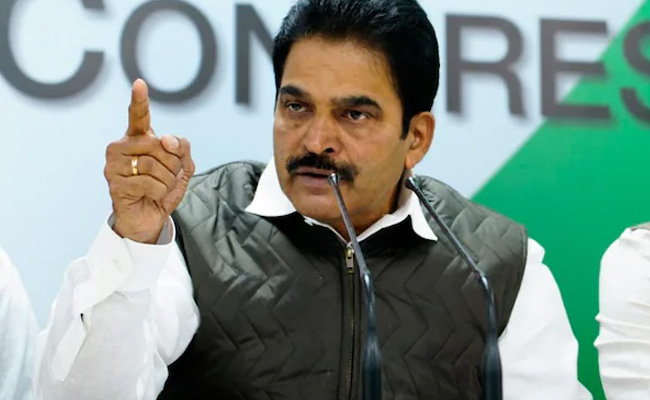
Thiruvananthapuram (PTI): AICC General Secretary K C Venugopal on Monday said the Congress-led UDF’s sweeping victory in the Kerala Assembly polls was a clear verdict against the “arrogance”, corruption, and nepotism of the CPI(M)-led LDF government headed by CM Pinarayi Vijayan.
Addressing a press conference as counting of votes for all 140 Assembly constituencies neared completion, Venugopal said the outcome reflected public anger against what he termed “10 years of misrule” by the Left government.
He claimed that Vijayan’s victory in his home constituency, Dharmadam, was “only technical”, alleging that the CM trailed the UDF candidate in the initial rounds of counting and failed to secure a majority in his own village.
“He just escaped. He suffered a setback even in his home turf. He was the only person who did not realise the people’s mood in this election,” Venugopal said.
Alleging that the CPI(M) and the LDF had resorted to “communal and opportunistic politics”, he further claimed that the ruling front had entered into a “secret understanding” with the BJP in a bid to retain power for a third consecutive term.
He said that when a government driven by power and arrogance attempts to align with anyone to stay in office, even its own cadre turns against it.
Referring to the results, Venugopal said that while the UDF expected rebel CPI(M) leaders, including K Kunhikrishnan in Payyannur, to impact the vote share, their victories came as a surprise.
Describing the UDF’s performance as a “historic victory”, he attributed it to coordinated teamwork, grassroots mobilisation, and the dedication of party workers, adding that the alliance accepted the mandate “with humility”.
Venugopal also credited Rahul Gandhi’s campaign guarantees, calling them a “trump card” that helped voters focus on real issues and reject what he described as the LDF’s “false narratives”.
He claimed that the Congress witnessed one of its lowest levels of rebellion in this election, which contributed to the alliance’s strong performance.
The senior Congress leader further alleged that the BJP managed to win two seats with the help of the CPI(M), and asserted that forces attempting to divide society on communal lines should “learn a lesson” from Kerala’s verdict.
“This is the real Kerala story,” he said.
On the question of the next Chief Minister, Venugopal said the party leadership would decide at the earliest after due consultations.
The counting of votes began on Monday morning for all 140 Assembly constituencies in Kerala, where the Congress-led UDF secured a decisive majority, defeating the CPI(M)-led LDF, which was seeking an unprecedented third consecutive term in office.
Congress MP Rahul Gandhi (@RahulGandhi) posts, "Thank you to my brothers and sisters in Keralam for a truly decisive mandate. Congratulations to every UDF leader and worker for a hard-fought, well-run campaign. As I said before, Keralam has the talent, Keralam has the potential… pic.twitter.com/6T4IZbEmp4
— Press Trust of India (@PTI_News) May 4, 2026