You have inspired us, will explore solar system together: NASA to ISRO
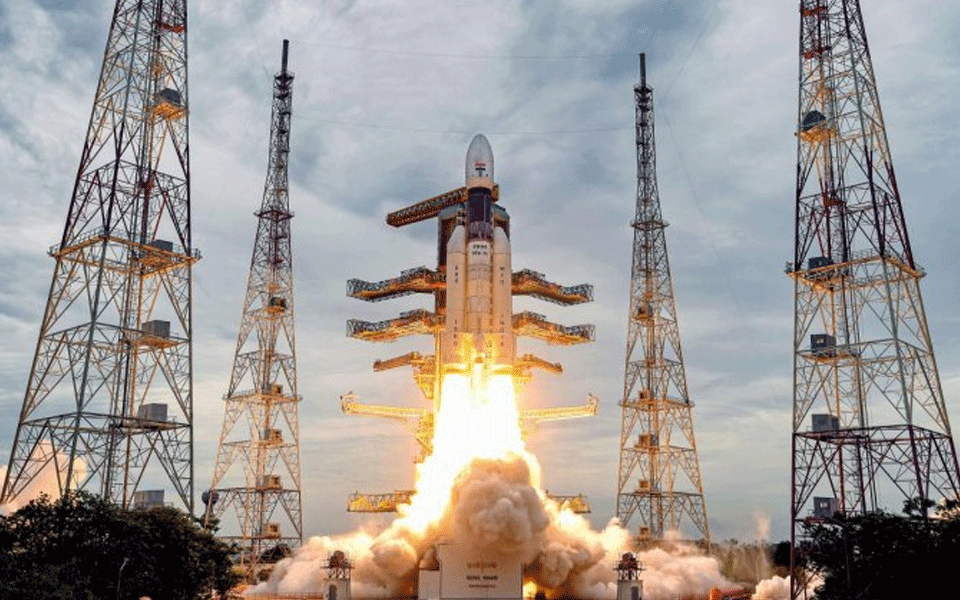
Washington: NASA has lauded India's historic Chandrayaan-2 mission, saying the Indian Space Research Organisation's attempt to soft-land Vikram module on the lunar South Pole has "inspired" it and the US space agency is looking forward to explore the solar system with its Indian counterpart.
The Indian Space Research Organisation's (ISRO) plan to soft-land Chandrayaan-2's Vikram module on the uncharted South Pole did not go as per script on Saturday, with the lander losing communication with ground stations during its final descent.
"Space is hard. We commend ISRO's attempt to land their Chandrayaan2 mission on the Moon's South Pole. You have inspired us with your journey and look forward to future opportunities to explore our solar system together," NASA said in a tweet on Saturday.
Former NASA astronaut Jerry Linenger told PTI on Saturday that the lessons learnt from India's "bold attempt" to soft land Chandrayaan-2's Vikram module on the lunar surface will help the country during its follow up missions.
"We should not be too discouraged. India was trying to do something very, very difficult. In fact, everything was going as planned as the lander came down," Linenger said.
The Chandrayaan-2 mission was launched on July 22 by a Geosynchronous Satellite Launch Vehicle Mark III (GSLV Mk III).
The spacecraft began its journey towards the moon, leaving the earth's orbit on August 14 after a crucial manoeuvre called Trans Lunar Insertion or TLI that was carried out by ISRO to place the spacecraft on "lunar transfer trajectory".
According to NASA, only half of the lunar missions involving landing on moon surface have succeeded in the last six decades. There have been a total of 109 lunar missions from 1958, out of which 61 were successful, says the US space agency's 'Moon Fact Sheet'.
As many as 46 missions involved landing on the lunar surface, including landing of the rover and sample return. Out of these, 21 were successful, while two were partially successful.
Sample return means mission that involves collecting and returning samples to earth. The first successful sample return mission was Apollo 12 of the US launched in November 1969.
From 1958 to 1979, only the US and the USSR (now Russia) launched Moon missions. In these 21 years, the two countries launched 90 missions. There was a lull in the decade that followed with no lunar missions from 1980-89.
Japan, the European Union, China, India and Israel have been late entrants. The first lunar soft landing and first pictures from the lunar surface came from Luna 9, launched by the USSR in January 1966.
The Apollo 11 mission was the landmark mission through which humans first stepped on the lunar surface. The three-crew mission was headed by Neil Armstrong.
From 2009-2019, ten missions have been launched of which five have been sent by China, three by the US, and one each by India and Israel.
Let the Truth be known. If you read VB and like VB, please be a VB Supporter and Help us deliver the Truth to one and all.
Centre spent Rs 76.13 lakh on print media ads for RSS centenary, reveals RTI
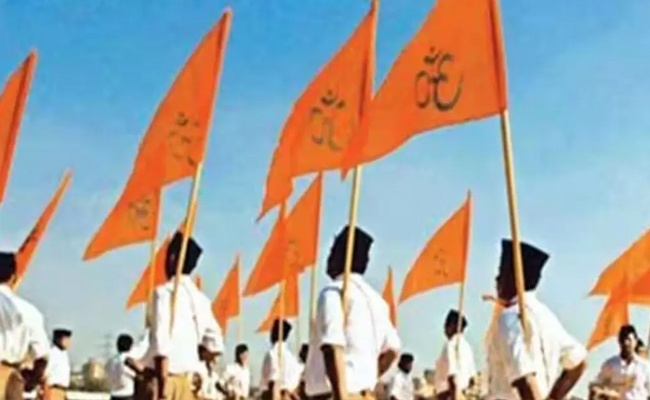
New Delhi: The Union Ministry of Culture allegedly spent Rs 76.13 lakh on print advertisements marking the 100-year celebrations of the Rashtriya Swayamsevak Sangh (RSS), according to a Right to Information (RTI) reply.
The information was sought by RTI activist Ajay Basudev Bose, who filed an application seeking details on expenditure incurred by the ministry for advertisements commemorating the RSS centenary.
Bose shared a picture of the reply from the ministry on his official ‘X’ handle.
“It is informed that an amount of Rs 76,13,129 has been spent on advertisement given in various print media by the Ministry of Culture on the occasion of the completion of 100 years of RSS,” the government’s reply stated.
RTI reply shows Min of Culture Govt of India spent a Whopping Rs 76L,13K,129 on Advertisement in Print Media on occasion of 100 yrs of #RSS
— AJAY Basudev Bose (@AjayBos93388306) April 16, 2026
When Everyone knows RSS is Not Registered & Does not Pay any Tax is it justified to spend Tax Payers Money on such Private event??@RSSorg… pic.twitter.com/dW4IUtdNCg
Bose questioned the expenditure in the post X, “when Everyone knows RSS is Not Registered & Does not Pay any Tax is it justified to spend Tax Payers Money on such Private event??”
Reacting to the development, Karnataka’s IT-BT and Panchayat Raj Minister Priyank Kharge also criticised the spending.
In a post on X, he asked why public money was being used for what he described as a “private ideological project.”
"Modi Sarkar spent Rs 76,13,129 of public money on newspaper advertisements to celebrate 100 years of the RSS. Why is Government spending taxpayers money on an unregistered, non-tax-paying organisation to celebrate their centenary?," he added.
Why is public money being used to serve a private ideological project?
— Priyank Kharge / ಪ್ರಿಯಾಂಕ್ ಖರ್ಗೆ (@PriyankKharge) April 16, 2026
Modi Sarkar spent ₹76,13,129 of public money on newspaper advertisements to celebrate 100 years of the RSS.
Why is Government spending taxpayers money on an unregistered, non-tax-paying organisation to… pic.twitter.com/EoZ6Pim3IM
According to reports, the RSS describes itself as a volunteer-based organisation and has stated that it functions as a body of individuals rather than a registered entity.
Founded by Keshav Baliram Hedgewar in 1925, the organisation is marking its centenary year beginning from Vijaydashami in 2025, with the milestone observed on October 2.