Zakir Naik apologises to Malaysians for race remarks; police bans his public activities
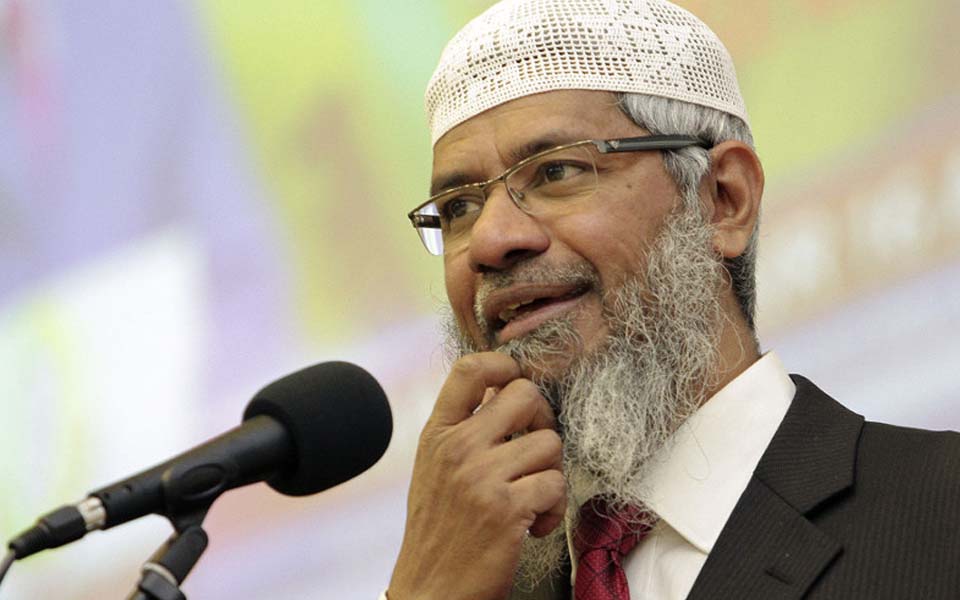
Kuala Lumpur, Aug 20: Zakir Naik on Tuesday apologised to Malaysians for making racist comments, after the radical Indian televangelist was grilled for 10 hours by police and banned him from any public activities in the multi-ethnic country.
The official Bernama news agency reported that Naik, wanted by Indian authorities since 2016 for alleged money laundering and inciting extremism through hate speeches, issued an apology for the hurt caused by his controversial remarks against Malaysian Hindus and Chinese during a talk on August 8.
Naik's apology came after he was questioned by police for a second time for allegedly making provocative remarks, in a session which lasted about 10 hours at the police headquarters.
The 53-year-old radical preacher was first questioned on Friday following the contentious remarks made in his speech against Hindus where he questioned their loyalty to the country and took a jibe at the Chinese community as "old guests" in Malaysia.
CID director Huzir Mohamed said Zakir arrived at the police headquarters at 3:15 pm on Monday, accompanied by his lawyer. He left at 1:30 am on Tuesday, the report said.
Mohamed said Naik was being probed under Section 504 of the Penal Code for intentional insult with intent to provoke a breach of the peace.
Police spokesman Asmawati Ahmad said on Tuesday that all public activities involving Naik are banned to "avoid any controversy and hostility, and the potential to cause a tense atmosphere" in the country.
After his controversial remarks, Naik was already banned from making public statements in the Malaysian states of Johor, Selangor, Penang, Kedah, Sarawak and Melaka.
In his apology, Naik said that it was never his intention to upset any individual or community and hoped Malaysians would not harbour ill feelings towards him.
"Even though I have clarified myself, I feel I owe an apology to everyone who feels hurt because of this misunderstanding.
"It is against the basic tenets of Islam, and I would like to convey my heartfelt apologies for this misunderstanding," he said in a statement.
Zakir maintained his claim that he was accused of causing racial discord in Malaysia and his detractors have been using selectively sentences taken out of context from his speeches and adding strange fabrications to them.
The Malaysian police questioned Naik, a day after Prime Minister Mohamad told the controversial televangelist that he is not allowed to participate in political activities in the country, which granted him permanent residency in 2016.
Mahathir on Sunday said it was "quite clear" that Naik wanted to participate in racial politics.
"He is stirring up racial feelings. The police will have to investigate whether it is causing tension; obviously, it is," he said.
Mahathir added that as a permanent resident, Naik was not allowed to participate in politics.
"You can preach (religiously). But he wasn't doing that," he said.
"He was talking about Chinese going back to China and Indians going back to India. I have never said such things. But he did. That is politics," the annoyed Malaysian prime minister said.
Malaysian police said they have received over 100 complaints from the public over remarks he made against Malaysian Indians and Chinese.
About 60 per cent of Malaysia's 32 million population are Muslims. Malaysia is also home to a sizable ethnic Indian and Chinese communities.
Let the Truth be known. If you read VB and like VB, please be a VB Supporter and Help us deliver the Truth to one and all.
Vijayanagara: One dead, 12 injured as trucks hits their vehicle from behind on NH 50
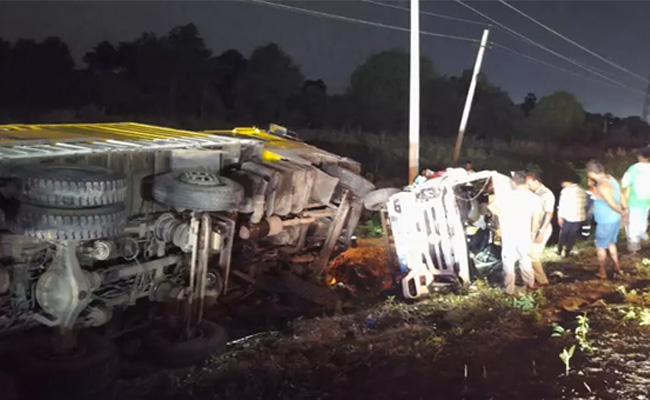
Vijayanagara: One man was killed and 12 others were injured after a truck hit vehicle they were traveling in on the National Highway 50 stretch on the outskirts of Koodligi in the district.
The accident victim, Madhu (27), is learned to have been an employee of Reliance Digital from Andhra Pradesh.
The vehicle was reportedly traveling from Bengaluru to Koodligi and the passengers are learned to have been seriously injured following the collision with the truck, which was found to have a Maharashtra registration.
Koodligi Deputy Superintendent of Police (DySP) Mallesh Dodmani and Circle Inspector Prahlad Channagiri arrived at the accident spot on being informed of the accident.
The police officers and locals rescued the injured passengers and got them shifted to the Koodligi Government Hospital. Some of the passengers were reportedly taken to the Ballari Trauma Care Centre for further treatment.
A case has been registered at the Koodligi Police Station and the officers are investigating the incident.