Zohran Mamdani’s old video criticising Narendra Modi resurfaces amid NYC Mayoral buzz
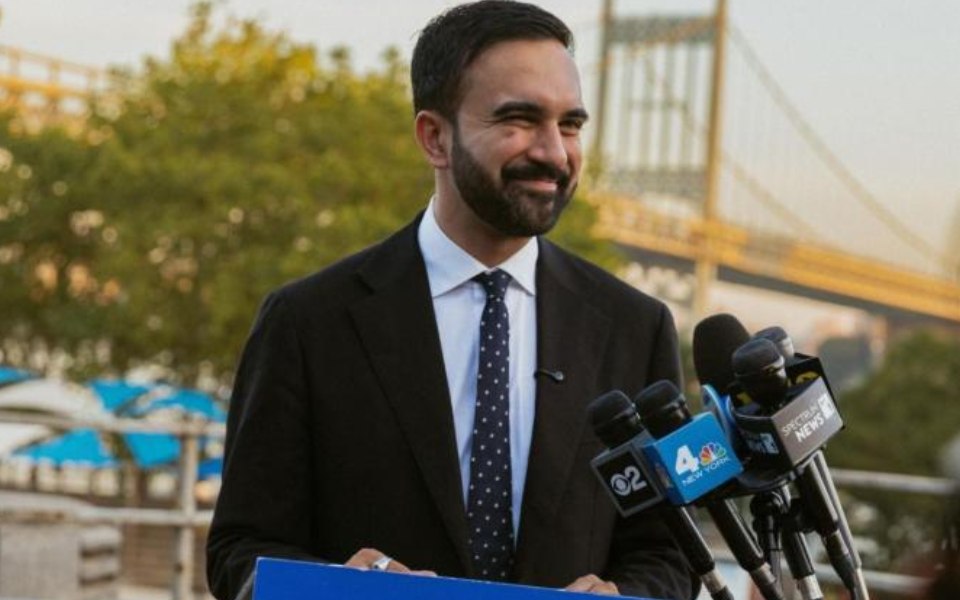
New York: As New York City Assemblyman Zohran Mamdani emerges as a prominent contender in the race for the city’s 2025 mayoral elections, a past video of his remarks on Indian Prime Minister Narendra Modi has gone viral on social media, drawing both criticism and support.
The resurfaced clip shows Mamdani speaking at a public event earlier this year, where he was asked whether he would consider sharing a platform with PM Modi, particularly in the context of Modi’s Madison Square Garden rally. Mamdani firmly declined the idea and offered a detailed explanation for his position, referencing the 2002 Gujarat riots and drawing a controversial comparison.
“This is someone who helped to orchestrate what was a mass slaughter of Muslims in Gujarat,” Mamdani said in the video, referring to Modi’s role as then Chief Minister of Gujarat. “To the extent that we don’t even believe there are Gujarati Muslims anymore... And this is someone we should view in the same manner that we do Benjamin Netanyahu — this is a war criminal,” he added.
The comments have triggered mixed reactions across social media platforms such as X and Instagram, especially among Indian-American communities and political observers. While some praised Mamdani for taking a principled stand, others criticised the remarks as inflammatory and disrespectful to a democratically elected world leader.
Mamdani, 33, is the son of Indian-born Ugandan academic Mahmood Mamdani and acclaimed filmmaker Mira Nair. He is currently a Democratic Socialist and has represented Astoria in the New York State Assembly since 2020. Born in Uganda, Mamdani moved to the United States at age seven and became a U.S. citizen in 2018.
A first-generation Gujarati Muslim by heritage, Mamdani has long been vocal about international human rights issues, including his advocacy for Palestinian rights during his time at Bowdoin College, where he co-founded the Students for Justice in Palestine chapter.
His recent rise in the Democratic mayoral primary, especially after the withdrawal of former New York Governor Andrew Cuomo, has placed him in the national spotlight. He secured the Democratic nomination, Mamdani is expected to face incumbent Mayor Eric Adams, running as an independent, and Republican Curtis Sliwa in the November general election.
The final results of the Democratic primary are expected later this year. Mamdani has not issued any fresh statement in response to the viral video as of yet.
Zohran Mamdani's view on Narendra Modi
— 𝑪𝒂𝒕𝒂𝒍𝒆𝒚𝒂🛡 (@catale7a) June 25, 2025
[New York City Mayoral Democratic Nominee] pic.twitter.com/Laa5VSwxJQ
"We should view Modi the way we view Netanyahu. This is a war criminal," says Indian-origin politician Zohran Mamdani in his campaign for New York Mayor pic.twitter.com/P6tzorEx5T
— Shashank Mattoo (@MattooShashank) June 7, 2025
Zohran Mamdani has burnt down Bhakats and Zionist by Calling Modi Butcher of Gujrat and Netanyahu a war Criminal .. Ladies and Gentlemen the Future Mayor of Newyork is already a Hero pic.twitter.com/Y2CxOw73z6
— Faisal Ranjha (@ranjha001) June 25, 2025
Zohran Mamdani's view on Narendra Modi.
— Dr Nimo Yadav 2.0 (@DrNimoYadav) June 25, 2025
Videsh mein danka baj rha hai
pic.twitter.com/oI2jf5wbHE
Zohran Mamdani, son of filmmaker Mira Nair, is an immigrant, socialist, and now NYC mayoral nominee. He once called Narendra Modi a “war criminal” over the 2002 Gujarat riots. He is a rare politician who doesn't mince words, locally or globally.#Emergency #Emergency1975 pic.twitter.com/GcNCV0kyL7
— Adv. Vijay Singh (@VijaySingh_law) June 25, 2025
Let the Truth be known. If you read VB and like VB, please be a VB Supporter and Help us deliver the Truth to one and all.
Two injuries, one DNF, a DQ as India end messy World Relays campaign
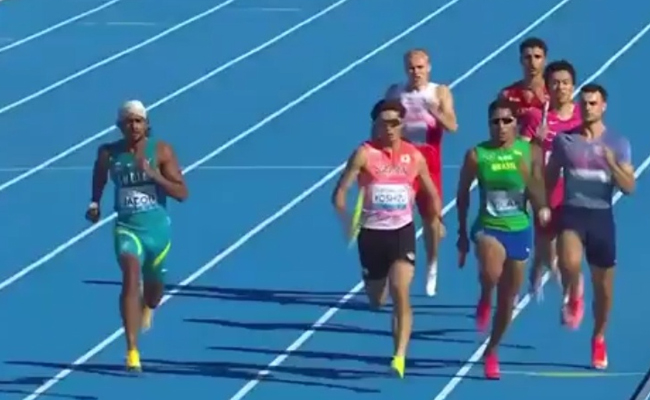
Gaborone (Botswana) (PTI): Amoj Jacob and Ragul Kumar got injured during the men's 4x400m and 4x100 races respectively as India ended their World Athletics Relays campaign in disappointment on the second day of competitions here on Sunday.
The Indian camp had high hopes of making the 2027 World Championships in the men's 4x400m relay but the team did not finish (DNF) the race as Jacob suffered cramps and pulled out of the race after taking the baton from the first leg runner Dharamveer Choudhary. Rajesh Ramesh and Vishal TK were to run in the third and fourth legs.
Those teams which could not qualify for the 2027 Beijing World Championships by reaching the final round of each of the six relay events on Saturday were given another chance in the second qualification round on Sunday.
The top two teams in each of the two heats (in all six relay events) booked the Beijing ticket on Sunday.
India will now have to try and qualify for the World Championships through the Top Lists of the World Athletics, which is a long and tedious process.
In the men's 4x100m race, third leg runner Ragul Kumar fell down the track after failing to hand over the baton inside the exchange zone to fourth leg runner Gurindervir Singh, which clearly showed the lack of coordination among the runners.
Harsh Santosh Raut and Animesh Kujur ran the first two legs.
The Indian quartet was disqualified and Kumar was seen being taken away from the Field of Play with the help of the volunteers.
It was a comedy of errors in the case of the women's 4x100m race, which saw the baton being dropped during an exchange between first leg runner Tamanna and second runner Nithya Gandhe, though the Indians finished the race in 53.09 seconds.
Gandhe started running quite a distance, but after realising that the baton was not in her hand, she turned and ran back to pick it up.
The only silver-lining for the Indian contingent was the national record time in the mixed 4x100m relay race, though the quartet of Ragul Kumar, Nithya Gandhe, Animesh Kujur and Sneha SS finished sixth in heat number two with a time of 41.35 seconds, bettering the previous national mark of 42.30 seconds set in March in Chandigarh.
The mixed 4x400m relay quartet of Theerthesh P Shetty, Kumari Saloni, Nihal William and Rashdeep Kaur ended at fifth in heat number one with a time of 3 minutes and 19.40 seconds.
On Saturday, all the five Indian relay teams had failed to make it to the respective final rounds and thus missed out on the 2027 World Championships berths.