Ambani to sell stake to Aramco, BP to make Reliance debt-free by March 2021
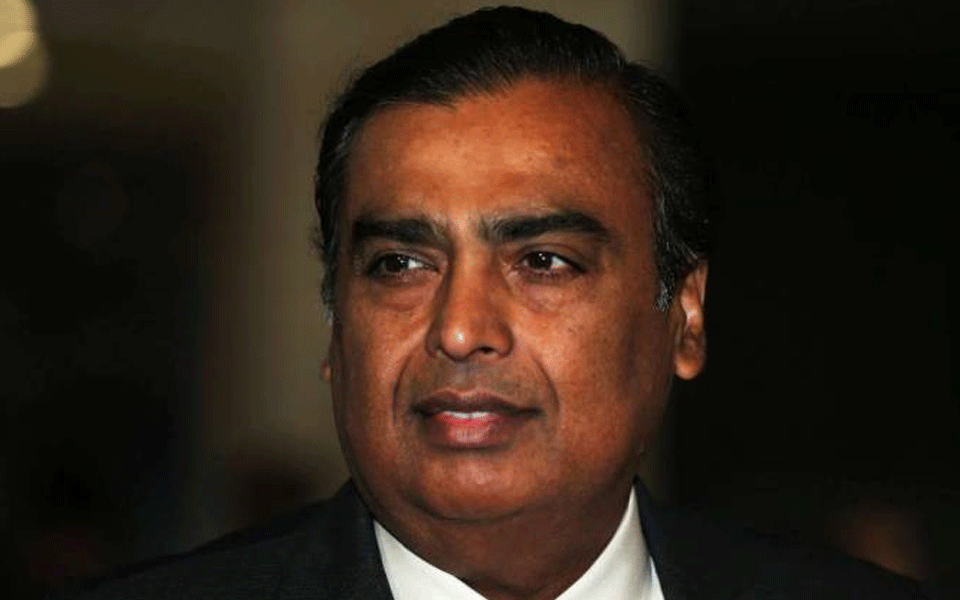
Mumbai: On a mission to cut debt in Reliance Industries, billionaire Mukesh Ambani on Monday announced plans to sell stakes in the firm's oil and chemicals business to Saudi oil giant Aramco and in fuel retail network to BP plc for Rs 1.15 lakh crore, and said its telecom unit Jio will begin offering fibre-based broadband services from next month.
Saudi Aramco will buy a 20 per cent stake in the oil and chemicals business of Reliance, including the 1.36 million barrels a day Jamnagar refining complex in Gujarat, for an enterprise value of USD 75 billion. BP will buy 49 per cent stake in the firm's 1,400 petrol pumps and aviation fuel selling facilities at 31 airports for another Rs 7,000 crore.
The twin deals along with deleveraging of telecom arm Jio's infrastructure assets will help Reliance become "a zero-net debt company within the next 18 months, that is by March 31, 2021", Ambani said at the company's annual general meeting (AGM) here.
Reliance as a whole has an enterprise value of about USD 134 billion, including telecom and retail businesses.
The company, which had a net debt of Rs 1,54,478 crore as on March 31, 2019, also intends to list its retail and telecommunication units within five years, he said.
A zero-net debt company would mean that borrowings fall below cash reserves with the firm, a level Reliance hasn't seen since 2013. It had an outstanding debt of Rs 2,88,243 crore as on June 30, 2019, and a cash balance of Rs 1,31,710 crore as on June 30.
Reliance has invested Rs 5.4 lakh crore, mostly in debt, in the last five years in the expansion of its oil to chemicals business, creating 4G wireless telecom network that offers high-speed internet and in setting up India's largest retail chain.
The debt levels had raised concerns among analysts including at Credit Suisse Group AG which felt the ballooning borrowings would weigh on growth.
Ambani sought to allay those fears.
"With these initiatives, I have no doubt that your company will have one of the strongest balance sheets in the world," he said. "We will also evaluate value unlocking options for our real estate and financial investments."
Announcing a 'new Reliance', Ambani said the Saudi investment is "the biggest foreign investment in the history of Reliance" and "among the largest foreign investments in India."
BP had previously bought a 30 per cent stake in 21 oil and gas blocks of Reliance for USD 7.2 billion in 2011.
The deal with Aramco covers all of Reliance's refining and petrochemicals assets as well as the remainder of stake the firm has in fuel retailing business after selling 49 per cent to BP, he said.
The world's biggest crude producer, Aramco will also supply 5,00,000 barrels of crude oil to Jamnagar refineries, roughly double of the amount Reliance buys from Saudi Arabia currently.
Stake in Reliance business is apart from 50 per cent interest Aramco along with UAE's ADNOC is picking up in a planned USD 60 billion refinery on the west coast of India. These investments are part of Aramco's plan to double oil processing capability under its belt to 10 million barrels a day by 2030, locking in friendly buyers for the Kingdom's crude.
The deal is subject to due diligence, definitive agreements, and regulatory and other approvals, Ambani said.
Later talking to reporters, Reliance executive director P M S Prasad said the Aramco deal is targeted to be completed by March 2020. "Within five years, the oil-to-chemicals business will be carved out as an unlisted subsidiary of Reliance and will operate as a business division of RIL with the Aramco having 20 per cent economic interest."
At the AGM, Ambani announced roll out of fibre-based fixed-line broadband services from September 5, offering internet speed of at least 100 Mbps, free voice calls for life and HD television sets given for free along with the connection that would come for as low as Rs 700 per month. Calls will be free on fixed lines phones to anywhere in the country.
Reliance has received "strong interest" from strategic and financial investors for its consumer businesses -- telecom venture Jio and Reliance Retail, he said without giving details.
With these initiatives, Reliance will have one of the strongest balance sheets in the world.
"As we achieve our zero-net debt target, I assure you, my dear shareholders, that we will reward you abundantly through higher dividends, periodic bonus issues and other means, and at a more accelerated pace than any time in our history," he said.
With over 340 million mobile phone subscribers, Jio is now venturing into optical-fibre-based fixed-line broadband service, called JioFiber.
"Today, I want to announce that starting September 5 of this year - on the third anniversary of Jio's launch - we are launching JioFiber services on a commercial basis," he said.
Watched by his mother Kokaliben and children, he said as India is getting transformed into 'New India', "Reliance will also transform itself into New Reliance".
"We also have large and valuable real estate assets, and have a strong portfolio of financial investments," he said. "On the strength of our existing and new growth engines, I am very confident that we can grow this by 15 per cent annually over the next five years.
Let the Truth be known. If you read VB and like VB, please be a VB Supporter and Help us deliver the Truth to one and all.
What is Iran’s 10-point plan? Key demands ahead of US talks in Islamabad
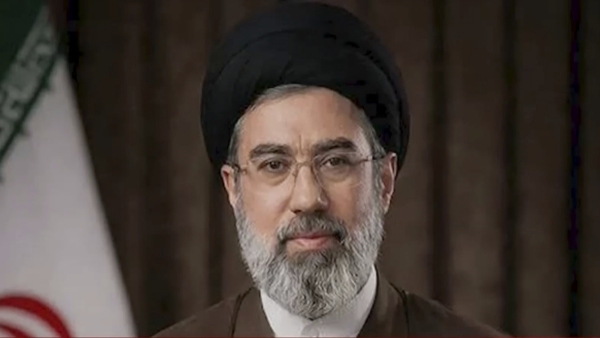
Tehran/Islamabad: Iran has outlined a 10-point plan as the basis for upcoming talks with the United States, expected to begin in Islamabad on April 11, according to a statement from the Iranian Supreme National Security Council.
The plan lays out Tehran’s key political, military and economic demands, and is being seen as a framework for negotiations following the recent escalation in the region.
Strait of Hormuz at the centre
A major focus of the plan is the Strait of Hormuz, a critical global shipping route. Iran has proposed “controlled passage through the Strait of Hormuz in coordination with the Iranian armed forces,” which it says would give the country a unique economic and geopolitical position.
The plan also calls for the “establishment of a safe transit protocol” in the Strait that would guarantee Iran’s dominance under an agreed mechanism.
Call to end conflict
Iran has demanded “the necessity of ending the war against all elements of the axis of resistance,” signalling its expectation that hostilities should stop not only in Iran but also involving allied groups in the region.
US troop withdrawal
Another key demand is the “withdrawal of US combat forces from all bases and deployment points in the region,” indicating Tehran’s long-standing position against American military presence in West Asia.
Sanctions relief and compensation
The plan places strong emphasis on economic measures. It calls for “full payment of Iran’s damages according to estimates,” along with “the lifting of all primary and secondary sanctions and resolutions of the Board of Governors and the Security Council.”
It also seeks “the release of all Iranian assets and properties frozen abroad,” which have been a major point of contention for years.
Binding global guarantee
Finally, Iran has demanded that all these terms be formally recognised through “a binding Security Council resolution,” suggesting it wants international legal backing to ensure enforcement.
What this means
The 10-point plan reflects Iran’s broader push for security guarantees, economic relief and regional influence. The upcoming talks in Islamabad are expected to test how far both sides are willing to negotiate on these demands.