Mobile call, data to cost more from December as Vodafone Idea, Airtel hike rates
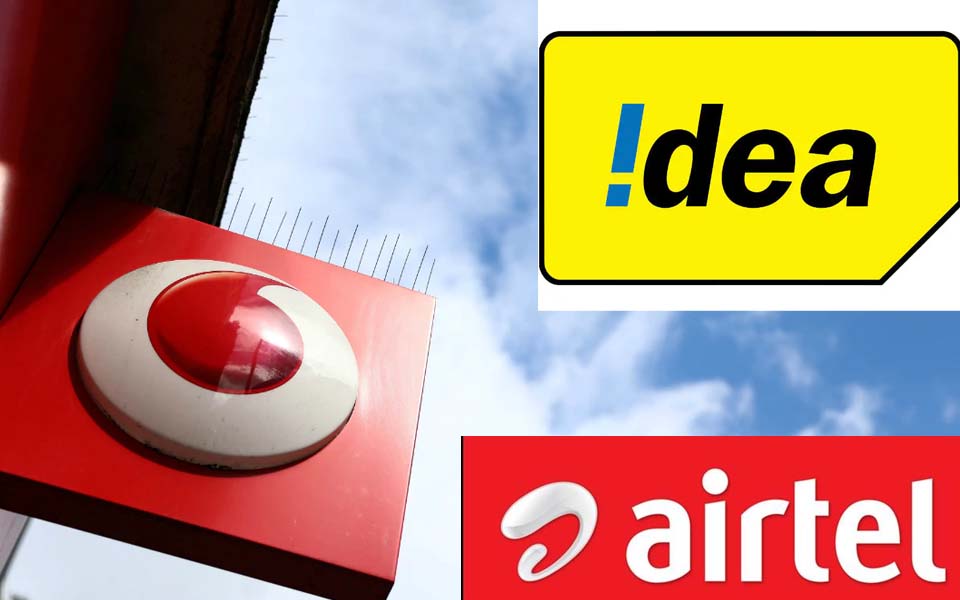
New Delhi, Nov 18: Faced with intense competition and unprecedented statutory dues, Bharti Airtel and Vodafone Idea on Monday announced a hike in mobile phone call and data charges from December saying the increase was warranted for viability of their business.
First Vodafone Idea in a statement announced plans to raise tariffs for the first time in 3 years only to be followed by a similarly worded statement minutes later from Airtel.
The two, however, did not quantify the increase in rates but said that the hike will be effective beginning next month.
Vodafone Idea last week reported consolidated loss of Rs 50,921 crore - highest ever loss posted by any Indian corporate - for the second quarter ended September 30, on account of liability arising out of the Supreme Court order in the adjusted gross revenue case.
"To ensure that its customers continue to enjoy world class digital experiences, Vodafone Idea will suitably increase the prices of its tariffs effective December 1, 2019," Vodafone Idea said in a statement.
The company at present provides monthly mobile services at starting price of Rs 24 without data, and plans with data service starts from Rs 33 onwards. Airtel monthly plan starts at Rs 24 onward, while scheme with data begins from Rs 35.
Vodafone Idea has last week said that its ability to continue as a going concern is dependent on obtaining relief from the government and positive outcome of the proposed legal remedy, including a review petition before the apex court.
Following the apex court judgement, Bharti Airtel too raised similar concerns.
"The telecom sector is highly capital intensive with fast changing technology cycles that require continuing investments. It is, therefore, extremely important that the industry remains viable to support the vision of Digital India. Accordingly, Airtel will appropriately increase price offerings in the month beginning December," Bharti Airtel said.
Bharti Airtel, which posted the highest ever loss of Rs 23,045 crore last week, said that it understands that telecom regulator Trai is likely to initiate a consultation for bringing rationality in pricing in the Indian mobile sector, which has been operating at prices that have been eroding its viability.
The Sunil Bharti Mittal led firm made provision of amount aggregating Rs 28,450 crore after the AGR verdict.
Vodafone Idea has estimated liability of Rs 44,150 crore post the apex court order, and made provisioning of Rs 25,680 crore in the second quarter this fiscal.
"The acute financial stress in the telecom sector has been acknowledged by all stakeholders and a high level Committee of Secretaries (CoS) headed by the Cabinet Secretary is looking into providing appropriate relief," Vodafone Idea said.
Vodafone India and Idea Cellular merged their telecom business to handle the tariff war in the sector, triggered by the new entrant Reliance Jio in 2016.
The merged entity Vodafone Idea came into existence on August 31 last year as the biggest telecom operator in the country with 408 million mobile customers.
However, the financial woes for the company did not end and the company lost over 100 million mobile subscribers since merger due to the cut throat tariff war.
According to the Telecom Regulatory Authority of India, prices of mobile data have fallen drastically by about 95 per cent to Rs 11.78 per gigabyte (GB).
Mobile calling rates dipped by about 60 per cent to about 19 paise per minute between June 2016 - December 2017.
Reliance Jio is offering unlimited voice calls in all it mobile services phone plan.
Promoter firm Vodafone, which holds majority stake of 45.39 per cent in Vodafone Idea, has said that the group will not infuse any further equity investment in the Indian telecom venture and reportedly similar stand has been taken by the Aditya Birla Group. This leaves the company with no other option but to support operation from internal resources.
Vodafone Idea said it has the largest spectrum footprint and by accelerating its network integration, the company is rapidly expanding both its coverage and capacity and is well on track to offer 4G services to 1 billion Indian citizens by March 2020.
Let the Truth be known. If you read VB and like VB, please be a VB Supporter and Help us deliver the Truth to one and all.
What is Iran’s 10-point plan? Key demands ahead of US talks in Islamabad
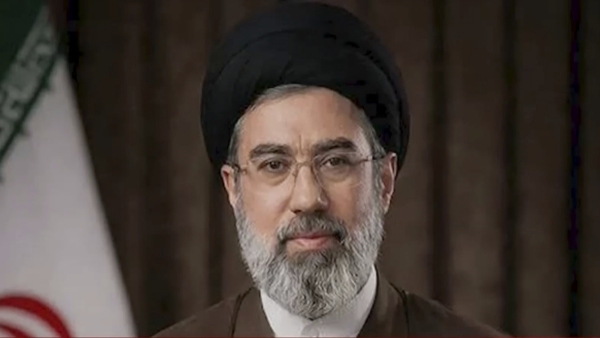
Tehran/Islamabad: Iran has outlined a 10-point plan as the basis for upcoming talks with the United States, expected to begin in Islamabad on April 11, according to a statement from the Iranian Supreme National Security Council.
The plan lays out Tehran’s key political, military and economic demands, and is being seen as a framework for negotiations following the recent escalation in the region.
Strait of Hormuz at the centre
A major focus of the plan is the Strait of Hormuz, a critical global shipping route. Iran has proposed “controlled passage through the Strait of Hormuz in coordination with the Iranian armed forces,” which it says would give the country a unique economic and geopolitical position.
The plan also calls for the “establishment of a safe transit protocol” in the Strait that would guarantee Iran’s dominance under an agreed mechanism.
Call to end conflict
Iran has demanded “the necessity of ending the war against all elements of the axis of resistance,” signalling its expectation that hostilities should stop not only in Iran but also involving allied groups in the region.
US troop withdrawal
Another key demand is the “withdrawal of US combat forces from all bases and deployment points in the region,” indicating Tehran’s long-standing position against American military presence in West Asia.
Sanctions relief and compensation
The plan places strong emphasis on economic measures. It calls for “full payment of Iran’s damages according to estimates,” along with “the lifting of all primary and secondary sanctions and resolutions of the Board of Governors and the Security Council.”
It also seeks “the release of all Iranian assets and properties frozen abroad,” which have been a major point of contention for years.
Binding global guarantee
Finally, Iran has demanded that all these terms be formally recognised through “a binding Security Council resolution,” suggesting it wants international legal backing to ensure enforcement.
What this means
The 10-point plan reflects Iran’s broader push for security guarantees, economic relief and regional influence. The upcoming talks in Islamabad are expected to test how far both sides are willing to negotiate on these demands.