Gold, silver rally on strong global market sentiment
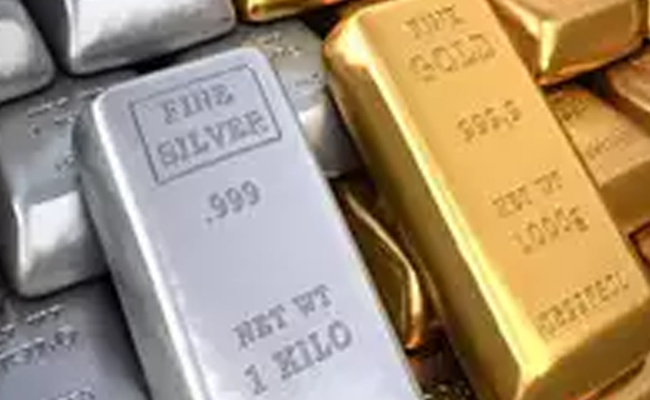
New Delhi (PTI): Gold prices climbed Rs 700 to Rs 1,30,160 per 10 grams in the national capital on Friday tracking firm trends in the global markets and strong investor appetite, according to marketmen.
The precious metal of 99.5 per cent purity jumped by Rs 700 to Rs 1,29,560 per 10 grams (inclusive of all taxes).
"Gold edged higher...supported by increasing expectations of a Federal Reserve rate cut in December," Saumil Gandhi, Senior Analyst - Commodities at HDFC Securities, said.
He further stated that gold prices, during the week, have remained well-supported by renewed optimism over a potential Fed cut and a steady US dollar.
Silver prices also continued their upward march for the fourth straight session soaring by Rs 3,000 to Rs 1,71,200 per kilogram (inclusive of all taxes).
In the past four sessions, the white metal skyrocketed by Rs 16,200 from Rs 1,55,000 per kg on Monday.
In the international markets, spot gold went up by USD 12.44 , or 0.30 per cent, to USD 4,169.88 per ounce.
"Spot gold continues to remain well bid on rate cut expectations after recent dovish comments by the Federal Reserve officials," Praveen Singh, Head of Commodities, Mirae Asset ShareKhan, said.
The dollar index, which gauges the greenback's strength against a basket of six currencies, was trading 0.16 per cent higher at 99.75, capping gains for the yellow metal.
Sandip Raichura - CEO, Retail Broking and Distribution, PL Capital, said that gold will soon test the USD 4,400 level, which marks its all-time high. Continuing purchases by central banks, as well as dollar weakness, are leading to a strong support for gold at the USD 4,000 level.
Spot silver was trading 0.77 per cent higher at USD 53.81 per ounce, marking gains for the fifth straight day. In the session, the white metal rose to hit an intra-day high of USD 54.31 an ounce in the overseas market.
"Silver approaches towards its all-time high (USD 54.49 per ounce), with increased predictions that the US Federal Reserve would further lower interest rates," Renisha Chainani, Head - Research at Augmont said.
She noted that Chinese inventories have fallen to decade lows, which has led to large exports to London to alleviate supply constraints. The reduction follows a spike in Chinese silver exports in October, which reached a record high of over 660 tonnes.
Jateen Trivedi, VP Research Analyst - Commodity and Currency, LKP Securities, said, "With US economic data yet to flow in after the government reopening, upcoming releases will be crucial for the Fed as it prepares for the final policy meeting of 2025 on December 10, where a rate cut is widely anticipated."
Let the Truth be known. If you read VB and like VB, please be a VB Supporter and Help us deliver the Truth to one and all.
Bhojshala case: Disputed structure built from remains of pre-existing temples, claims ASI
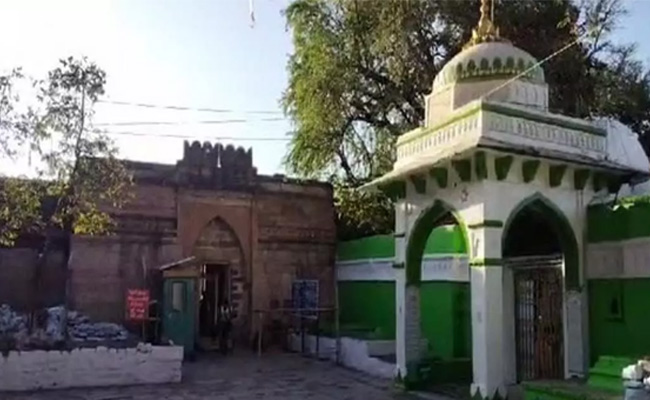
Indore (PTI): The ASI has told the Madhya Pradesh High Court that a massive structure dating back to the Paramara kings' rule existed at the disputed Bhojshala temple-Kamal Maula mosque complex, and the current structure was built from the remains of temples.
The Archaeological Survey of India (ASI) made the claim on Tuesday based on its 98-day scientific survey and over 2,000-page report.
The Hindu community considers Bhojshala a temple dedicated to Vagdevi (Goddess Saraswati), while the Muslim side claims the monument as the Kamal Maula Mosque. The disputed complex is protected by the ASI.
During the hearing before Justices Vijay Kumar Shukla and Alok Awasthi of the HC's Indore bench, Additional Solicitor General Sunil Kumar Jain, representing the ASI, presented a detailed account of the scientific survey conducted two years ago at the complex.
Referring to the ASI's survey report, he said, "Retrieved architectural remains, sculptural fragments, large slabs of inscriptions with literary texts, Nagakarnika inscriptions on pillars, etc, suggest that a large structure associated with literary and educational activities existed at the site. Based on scientific investigations and archaeological remains recovered during the investigations, this pre-existing structure can be dated to the Paramara period."
It can be said that the existing structure was made from the parts of earlier temples, based on scientific investigations, survey and archaeological excavations conducted, study and analysis of retrieved finds, study of architectural remains, sculptures, and inscriptions, art and sculptures, Jain said quoting the report.
Summarising the report, he also drew the court's attention to the fact that the archaeological study identifies that many architectural components, such as pillars and beams, were originally part of temple structures before being repurposed for a mosque.
"The evidence of this transition includes Sanskrit and Prakrit inscriptions that were damaged or hidden, alongside sculptures of deities and animals that were often mutilated or defaced," Jain contended.
The report also states that "all Sanskrit and Prakrit inscriptions are older than the Arabic and Persian inscriptions, indicating that users or engravers of the Sanskrit and Prakrit inscriptions occupied the place earlier".
In light of the Muslim side's earlier objections, the bench wanted to know why there were some discrepancies in the ASI's responses regarding the status of the disputed complex in the cases filed over the years.
The Additional Solicitor General argued that earlier studies of the complex involved only officials, while the current survey involved scientists and the use of advanced technologies such as Ground Penetrating Radar (GPR).
The hearing in the Bhojshala case will continue on Wednesday.
The high court has been regularly hearing four petitions and one writ appeal regarding the religious nature of the Bhojshala temple-Kamal Maula mosque complex since April 6.