Markets extend losses on global sell-off amid US tariff concerns; Sensex tanks 586 points
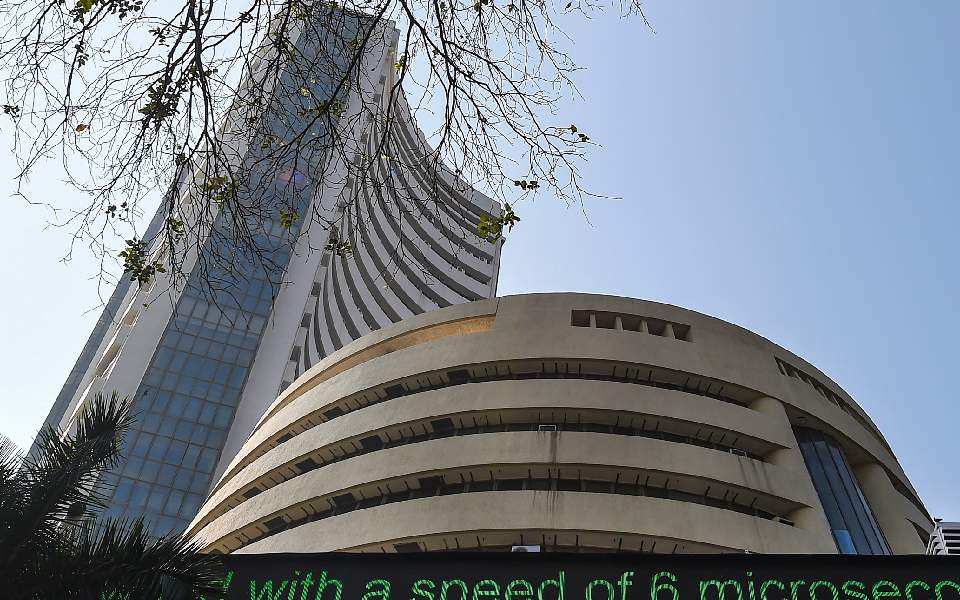
Mumbai, Aug 1 (PTI): Equity benchmark indices Sensex and Nifty declined sharply for the second straight session on Friday, tracking deep losses in pharma, metal, and IT stocks amid trade-related concerns and widespread selling pressure in global markets.
Besides, persistent selling by foreign investors added to the gloom, according to experts.
In a volatile trade, the 30-share BSE Sensex tumbled 585.67 points or 0.72 per cent to settle at 80,599.91. During the day, it dropped 690.01 points or 0.84 per cent to 80,495.57.
As many as 2,712 stocks declined while 1,306 advanced and 151 remained unchanged on the BSE.
The 50-share NSE Nifty declined 203 points or 0.82 per cent to 24,565.35.
"The benchmark index Nifty wrapped up its fifth consecutive week in the red -- its longest losing streak since August 2023, raising eyebrows across the street...Despite making multiple attempts to scale up, the index has struggled to hold ground, only to be met with selling pressure each time. The long upper wicks are a telling story — bulls tried, but bears had the final say," Sudeep Shah, Head - Technical Research and Derivatives at SBI Securities, said.
On the weekly front, the BSE benchmark tanked 863.18 points or 1.05 per cent, and the Nifty dropped 271.65 points or 1.09 per cent.
"The Indian equity market extended its decline for a second day, pressured by renewed tariff threats and punitive duties that could undermine India’s global trade competitiveness. Investor sentiment weakened further as FIIs now hold the second-highest net short position in derivatives, reflecting elevated caution.
"Globally, markets turned negative amid rising US inflation and trade tensions. While the sell-off was broad-based, FMCG stocks emerged as a defensive play, supported by attractive valuations, resilient demand, and relative immunity to external trade disruptions," Vinod Nair, Head of Research, Geojit Investments Limited, said.
US President Donald Trump unveiled sweeping new tariffs on dozens of countries, including 25 per cent duties for goods from India, marking a new era of American protectionism that triggered fresh tensions and concerns over a much wider disruption in the global trade landscape.
From the Sensex firms, Sun Pharma tumbled 4.43 per cent after the company reported a 20 per cent year-on-year decline in consolidated net profit to Rs 2,279 crore for the first quarter ended June 30, 2025.
Tata Steel, Maruti, Tata Motors, Infosys, Bharti Airtel and Tech Mahindra were also among the laggards.
However, Trent, Asian Paints, Hindustan Unilever, ITC, Kotak Mahindra Bank, and Reliance Industries were the gainers.
The BSE smallcap gauge dropped 1.59 per cent, and the midcap index declined by 1.37 per cent.
Healthcare tanked 2.44 per cent, telecommunication (2.41 per cent), metal (1.94 per cent), oil & gas (1.91 per cent), teck (1.83 per cent), IT (1.81 per cent), and realty (1.78 per cent).
BSE FMCG index emerged as the only gainer.
"Markets began the August series on a negative note, extending the prevailing corrective trend, and ended lower by over half a per cent. Markets continue to grapple with a mixed earnings season, while the recent tariff announcement and persistent foreign fund outflows are further weighing on sentiment," Ajit Mishra - SVP, Research, Religare Broking Ltd, said.
The US president signed an executive order on Thursday that raised tariffs for over five dozen countries, with Washington's negotiations for trade deals going down to the wire ahead of the August 1 deadline.
In the Executive Order titled 'Further Modifying The Reciprocal Tariff Rates', Trump announced tariff rates for nearly 70 nations.
A 25 per cent "Reciprocal Tariff, Adjusted" has been imposed on India, according to the list released. The order, however, does not mention the "penalty" that Trump had said India would have to pay because it purchases Russian military equipment and energy.
While August 1 was the tariff deadline, the new levies will come into effect from August 7.
Foreign Institutional Investors (FIIs) offloaded equities worth Rs 5,588.91 crore on Thursday, according to exchange data.
"Global equity markets were mostly weak over the past week, as the US tariff saga continued. The Indian equity market continued to underperform global equity markets in the past week and was down 0.8 per cent over this period," Shrikant Chouhan, Head – Equity Research, said.
In Asian markets, South Korea's Kospi, Japan's Nikkei 225 index, Shanghai's SSE Composite index and Hong Kong's Hang Seng settled lower.
Equity markets in Europe were trading in the red.
The US markets ended in negative territory on Thursday.
Global oil benchmark Brent crude declined 0.39 per cent to USD 71.42 a barrel.
On Thursday, the Sensex declined 296.28 points or 0.36 per cent to settle at 81,185.58. The Nifty dropped 86.70 points or 0.35 per cent to 24,768.35.
Let the Truth be known. If you read VB and like VB, please be a VB Supporter and Help us deliver the Truth to one and all.
Congress using hijab issue to pacify minority anger, alleges Karnataka LoP R Ashoka
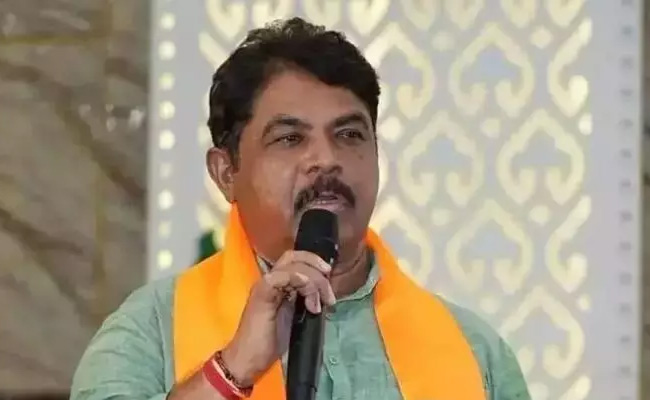
Bengaluru: Leader of Opposition in the Assembly R. Ashoka has accused the Congress government of using the hijab issue to placate what he described as discontent among minority voters after the Davanagere by-election.
In a post on X on Wednesday, Ashoka alleged that the state government, instead of addressing issues such as price rise, corruption, farmers’ distress and law and order, was attempting to retain its minority vote base by reviving the hijab issue.
Referring to the 2022 dress code introduced by the BJP government, which prohibited hijab in schools and colleges, Ashoka said the Karnataka High Court had upheld the policy and emphasised the importance of discipline in educational institutions.
He questioned the Congress government’s move to revisit the issue and asked whether setting aside the court-backed policy to benefit one community could be described as secularism.
Ashoka further alleged that while the government was willing to permit hijab, it continued to prohibit saffron shawls.
He accused the government of dividing students on religious lines rather than treating schools and colleges as spaces of equality.
Drawing a comparison with Mamata Banerjee’s government in West Bengal, Ashoka claimed that excessive appeasement politics had harmed the state and warned that the Congress in Karnataka could face a similar political response.
He said voters in Karnataka would teach the Congress a lesson for what he termed “vote-bank politics” and for compromising constitutional and judicial principles.