Markets rebound nearly 1 pc; Sensex surges over 760 pts as FMCG, IT shares gain
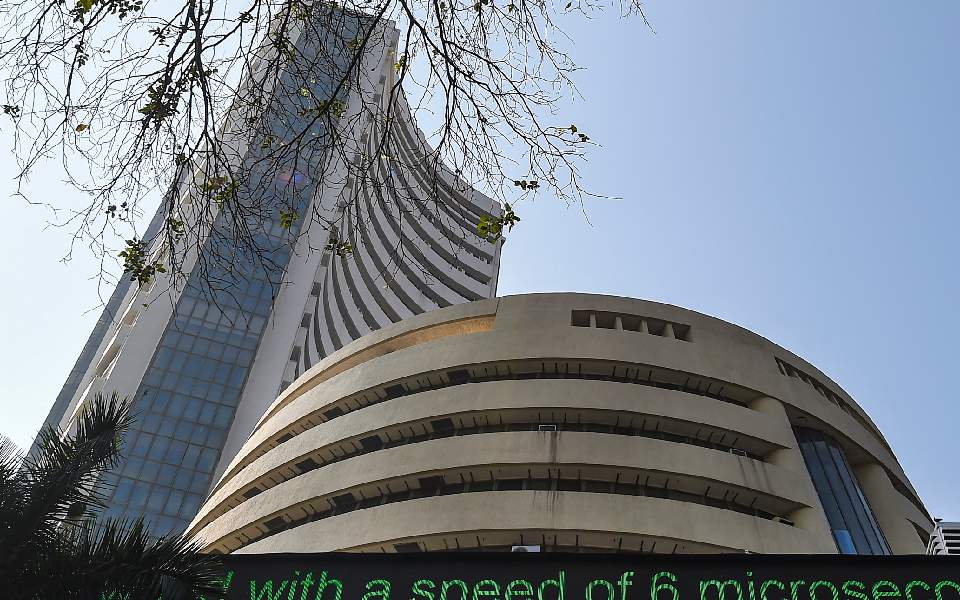
Mumbai, May 23 (PTI): Equity benchmark indices Sensex and Nifty rebounded sharply by nearly 1 per cent on Friday, propelled by buying in market heavyweights Reliance Industries, HDFC Bank and ITC.
Besides, hopes of a record dividend from the RBI and easing US treasury yields bolstered investor sentiment, traders said.
After a flat start, the 30-share BSE benchmark bounced back and surged 769.09 points or 0.95 per cent to settle at 81,721.08. During the day, it jumped 953.18 points or 1.17 per cent to 81,905.17.
As many as 2,361 stocks advanced while 1,589 declined and 156 remained unchanged on the BSE.

The NSE Nifty rallied 243.45 points or 0.99 per cent to 24,853.15.
On a weekly basis, the BSE benchmark dropped 609.51 points or 0.74 per cent and the Nifty declined 166.65 points or 0.66 per cent.
"The domestic market has recouped nearly half of the week’s losses, supported by gains in FMCG and IT stocks. FMCG benefitted from the early and above-normal monsoon forecast, while IT stocks saw a rebound following a healthy correction.
"Optimism around a potentially record-high dividend from the RBI is boosting hopes for fiscal consolidation, reflected in falling Indian bond yields," Vinod Nair, Head of Research, Geojit Investments Limited, said.
From the Sensex firms, Eternal, Power Grid, ITC, Bajaj Finserv, Nestle, Axis Bank, Kotak Mahindra Bank and Adani Ports were among the biggest gainers.
On the other hand, Sun Pharma was the only laggard, declining nearly 2 per cent.
The company's stock fell after it reported a nearly 19 per cent drop in consolidated net profit for the quarter ended March 31, 2025.
The BSE midcap gauge climbed 0.50 per cent and smallcap index went up by 0.45 per cent.
FMCG jumped 1.49 per cent, utilities (1.02 per cent), power (1.01 per cent), financial services (0.99 per cent), bankex (0.99 per cent), oil & gas (0.94 per cent) and energy (0.82 per cent).
In Asian markets, Japan's Nikkei 225 index and Hong Kong's Hang Seng settled in positive territory, while South Korea's Kospi and Shanghai's SSE Composite index ended lower.
Markets in Europe were trading higher in mid-session deals.
US markets ended largely flat in overnight trade on Thursday.
Global oil benchmark Brent crude dipped 0.23 per cent to USD 64.29 a barrel.
Foreign Institutional Investors (FIIs) offloaded equities worth Rs 5,045.36 crore on Thursday, according to exchange data.
"Investor attention is further revolving around US-India trade talks and strong domestic macroeconomic indicators. However, recent FII outflows, driven by rising US bond yields amid concerns over mounting US debt, may weigh on the market sentiment," Nair said.
On Thursday, the BSE Sensex tanked 644.64 points, or 0.79 per cent, to settle at 80,951.99. The Nifty tumbled 203.75 points, or 0.82 per cent, to 24,609.70.
"Markets quickly rebounded after a subdued opening, as short-covering helped benchmark indices stay in positive territory thereafter. The market has been volatile throughout the week, as concerns over US fiscal health due to rising debt and interest rates seen unchanged weighed on sentiment," Prashanth Tapse, Senior VP (Research), Mehta Equities Ltd, said.


Let the Truth be known. If you read VB and like VB, please be a VB Supporter and Help us deliver the Truth to one and all.
Ordinance issued to increase number of Supreme Court judges from 34 to 38
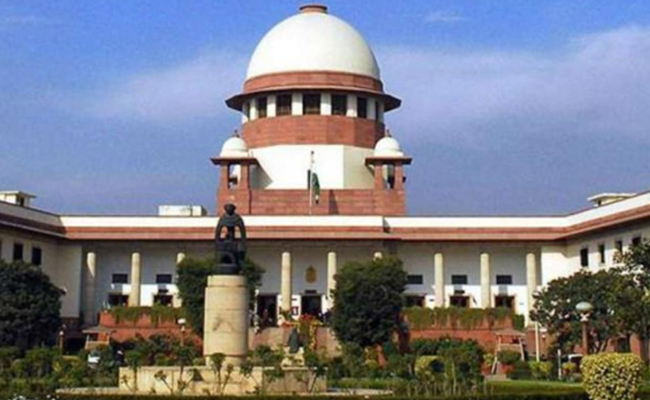
New Delhi (PTI): The government has promulgated an ordinance to increase the strength of the Supreme Court from the present 34 judges to 38, including the Chief Justice of India.
The law ministry notified the ordinance on Saturday, which amended the Supreme Court (Number of Judges) Act, 1956, to increase the sanctioned strength of the top court.
So far, the sanctioned strength of the top court was 34, including the Chief Justice of India (CJI). Now, the number of judges has been increased by four, taking the sanctioned strength to 38.
The top court will now have 37 judges, other than the CJI.
With the apex court having two vacancies at present, and the ordinance coming into force immediately, the Supreme Court Collegium will now have to recommend six names for appointment as judges in the top court.
A bill will be brought in the Monsoon Session of Parliament to convert the ordinance – an executive order – into a law passed by Parliament.
The Union Cabinet had cleared a draft bill on May 5 to increase the number of apex court judges.
The strength of the Supreme Court was last increased from 30 to 33 (excluding the CJI) in 2019.
The Supreme Court (Number of Judges) Act, as originally enacted in 1956, put the maximum number of judges (excluding the CJI) at 10.
This number was increased to 13 by the Supreme Court (Number of Judges), Amendment Act, 1960, and to 17 by another amendment to the law.
The Supreme Court (Number of Judges) Amendment Act, 1986, augmented the strength of judges from 17 to 25, excluding the CJI.
A fresh amendment in 2009 further increased the strength from 25 to 30.
Article 124(3) of the Constitution lists the qualifications required to become a Supreme Court judge.
An Indian citizen who has either served as a high court judge for at least five years, or as an advocate for 10 years, or is a distinguished jurist, can be appointed to the top court.
The strength of the Supreme Court is increased based on the recommendations of the CJI, who writes to the Union law minister. After consulting the finance ministry, the Department of Justice under the law ministry moves the Cabinet with a draft bill.