Veteran Tamil film producer Rajan dies after jumping into Adyar River
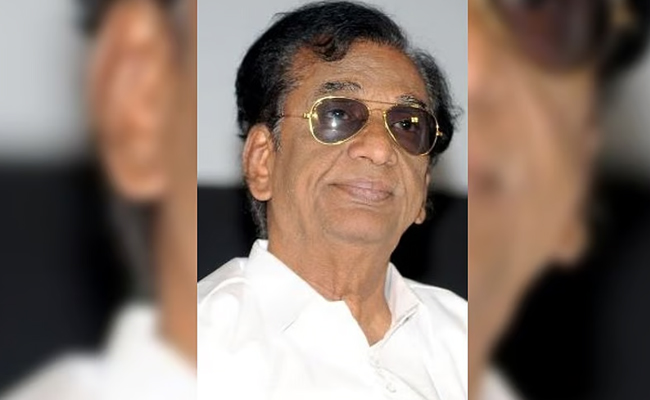
Chennai (PTI): Veteran Tamil film producer K Rajan died after jumping into the Adyar River in the city on Sunday, police said.
Police said it appears to be a case of suicide, though the reason for his extreme step was not immediately known.
The 85-year-old film personality asked his driver to stop the car while crossing the Adyar bridge and suddenly got out and jumped into the river, police sources said.
The driver immediately alerted Fire and Rescue Services personnel, who reached the spot, recovered the body, and sent it for post-mortem.
Police have registered a case, and further investigation is underway.
Rajan entered the Tamil film industry as a producer in the early 1980s. Apart from producing films, he also directed a few movies.
He also served as president of a film distributors’ association.
Top leaders of political parties, including the two Dravidian majors—the DMK and AIADMK—expressed shock and grief over his death and conveyed their condolences to the bereaved family.
Former Chief Minister and DMK President M K Stalin said Rajan had always boldly raised his voice for the welfare of small film producers and the overall development of the film industry.
“He had always urged that Tamil films be titled in Tamil,” Stalin said in a statement, adding that Rajan consistently fought for the rights of ordinary workers in the film industry.
AIADMK general secretary and former Chief Minister Edappadi K Palaniswami said Rajan’s voice was important in securing recognition for small-budget films in the Tamil film industry.
Among others who condoled his death was PMK founder S Ramadoss. Leaders from various parties also expressed their condolences to the bereaved family.
“This is terrible news. Deeply shocked to hear about the demise of our beloved member of the film fraternity, producer K Rajan sir,” actor and BJP leader Khushbu Sundar said in a post on social media platform X.
“He was a very respectful person and someone who never hesitated to call a spade a spade. This is very upsetting. May his soul rest in peace,” she added.
Let the Truth be known. If you read VB and like VB, please be a VB Supporter and Help us deliver the Truth to one and all.
Ordinance issued to increase number of Supreme Court judges from 34 to 38
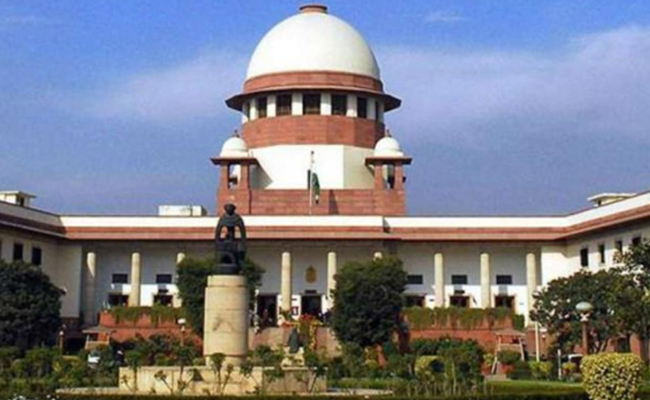
New Delhi (PTI): The government has promulgated an ordinance to increase the strength of the Supreme Court from the present 34 judges to 38, including the Chief Justice of India.
The law ministry notified the ordinance on Saturday, which amended the Supreme Court (Number of Judges) Act, 1956, to increase the sanctioned strength of the top court.
So far, the sanctioned strength of the top court was 34, including the Chief Justice of India (CJI). Now, the number of judges has been increased by four, taking the sanctioned strength to 38.
The top court will now have 37 judges, other than the CJI.
With the apex court having two vacancies at present, and the ordinance coming into force immediately, the Supreme Court Collegium will now have to recommend six names for appointment as judges in the top court.
A bill will be brought in the Monsoon Session of Parliament to convert the ordinance – an executive order – into a law passed by Parliament.
The Union Cabinet had cleared a draft bill on May 5 to increase the number of apex court judges.
The strength of the Supreme Court was last increased from 30 to 33 (excluding the CJI) in 2019.
The Supreme Court (Number of Judges) Act, as originally enacted in 1956, put the maximum number of judges (excluding the CJI) at 10.
This number was increased to 13 by the Supreme Court (Number of Judges), Amendment Act, 1960, and to 17 by another amendment to the law.
The Supreme Court (Number of Judges) Amendment Act, 1986, augmented the strength of judges from 17 to 25, excluding the CJI.
A fresh amendment in 2009 further increased the strength from 25 to 30.
Article 124(3) of the Constitution lists the qualifications required to become a Supreme Court judge.
An Indian citizen who has either served as a high court judge for at least five years, or as an advocate for 10 years, or is a distinguished jurist, can be appointed to the top court.
The strength of the Supreme Court is increased based on the recommendations of the CJI, who writes to the Union law minister. After consulting the finance ministry, the Department of Justice under the law ministry moves the Cabinet with a draft bill.