Nirmala Sitharaman, Kiran Mazumdar-Shaw in Forbes 2020 list of 100 most powerful women
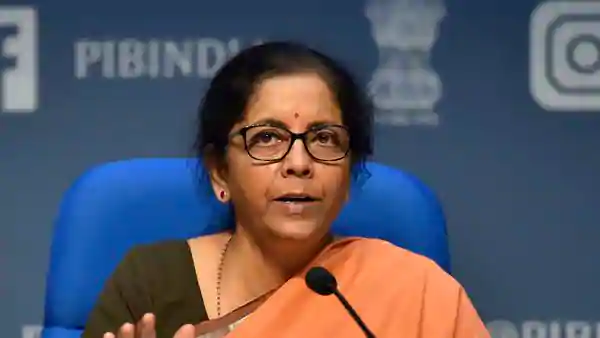
New York, Dec 9: Finance Minister Nirmala Sitharaman, US Vice President-elect Kamala Harris, Biocon Founder Kiran Mazumdar-Shaw and HCL Enterprise CEO Roshni Nadar Malhotra have been named among the world's 100 most powerful women by Forbes, a list topped by German Chancellor Angela Merkel for the 10th year in a row.
The women on the 17th annual Forbes Power List hail from 30 countries and were born across four generations.
"There are 10 heads of state, 38 CEOs and five entertainers among them. But where they differ in age, nationality and job description, they are united in the ways they have been using their platforms to address the unique challenges of 2020, Forbes said.
Sitharaman is ranked 41st on the list, Nadar Malhotra comes in at the 55th spot, Mazumdar-Shaw -- described as India's richest self-made woman -- is ranked 68th and chairwoman of Landmark Group Renuka Jagtiani is ranked 98th.
Merkel ranks No. 1 for the tenth year in a row. Merkel remains the de facto leader of Europe, leading the region's largest economy after steering Germany through financial crisis and back to growth. Her leadership is marked by her steely reserve, from standing up to Donald Trump to allowing more than a million Syrian refugees into Germany, Forbes said, adding: the big question that the public is now asking is who and what will come after Merkel's time in office comes to an end.
Harris, who became the first woman, first Black American and first Asian American to be elected vice president -- "an unprecedented trifecta of firsts for California Senator Harris", is ranked third on the list.
Harris's "rapid ascension in U.S. politics has also catapulted" her onto the Forbes list of the World's 100 Most Powerful Women for the first time. European Central Bank chief Christine Lagarde is ranked second for the second straight year.
From fighting the pandemic to re-engineering American politics, these influential women, including New Zealand Prime Minister Jacinda Ardern, Vice President-elect Kamala Harris and voting rights advocate Stacey Abrams, are making history, Forbes said.
Several of this year's Power Women received "global plaudits" for their effective responses to COVID-19.
New Zealand Prime Minister Jacinda Ardern (No. 32) vanquished a first and second wave of the virus in her country by implementing strict lockdown and quarantine procedures.
Taiwan's President Tsai Ing-wen (No. 37) implemented a rigorous contact-tracing program in January, as a result, to date, the island of 23 million people has lost only seven lives to the virus, Forbes said.
There are 17 newcomers on this year's list, illustrating that women are leading all aspects of a society transformed by a global pandemic .
New CEO of American multinational company United Parcel Service Carol Tom (No. 11) and head of California-based Clorox Linda Rendle (No. 87) are responsible for helping provide essential services that have kept Americans connected and clean.
CVS Health executive vice-president and incoming CEO Karen Lynch (No. 38) leads the pharmacy giant's vast COVID-19 testing programme and, in 2021 will be responsible for its critical handling of coronavirus vaccines.
The list also includes Co-Chair of Bill and Melinda Gates Foundation, Melinda Gates (5), US House Speaker Nancy Pelosi (7), Facebook chief operating officer Sheryl Sandberg (22), Bangladesh Prime Minister Sheikh Hasina (39), UK's Queen Elizabeth II (46), celebrated artistes Rihana (69) and Beyonce (72).
Let the Truth be known. If you read VB and like VB, please be a VB Supporter and Help us deliver the Truth to one and all.
Protest against demolition drive turns violent in Kolkata, 3 cops injured
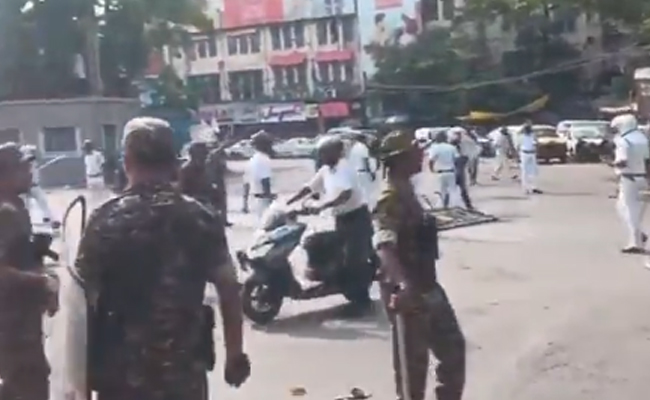
Kolkata (PTI): A protest against the recent bulldozer action in Kolkata's Tiljala turned violent on Sunday as demonstrators hurled stones at police personnel in the minority-dominated Park Circus area, injuring at least three officials and damaging several vehicles.
The flare-up came days after bulldozers rolled into Tiljala as part of the West Bengal government's demolition drive against alleged illegal constructions following the factory fire that killed two persons earlier this week.
On Sunday afternoon, a large number of people gathered near Park Circus Seven Point Crossing to protest against the anti-encroachment drive and attempted to block roads, police said.
As police tried to disperse, what they described as an "unlawful assembly", a section of protesters allegedly resorted to stone-pelting, triggering chaos in the area.
Several vehicles parked along the roadside, including those carrying central forces, were vandalised, officials said.
Heavy deployment of Kolkata Police and central forces was made in the area after the clashes. Route marches and intensified patrolling were undertaken in adjoining localities to prevent further escalation and restore normalcy.
Kolkata Police Additional Commissioner Ashesh Biswas said action has already been initiated against those involved in the violence.
"Some people tried to block the road. It was an illegal gathering. The police were trying to disperse them, and there was pelting of stones. Three of our colleagues were injured," Biswas told reporters.
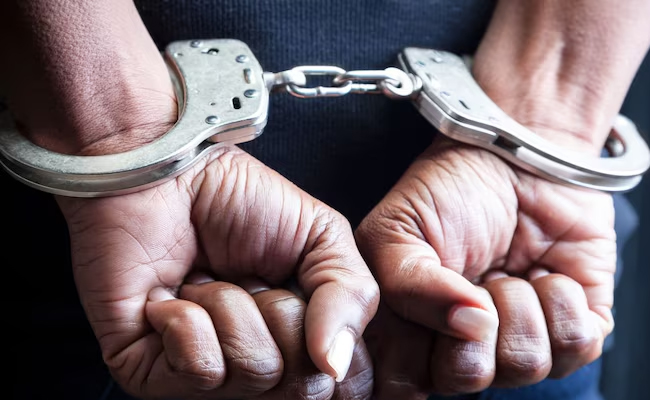
"We have already arrested a few people," he said.
The officer said police followed standard operating procedures, and efforts were underway to identify all those involved in the violence.
"There was an attack on the police. We will see who is behind it and arrest everyone. Strict legal action will be taken," he added.
While the police maintained the agitation was linked to administrative action against illegal buildings, some locals claimed that grievances over alleged restrictions on the use of loudspeakers during religious prayers and curbs on offering prayers on roads had also contributed to the tensions.
The developments come close on the heels of tension in Kolkata's Rajabazar area on Friday, where a standoff broke out after a group of people allegedly attempted to offer prayers on a public road despite restrictions on blocking traffic.
According to police sources, a large contingent of personnel reached the area and asked people to vacate the road, after which the situation turned tense briefly.
Members of the local community argued that holding Friday prayers on roads had been a long-standing practice in the locality, while the administration maintained that keeping roads clear was necessary for traffic movement and maintenance of law and order.
Police, however, did not indicate any direct connection between the Rajabazar incident and Sunday's violence in Park Circus.
Authorities also did not immediately disclose the number of persons arrested in Sunday's clashes or whether any protesters sustained injuries during the confrontation.