Sebi bans IndusInd Bank former CEO, 4 others from securities mkt for insider trading

New Delhi, May 28 (PTI): Markets regulator Sebi on Wednesday barred former CEO of IndusInd Bank, Sumant Kathpalia, and four other senior officials from accessing the securities markets in connection with an alleged insider trading in the bank's shares.
In addition to the market ban, Sebi has impounded Rs 19.78 crore collectively from the five individuals, according to an interim order passed by the regulator.
The other officials of IndusInd Bank Ltd (IBL) restrained by Sebi are Arun Khurana, who was Executive Director and Deputy CEO at the time of the alleged violation; Sushant Sourav, Head, Treasury Operations; Rohan Jathanna, Head, GMG Operations; and Anil Marco Rao, Chief Administrative Officer (CAO), Consumer Banking Operations.
These senior executives allegedly traded in IndusInd Bank shares while in possession of unpublished price-sensitive information (UPSI) related to discrepancies in account balances of the bank's derivative portfolio. By doing so, they violated insider trading regulations.
"During the preliminary examination conducted by Sebi, on the basis of the evidence collected so far, it is prima facie seen that all noticees traded in the scrip being aware of the UPSI related to the discrepancies and averted/avoided huge losses," the regulator said in its 32-page order.
The case originated from a Master Direction issued by the Reserve Bank of India (RBI), which had a significant operational and financial impact on IndusInd Bank.
Sebi noted that the internal team of the bank was aware of the financial implications due to discrepancies in the derivative portfolio and had already begun calculating the impact internally.
A preliminary examination revealed that an email dated November 30, 2023, was sent by the Head, Accounts, of the bank to certain employees. This communication cited a figure of Rs 1,749.98 crore as the estimated impact of discrepancies in the derivative portfolio.
Further, during the preliminary examination, it is prima facie seen that members of the senior management of IBL including noticees (five officials) were aware of the UPSI related to discrepancies and they had kept constant supervision upon the same.
The evidence analysed during the preliminary examination revealed that Noticees traded in the scrip of IBL while being insider, Sebi said.
Sebi noted that emails dated December 6, 7, and 8, 2023, referenced a discrepancy of around Rs 1,362 crore, with the final figure of Rs 1,572 crore communicated to certain employees on December 11, 2023.
The examination also revealed that figures regarding the discrepancies were not only being tracked internally but were also being prepared for submission to the RBI. Emails circulated on December 16, 2023, March 6, 2024, and May 5, 2024, indicated discrepancy figures of Rs 1,572 crore, Rs 1,776.49 crore, and Rs 2,361.69 crore for the quarters ended September 2023, December 2023, and March 2024, respectively.
However, this information was only disclosed to the public via stock exchange filings on March 10, 2025, Sebi noted.
It was also noted that senior management insisted on getting these figures validated externally. Accordingly, KPMG was appointed in January 2024, to review the discrepancies identified by the internal team. The preliminary examination revealed that KPMG submitted a figure of Rs 2,093 crore as the negative impact from the discrepancies, covering data till December 31, 2023.
In its order, Sebi noted that noticee nos. 1 to 5 (five officials) traded in the scrip of IBL while being insider and accordingly barred them "from buying, selling or dealing in securities, either directly or indirectly, in any manner whatsoever, until further orders."
On April 29, CEO Kathpalia and Deputy CEO Khurana resigned from the bank. Following their exit, the IndusInd Bank Board appointed a Committee of Executives to oversee daily operations until a new MD & CEO takes charge or for a period of three months, whichever is earlier.
The fraud-hit private sector lender earlier this month reported a Rs 2,329 crore loss for the March quarter, its worst performance ever, as the interim management opted to go for a deep-clean exercise beyond recognising the impact of wrong accounting practices.
In the March quarter, the bank took impact of all the irregularities brought to the notice, including a Rs 1,960 crore hit from incorrect recognition of derivative trades, cumulative interest income reversal of Rs 674 crore due to incorrect accounting, disclosed a Rs 172 crore fraud where employees had led it to incorrectly classify the amount as fee income under the microfinance business, set off Rs 595 crore of incorrect manual entries posted as "Other Assets" and "Other Liabilities" in the past, and also recognized the higher slippages.
The internal audit report of the bank revealed "involvement of senior Bank officials, including former Key Management Personnel (KMP), in overriding key internal controls". The bank reported the likely involvement of senior management in the accounting fraud to the Central Government.
Let the Truth be known. If you read VB and like VB, please be a VB Supporter and Help us deliver the Truth to one and all.
West Asia war: Vessel carrying 20,000 tonnes of LPG reaches Gujarat crossing Strait of Hormuz
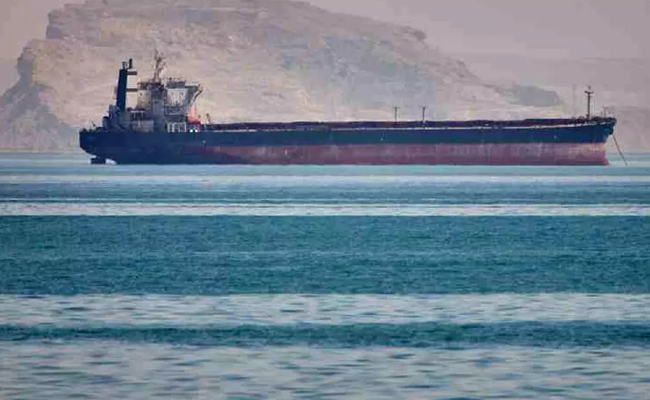
Kandla (Gujarat) (PTI): A vessel carrying 20,000 metric tonnes of Liquefied Petroleum Gas (LPG) arrived at Deendayal Port Authority in Kandla in Gujarat after crossing the Strait of Hormuz amid the West Asia crisis, officials said on Sunday.
The Marshall Islands-flagged MV SYMI started its journey from Qatar and docked at the port in Kandla around 11.30 pm on Saturday after crossing the Strait of Hormuz on May 13, they added.
Since early March, 13 India-flagged vessels, comprising 12 LPG tankers and one crude oil tanker, have crossed the Strait of Hormuz, a narrow waterway close to the coast of Oman through which roughly one-fifth of the world's energy supplies pass.
It has been severely disrupted by the conflict in West Asia that started on February 28, with the US and Israel launching joint attacks on Iran, triggering retaliatory strikes. It has resulted in one of the worst energy crisis the world has seen in recent decades.
Incidentally, at a special meeting of the United Nations Economic and Social Council (UNECOSOC) on safeguarding energy and supply flows, India’s Permanent Representative to the UN Parvathaneni Harish said targeting commercial shipping, endangering civilian crew and impeding freedom of navigation in the Strait of Hormuz is "unacceptable".
On May 13, an India-flagged commercial vessel came under attack off the coast of Oman.
Omani authorities rescued all 14 crew members of the vessel sailing from Somalia, but it was not immediately known who carried out the strike.