Sebi bans Mehul Choksi from capital market for 10 yrs; slaps Rs 5 cr fine for manipulating trades

New Delhi, Oct 31: Sebi on Monday barred fugitive businessman Mehul Choksi from the securities markets for 10 years and imposed a fine of Rs 5 crore on him for indulging in fraudulent trading in the shares of Gitanjali Gems Ltd.
He has been directed to pay the penalty within 45 days, as per the Securities and Exchange Board of India (Sebi) order.
Choksi, who was the chairman and managing director as well as part of promoter group of Gitanjali Gems, is the maternal uncle of Nirav Modi. Both of whom are facing charges of defrauding state-owned Punjab National Bank (PNB) of more than Rs 14,000 crore.
Both Choksi and Modi fled India after the PNB scam came to light in early 2018. While Choksi is said to be in Antigua and Barbuda, Modi is lodged in a British jail and has challenged India's extradition request.
The present proceedings emanate from a common show cause notice issued by Sebi in May 2022 against Choksi pursuant to an investigation by the regulator into the alleged manipulative trading in the scrip of Gitanjali Gems. The regulator conducted an investigation into the trading activities of certain entities in the scrip of the company for the period July 2011 to January 2012.
In its order, Sebi said that Choksi had funded a set of 15 entities known as 'front entities', who were directly or indirectly connected with him and with each other and who had taken position in the scrip of Gitanjali Gems both in the cash and derivative segments during the investigation period. He had used them as front entities for manipulation in the company's scrip.
It was observed that the fund transfers by the company to front entities were to the extent of Rs 77.44 crore, out of which funds to the tune of Rs 13.34 crore were used by front entities to trade in the scrip.
The regulator noted that immediately prior to the investigation period, the shares of Gitanjali Gems, excluding promoter holding and holdings of banks/ financial institutions/ FPIs, available to the general investors was 28.96 per cent for the quarter ended June 2011. This was reduced to 19.71 per cent in the quarter ended September 2011. Subsequently, the shares available to general investors increased to 25.36 per cent post the investigation period.
This indicates that Choksi, through front entities, tried to corner the shares available in the market during the investigation period to reduce the shares available for general investors which subsequently increased after the front entities sold the shares in the market. Further, the front entities cornered the position limits in the scrip of Gitanjali Gems by building up substantially large position in the derivatives segment.
"I find that the above mentioned findings coupled with the noticee's (Mehul C Choksi) failure to rebut the said findings, clearly establishes the noticee's role in creation of false and misleading appearance of trading in the scrip of GGL by using and funding the front entities in executing manipulated trades.
"I thus find that the noticee has violated the provisions of... PFUTP (Prohibition of Fraudulent and Unfair Trade Practices (PFUTP) Regulations," Sebi Whole Time Member Ashwani Bhatia said in his 20-page order.
Accordingly, the regulator has restrained Choksi "from buying, selling or otherwise dealing in securities, directly or indirectly, in any manner whatsoever and is further prohibited from accessing the securities market, for a period of ten years ... and the noticee shall pay a monetary penalty of Rs 5 crore."
In February this year, Sebi had prohibited Choksi from the securities markets for one year and levied a fine of Rs 1.5 crore on him for violating insider trading rules in the matter of Gitanjali Gems.
In February 2020, the regulator slapped a total fine of Rs 5 crore on Choksi, Gitanjali Gems and another individual for violating various regulations, including listing norms, in connection with the massive fraud on PNB.
Let the Truth be known. If you read VB and like VB, please be a VB Supporter and Help us deliver the Truth to one and all.
CM Siddaramaiah alleges ‘criminal conspiracy’ in Sringeri recount, vows legal action
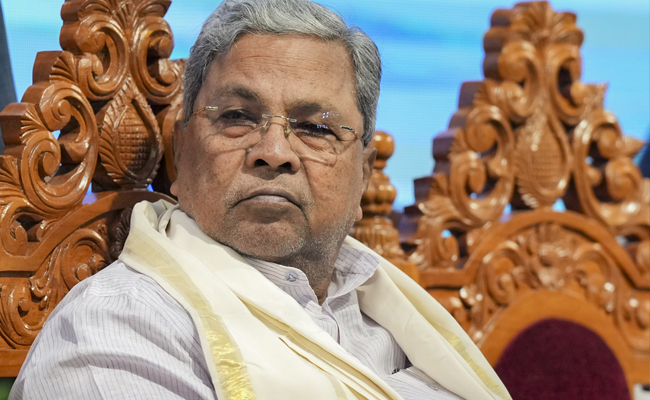
Bengaluru (PTI): Alleging a “criminal conspiracy” by BJP candidate D N Jeevaraj in the Sringeri Assembly poll recounting, Karnataka CM Siddaramaiah on Tuesday said the outcome was manipulated after valid postal ballot votes in favour of Congress leader T D Raje Gowda were tampered with during the recounting process.
Following a Karnataka High Court order on an election petition filed by Jeevaraj, challenging Raje Gowda’s election, the reverification and recounting were conducted on Saturday.
After the reverification and recount of postal ballots for the Sringeri Assembly constituency, votes polled in favour of Raje Gowda were reduced by 255, the returning officer said.
A report on the matter has been submitted to the Election Commission of India for further action, the officer added.
Congress leader Raje Gowda had won the 2023 Assembly polls from Sringeri by 201 votes, defeating his nearest rival Jeevaraj.
Addressing a press conference in Bengaluru, Siddaramaiah said the High Court had directed the recounting of postal ballots and that irregularities were noticed during the exercise conducted on May 2.
“This is a clear case of criminal conspiracy,” Siddaramaiah said, alleging that valid votes cast in favour of Raje Gowda were altered after being accepted by counting agents of all parties, including Congress, BJP, and JD(S).
He claimed that during the recounting of postal ballots, 255 votes were initially accepted as valid by all agents but were later tampered with by subordinate officials.
“There is a second mark on the votes polled in favour of Raje Gowda. They had accepted these as valid votes. Subsequently, another mark was made by officials. This is a clear case of criminal conspiracy,” he said.
When asked who was behind the alleged conspiracy, the CM replied, “It was hatched by Jeevaraj and others. It is planned.”
Siddaramaiah further alleged that the returning officer acted improperly by declaring the result despite the presence of an Election Commission observer during the recounting.
“Immediately after the counting, the returning officer announced the result. He should not have done so; this is against the law,” he said.
He pointed out that Raje Gowda had originally won by 201 votes, but after the recounting, the BJP candidate was declared the winner by 52 votes.
“The BJP has committed a criminal act of conspiracy. This is not vote chori but vote dacoity,” he alleged.
The CM said a police complaint had already been filed by Raje Gowda’s election agent, Sudhir Kumar, and emphasised the need for electoral integrity.
“We want transparency and free and fair elections. That is what our Constitution mandates,” he added.
Stating that the government would pursue legal remedies, Siddaramaiah said, “We are preparing an appeal challenging the returning officer’s announcement in a court of law.”
Responding to a separate query on elections in other states, the CM said there appeared to be an anti-incumbency factor in West Bengal, while results in Tamil Nadu were “surprising,” adding that Vijay’s party was emerging as the largest there.
Following the victory of party candidates in Bagalkote and Davanagere South, Siddaramaiah expressed confidence about future electoral prospects in Karnataka.
“Even in 2028, we will win the Assembly elections. We will come back,” the CM said.
Siddaramaiah added that he would order a forensic examination into the alleged tampering of postal ballots.