Sensex falls by 322 pts as Trump imposes reciprocal tariffs on 60 countries; IT shares lead losers
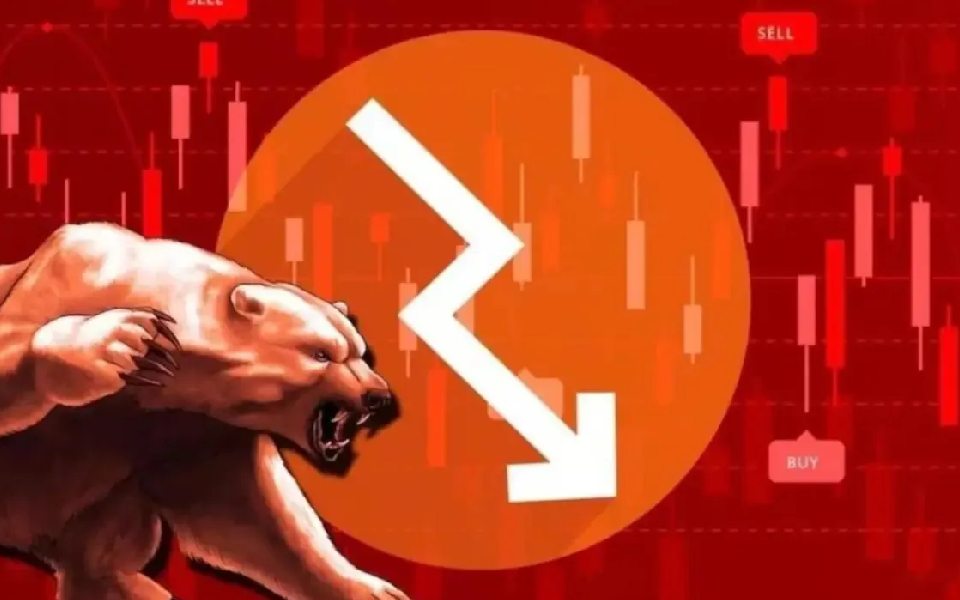
Mumbai, Apr 3 (PTI): Benchmark indices Sensex and Nifty closed down on Thursday due to selling in IT shares amid a global sell-off as US President Donald Trump unveiled reciprocal tariffs on about 60 countries, including India.
The 30-share BSE Sensex declined by 322.08 points or 0.42 per cent to close at 76,295.36. During the session, it plunged 809.89 points or 1.05 per cent to hit an intraday low of 75,807.55 but recovered some of the losses as pharma shares advanced.
The broader NSE Nifty fell 82.25 points or 0.35 per cent to settle at 23,250.10. The index declined by 186.55 points or 0.79 per cent to a low of 23,145.80 in early trade but later pared some losses.
President Trump, in a historic measure to counter higher duties on American products imposed globally, announced reciprocal tariffs on about 60 countries. The US imposed a 27 per cent tariff on Indian goods while imposing a 10 per cent baseline tax on imports from all countries.
"This is Liberation Day, a long-awaited moment. April 2, 2025, will forever be remembered as the day American industry was reborn, the day America's destiny was reclaimed, and the day that we began to make America wealthy again. We are going to make it wealthy, good, and wealthy," Trump said in his remarks from the Rose Garden at the White House on Wednesday.
IT shares led the losses with TCS falling the most by 3.98 per cent. Tech Mahindra declined by 3.79 per cent, HCL Technologies by 3.71 per cent and Infosys by 3.41 per cent.
"The imposition of very high reciprocal tariffs by the US on its major trading partners, including India, will likely have large negative consequences for global and US GDP growth, global and US inflation, and the profitability of certain sectors and companies in India," Sumit Pokharna, VP-Fundamental Research, Kotak Securities said, adding that a sequential revenue decline for all large Indian IT service companies for the March'25 quarter is expected due to seasonal weakness, lower billing days, and marginal deterioration in demand.
Tata Motors, Bajaj Finance, Kotak Mahindra Bank, Mahindra & Mahindra, Bharti Airtel and Maruti Suzuki India, Tata Steel were also among the laggards.
PowerGrid, Sun Pharmaceuticals, UltraTech Cement, NTPC, Asian Paints, Nestle India, Titan, IndusInd Bank and Axis Bank were among the gainers.
"The Nifty index opened lower in response to the US tariff announcements but saw some recovery due to resilience in select heavyweight stocks. This helped trim losses in early trades, leading to a range-bound session," Ajit Mishra - SVP, Research, Religare Broking Ltd, said.
In broader markets, the BSE smallcap gauge rose by 0.76 per cent and the midcap index went up 0.31 per cent.
Market breadth was positive as 2,809 stocks advanced while 1,175 declined and 139 remained unchanged on the BSE.
"The domestic market initially showed signs of recovery but ended with modest losses after the announcement of a relatively lower... tariff on US imports. The IT and auto sectors experienced selling pressure due to US slowdown concerns and disruptions in the supply chain," Vinod Nair, Head of Research, Geojit Investments, said.
Nair further, said pharmaceutical stocks benefited from being exempt from the tariffs. Nonetheless, robust domestic macroeconomic data and lower crude oil prices aided the broader market performance.
Although the tariff presents short-term challenges, India's economic resilience and bilateral trade agreement may help mitigate the overall impact, he added.
According to Choice Wealth' Vice President Nikunj Saraf, the US tariff on Indian exports introduces near-term economic headwinds, affecting key industries like automobiles, textiles, and gems & jewellery.
While India's trade surplus with the US is significant, prolonged tariffs may force us to explore alternative economic partnerships to safeguard growth.
If these duties persist and impact our economy, a strategic shift toward newer markets and domestic resilience will be imperative. The focus now must be on strong trade negotiations and proactive policy measures to mitigate risks, Saraf said.
Among the sectoral indices, Focussed IT plunged the most by 4.13 per cent, IT (3.78 per cent), Teck (2.85 per cent), Auto (1.14 per cent), Metal (0.99 per cent), Oil & Gas (0.59 per cent), Consumer Discretionary (0.24 per cent) and Energy (0.38 per cent).
On the other hand, Utilities, Power, Healthcare, Telecommunication, Consumer Durables, Services, and FMCG were among the gainers.
Despite, market ended in the red territory, the market capitalisation of BSE-listed firms rose by Rs 35,170.32 crore to Rs 4,13,33,265.92 (USD 4.83 trillion).
In Asian markets, Tokyo's Nikkei plunged the most by nearly 3 per cent, followed by Hong Kong (1.52 per cent), Seoul's KOSPI (0.76 per cent) and Shanghai (0.24 per cent).
European markets were trading lower in the mid-session deals. Wall Street ended higher on Wednesday.
Global oil benchmark Brent crude declined 3.68 per cent to USD 72.19 a barrel.
Meanwhile, foreign Institutional Investors (FIIs) offloaded equities worth Rs 1,538.88 crore on Wednesday, while Domestic Institutional Investors (DIIs) purchased shares worth Rs 2,808.83 crore on a net basis.
On Wednesday, the 30-share BSE Sensex rebounded 592.93 points to settle at 76,617.44, and the NSE Nifty climbed 166.65 points to settle at 23,332.35.
Let the Truth be known. If you read VB and like VB, please be a VB Supporter and Help us deliver the Truth to one and all.
Assam Police at Pawan Khera's residence in national capital, Delhi Police assisting

New Delhi (PTI): An Assam Police team on Tuesday is at the Delhi residence of Congress leader Pawan Khera for questioning in connection with a case linked to allegations made against Assam Chief Minister Himanta Biswa Sarma and his family, official sources said.
The team formally informed Delhi Police upon arrival, following which a local police team joined and is assisting in the proceedings, the source said.
The development comes amid a political tussle after Sarma alleged that the Congress used "false information" sourced from a Pakistani social media group to level charges against his wife regarding multiple passports and overseas assets. He termed the allegations an attempt to influence the Assam elections and a punishable offence.
Khera had recently sought clarifications on Sarma's wife's alleged foreign assets, prompting a complaint and subsequent police action.