Sensex sinks 642 points as crude oil woes persist
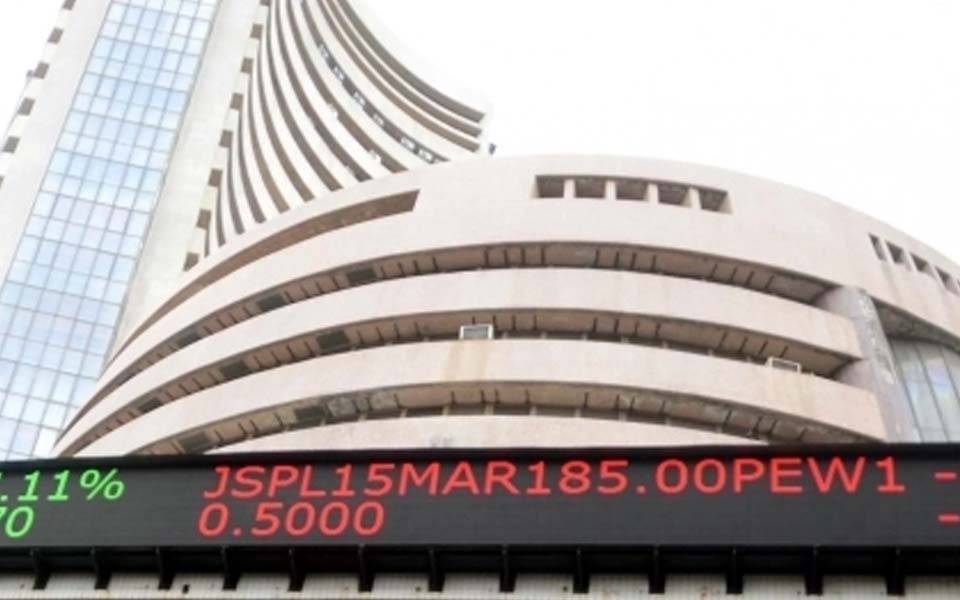
Mumbai, Sep 17: Market benchmark BSE Sensex on Tuesday plummeted 642 points as investors weighed India's fiscal worries due to soaring crude prices in the wake of growing geopolitical tensions in the Middle East.
After nose diving 704 points, the 30-share index ended 642.22 points, or 1.73 per cent, lower at 36,481.09. The broader NSE Nifty too settled 185.90 points, or 1.69 per cent, down at 10,817.60.
On the Sensex chart, losses were mainly driven by Hero MotoCorp, Tata Motors, Axis Bank, Tata Steel, Maruti and SBI falling as much as 6.19 per cent.
Of the 30 scrips of the BSE gauge, HUL, Asian Paints and Infosys were the three gainers.
Investors were spooked by geopolitical uncertainties over the Saudi oil turmoil amid reports that higher oil prices were likely to severely hit economic conditions in India, which imports more than 70 per cent of its oil needs, experts said.
The attack on the world's largest oil processing facility in Saudi Arabia has led to a record surge in global crude prices.
After soaring as much as 20 per cent to USD 71.95 per barrel on Monday, Brent crude futures corrected slightly to trade at USD 67.97 per barrel on Tuesday.
Higher import cost of oil could sharply worsen current account position, compress profit margins and raise inflation, a Nomura report said.
Tracking the movement in oil prices, the rupee further depreciated by 37 paise (intra-day) to trade at 71.97 per US dollar.
Market participants were also on edge awaiting cues from the upcoming trade talks between China and the US as well as a much-anticipated policy meeting of the Federal Reserve, scheduled to begin later in the day.
Elsewhere in Asia, Shanghai Composite Index and Hang Seng ended significantly lower, while Nikkei and Kospi settled in the green.
Stock exchanges in Europe were trading on a mixed note in their respective early sessions.
Let the Truth be known. If you read VB and like VB, please be a VB Supporter and Help us deliver the Truth to one and all.
AIITA welcomes Karnataka’s ban on obscene songs in school events

Bhatkal: The Karnataka unit of the All India Ideal Teachers Association (AIITA) has welcomed the Karnataka government’s decision to strictly ban school children from dancing to obscene songs during educational and cultural programmes in government, aided, and private schools across the state.
AIITA Karnataka State President M. R. Manvi congratulated the government for taking what he termed an important step to preserve the sanctity of education.
“Such decisions to safeguard the dignity of school children and uphold the values of education are the need of the hour. This rule should not be limited to government schools alone but must be strictly implemented in all private educational institutions as well,” he said.
He further urged the government to address other concerns within school programmes.
“The government should not only prohibit obscene dances in the name of school anniversaries, but also ensure that plays and dialogues that incite religious hatred are avoided. Schools should be centres of harmony, not platforms for spreading hatred,” he added.
According to a recent circular issued by the Department of School Education and Literacy, obscene dances are adversely affecting the mental health and moral values of students.
In this regard, schools have been advised to use songs that promote nationalism, positive thinking, the greatness of Kannada culture, and value-based traditions instead of inappropriate content during programmes.
The circular also emphasises that students should be dressed in decent attire.
AIITA also backed the department’s warning that disciplinary action would be taken against head teachers if such guidelines are violated. The association has further demanded that district Deputy Directors of Public Instruction strictly monitor the implementation of these rules.