Sensex tumbles 645 pts on global sell-off, rising US bond yields; FMCG, IT shares major losers
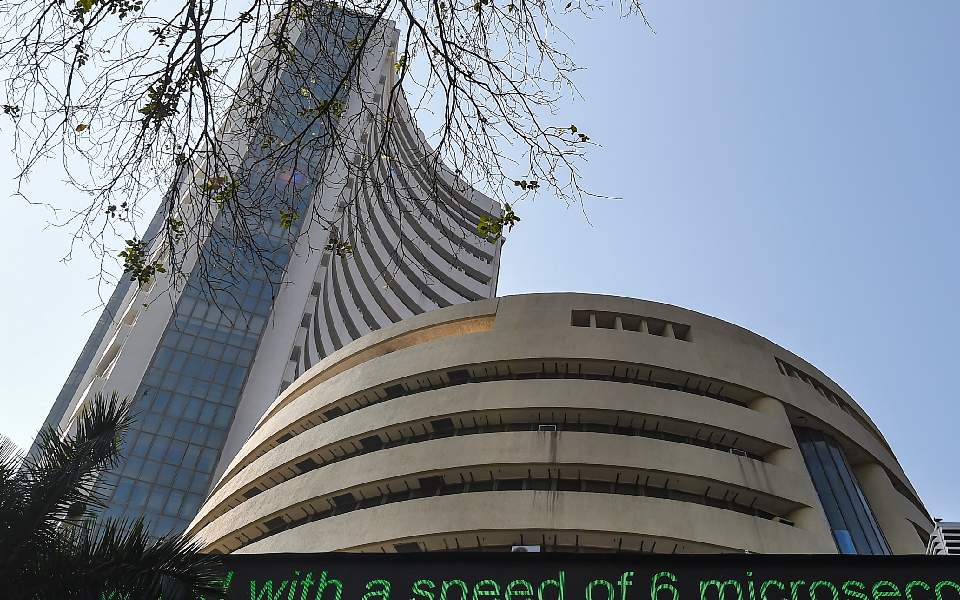
Mumbai, May 22 (PTI): Benchmark Sensex declined by nearly 645 points while Nifty retreated to 24,600 level due to selling in IT, oil and FMCG shares amid a global equity rout triggered by surging bond yields and US debt concerns.
The 30-share BSE Sensex tanked 644.64 points or 0.79 per cent to settle at 80,951.99 with 27 of its constituents ending lower. The index opened lower and tanked further 1,106.71 points or 1.35 per cent to hit a low of 80,489.92 during the day due to across-the-board selling.
The NSE Nifty tumbled 203.75 points or 0.82 per cent to 24,609.70.

From the Sensex firms, Mahindra & Mahindra, Bajaj Finserv, Tech Mahindra, Power Grid, ITC, Hindustan Unilever, Reliance Industries and Maruti were the biggest laggards.
IndusInd Bank, Bharti Airtel and UltraTech Cement were the gainers.
"The key benchmark indices witnessed declines amid US fiscal concerns that the proposed budget bill could significantly increase the national debt, pushing US treasury yields higher due to tepid long-term bond demand. Adding to the pressure, a major credit rating agency’s downgrade of the US credit outlook sparked broad-based selloffs across Asian markets," Vinod Nair, Head of Research, Geojit Investments Limited, said.
US bond yields breached the 5 per cent mark while Japanese bond yields surged to 3.5 per cent which prompted sell-off in riskier assets and emerging markets like India.
"Indian equities followed their global counterparts and witnessed major sell-off after a sharp spike in US and Japanese bond yields made investors risk averse towards equities," Prashanth Tapse, Senior VP (Research), Mehta Equities Ltd, said.
The BSE midcap gauge declined 0.33 per cent while smallcap index went up by 0.17 per cent.
Among sectoral indices, energy dropped the most by 1.25 per cent, followed by FMCG (1.25 per cent), BSE Focused IT (1.19 per cent), oil & gas (1.13 per cent), IT (1.09 per cent) and auto (0.87 per cent).
Telecommunication and services were the gainers.
As many as 2,178 stocks declined while 1,741 advanced and 167 remained unchanged on the BSE.
In Asian markets, South Korea's Kospi, Japan's Nikkei 225 index, Shanghai's SSE Composite index and Hong Kong's Hang Seng settled lower. Markets in Europe were trading in the negative territory.
US markets ended sharply lower on Wednesday.
Global oil benchmark Brent crude declined 1.37 per cent to USD 64.02 a barrel.
Foreign Institutional Investors (FIIs) turned buyers on Wednesday after a day's breather. They bought equities worth Rs 2,201.79 crore, according to exchange data.
The BSE benchmark jumped 410.19 points or 0.51 per cent to settle at 81,596.63 on Wednesday. The Nifty climbed 129.55 points or 0.52 per cent to 24,813.45.


Let the Truth be known. If you read VB and like VB, please be a VB Supporter and Help us deliver the Truth to one and all.
Ordinance issued to increase number of Supreme Court judges from 34 to 38
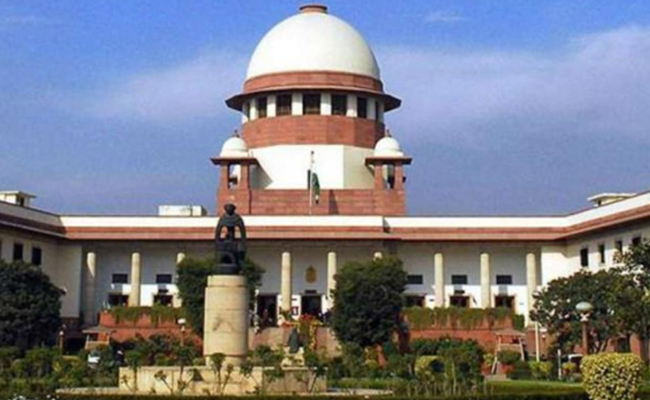
New Delhi (PTI): The government has promulgated an ordinance to increase the strength of the Supreme Court from the present 34 judges to 38, including the Chief Justice of India.
The law ministry notified the ordinance on Saturday, which amended the Supreme Court (Number of Judges) Act, 1956, to increase the sanctioned strength of the top court.
So far, the sanctioned strength of the top court was 34, including the Chief Justice of India (CJI). Now, the number of judges has been increased by four, taking the sanctioned strength to 38.
The top court will now have 37 judges, other than the CJI.
With the apex court having two vacancies at present, and the ordinance coming into force immediately, the Supreme Court Collegium will now have to recommend six names for appointment as judges in the top court.
A bill will be brought in the Monsoon Session of Parliament to convert the ordinance – an executive order – into a law passed by Parliament.
The Union Cabinet had cleared a draft bill on May 5 to increase the number of apex court judges.
The strength of the Supreme Court was last increased from 30 to 33 (excluding the CJI) in 2019.
The Supreme Court (Number of Judges) Act, as originally enacted in 1956, put the maximum number of judges (excluding the CJI) at 10.
This number was increased to 13 by the Supreme Court (Number of Judges), Amendment Act, 1960, and to 17 by another amendment to the law.
The Supreme Court (Number of Judges) Amendment Act, 1986, augmented the strength of judges from 17 to 25, excluding the CJI.
A fresh amendment in 2009 further increased the strength from 25 to 30.
Article 124(3) of the Constitution lists the qualifications required to become a Supreme Court judge.
An Indian citizen who has either served as a high court judge for at least five years, or as an advocate for 10 years, or is a distinguished jurist, can be appointed to the top court.
The strength of the Supreme Court is increased based on the recommendations of the CJI, who writes to the Union law minister. After consulting the finance ministry, the Department of Justice under the law ministry moves the Cabinet with a draft bill.