Stock markets decline in early trade tracking weak global peers, fresh foreign fund outflows
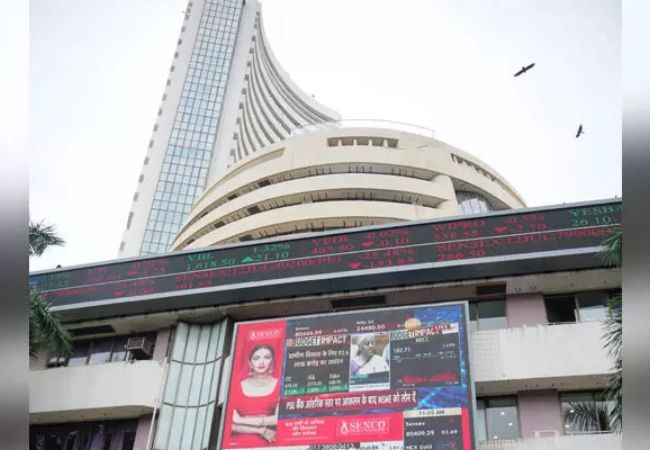
Mumbai (PTI): Equity benchmark indices Sensex and Nifty declined in initial trade on Wednesday, tracking weak global market trends and fresh foreign fund outflows.
The 30-share BSE Sensex dropped 135.8 points to 84,537.22 in early trade. The 50-share NSE Nifty dipped 53.85 points to 25,856.20.
From the Sensex firms, Tata Motors Passenger Vehicles, HDFC Bank, Bajaj Finserv, NTPC, and Sun Pharma were among the laggards.
However, Infosys, Hindustan Unilever, Tata Consultancy Services, HCL Tech, Tech Mahindra and ICICI Bank were among the gainers.
In Asian markets, South Korea's Kospi, Shanghai's SSE Composite index and Hong Kong's Hang Seng index quoted lower while Japan's Nikkei 225 index traded higher.
US markets ended in negative territory on Tuesday.
"Global stock markets continue to trade under pressure, extending a volatile phase that has pulled major US indices like the S&P 500 and Nasdaq into their longest losing streaks in months. The weakness is not a panic-driven crash but a broad and healthy correction following an overheated rally through most of 2025.
"The biggest drag has come from cooling enthusiasm in AI and mega-cap technology stocks," Ponmudi R, CEO of Enrich Money, an online trading and wealth tech firm, said.
He further said that adding to the pressure, the Federal Reserve's tone has turned more hawkish in recent days.
Foreign institutional investors (FIIs) offloaded equities worth Rs 728.82 crore on Tuesday. However, domestic institutional investors (DIIs) bought stocks worth Rs 6,156.83 crore, according to exchange data.
Brent crude, the global oil benchmark, dipped 0.25 per cent to USD 64.73 per barrel.
On Tuesday, the Sensex declined 277.93 points, or 0.33 per cent, to settle at 84,673.02. The Nifty dipped 103.40 points, or 0.40 per cent, to 25,910.05.
Let the Truth be known. If you read VB and like VB, please be a VB Supporter and Help us deliver the Truth to one and all.
Gold, silver soar as US-Iran deal hopes lift bullion demand

New Delhi (PTI): Gold prices rebounded by Rs 2,900 to Rs 1.55 lakh per 10 grams in the national capital on Wednesday, while silver climbed to Rs 2.54 lakh per kilogram as easing geopolitical tensions triggered a pullback in oil rates, boosting demand for precious metals.
According to the All India Sarafa Association, the yellow metal of 99.9 per cent purity jumped by Rs 2,900, or nearly 2 per cent, to Rs 1,55,400 per 10 grams (inclusive of all taxes) from Tuesday's closing level of Rs 1,52,500 per 10 grams.
Traders attributed the surge in bullion prices to reports that Washington and Tehran are close to finalising a framework agreement to end months of conflict, raising the prospects of smoother flows through the Strait of Hormuz and easing inflation concerns tied to energy markets.
"Gold rallied strongly on Wednesday as easing geopolitical tensions triggered a sharp reversal in key macro drivers that had recently pressured precious metals," Saumil Gandhi, Senior Analyst - Commodities at HDFC Securities, said.
Silver prices also advanced for the third straight session by rising Rs 3,500, or 1.4 per cent, to Rs 2,54,500 per kg (inclusive of all taxes). The metal had settled at Rs 2,51,000 per kg in the previous session, as per the Association.
"The prospect of a diplomatic breakthrough triggered a steep decline in oil prices and the US dollar, easing concerns about inflation while boosting demand for precious metals," Gandhi said.
Globally, spot gold increased by USD 106.15, or 2.33 per cent, to USD 4,663.70 per ounce while silver gained USD 3.40, or 4.68 per cent, to USD 76.24 per ounce.
"Gold witnessed a sharp rally as markets reacted positively to reports that the US and Iran are moving closer to a one-page agreement framework aimed at ending the conflict," Jateen Trivedi, VP Research Analyst - Commodity and Currency, LKP Securities, said.
Despite strong international gains, rupee strength limited the upside in domestic gold prices. The market is now highly focused on final confirmation and execution of the proposed deal, he added.
Any negative surprise or breakdown in negotiations could trigger a sharp sell-off in gold, while a successful agreement and sustained ceasefire could push the bullion prices higher in the near-term, Trivedi said.