Stock markets log gains for 5th day; Sensex climbs 213 points led by IT shares
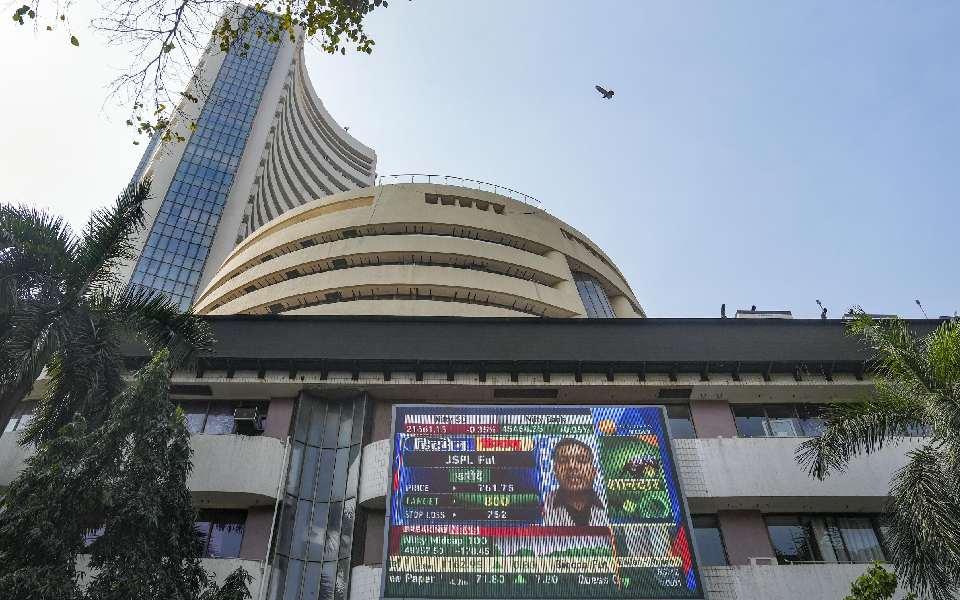
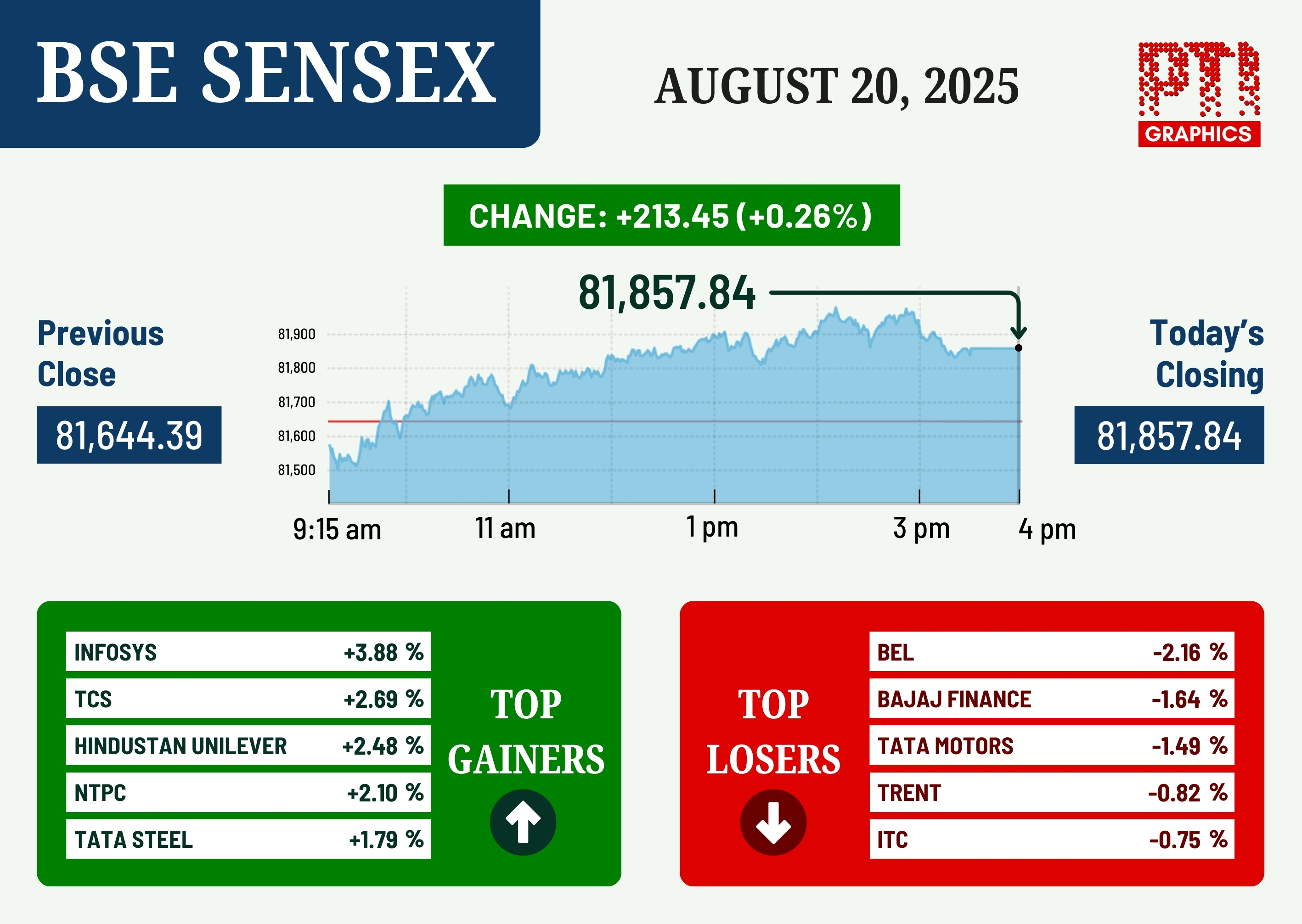
Mumbai, Aug 20 (PTI): Benchmark BSE Sensex closed higher by 213 points on Wednesday, extending its rally to the fifth consecutive day on heavy buying in IT and FMCG shares.
The 30-share BSE Sensex climbed 213.45 points or 0.26 per cent to settle at 81,857.84 with 15 of its constituents ending higher and the rest with losses. During the day, it jumped 341.23 points or 0.41 per cent to 81,985.62.
The 50-share NSE Nifty edged higher by 69.90 points or 0.28 per cent to 25,050.55.
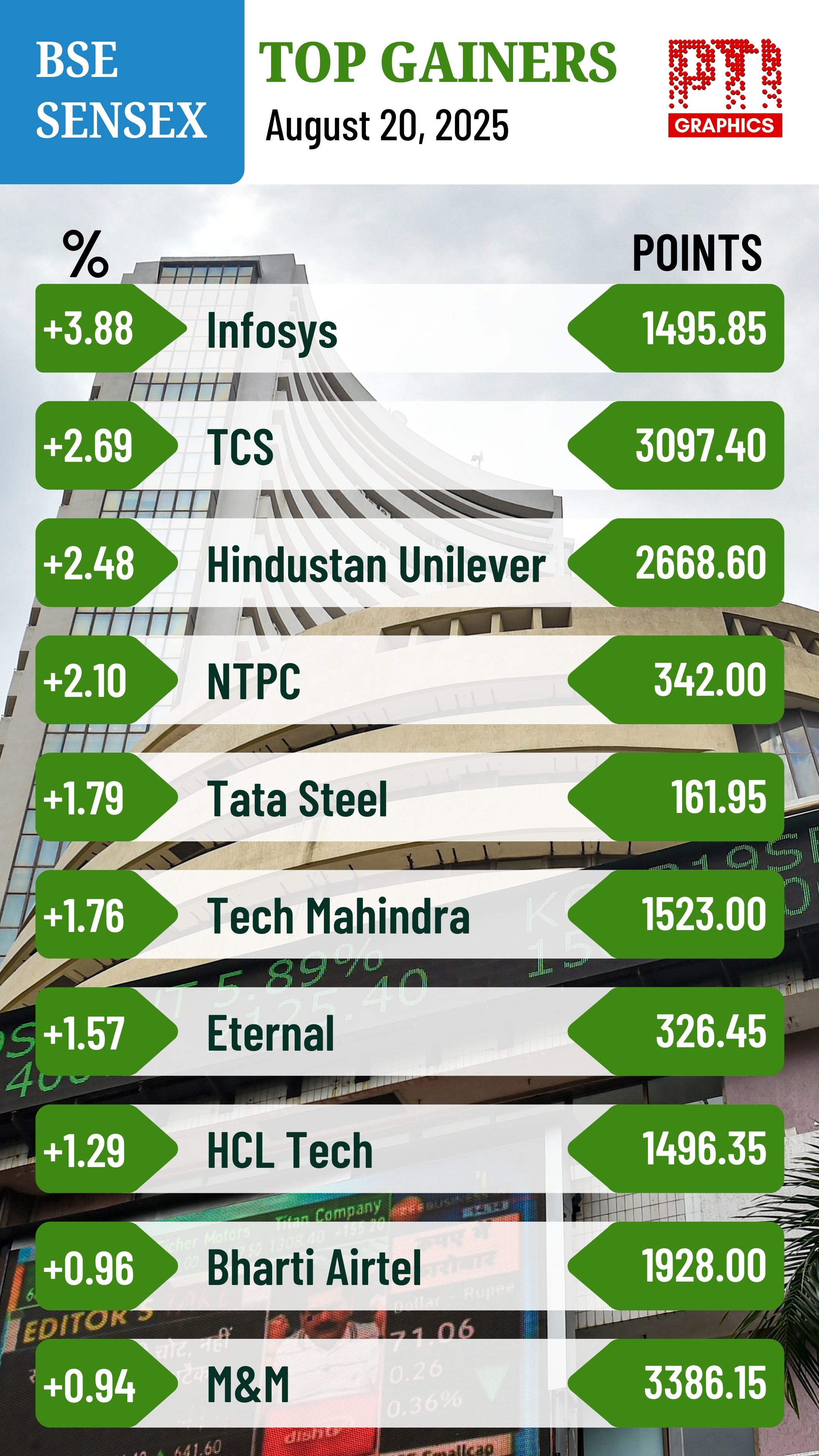
Among Sensex firms, Infosys surged the most by 3.88 per cent, followed by Tata Consultancy Services, which climbed 2.69 per cent. Hindustan Unilever, NTPC, Tata Steel, Tech Mahindra, Eternal and HCL Tech were also among the gainers.
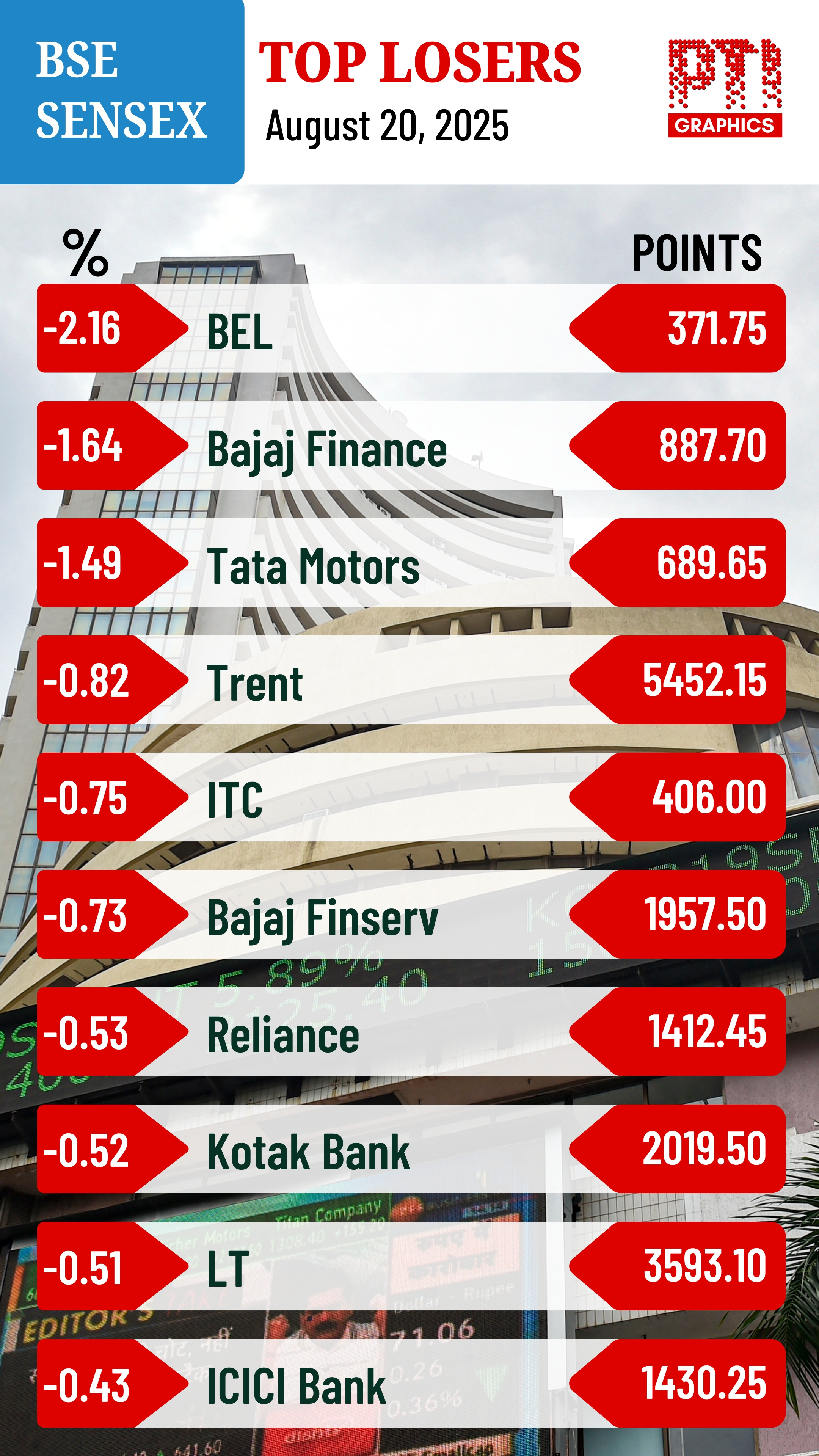
However, Bharat Electronics, Bajaj Finance, Tata Motors and Trent were among the laggards.
Reliance Industries dropped over half a per cent, capping gains in the key index.
"The Indian market sustained its positive momentum, supported by strong domestic inflows and favourable macro tailwinds. However, rich valuations and external risks, particularly the US tariffs and sanctions on purchase of Russian crude, continue to pose challenges. Hence, greater visibility on US trade policy and the path of earnings recovery will be critical.
"Meanwhile, global sentiment is cautious ahead of the release of the FOMC minutes later today, with investor attention gradually shifting to the US Fed Chair’s speech at Jackson Hole this weekend, which is expected to provide clearer guidance on future policy direction," Vinod Nair, Head of Research, Geojit Investments Limited, said.
The BSE midcap gauge climbed 0.39 per cent and smallcap index went up by 0.30 per cent.
Among BSE sectoral indices, BSE Focused IT jumped 2.70 per cent, IT (2.61 per cent), teck (2.22 per cent), FMCG (1.36 per cent), realty (1.04 per cent) and telecommunication (0.68 per cent).
Bankex, oil & gas, financial services and energy were the laggards.
“Today’s advance was largely supported by buying in large-cap IT stocks and steady domestic sentiment. In the absence of any major domestic triggers, global cues such as updates from the Jackson Hole symposium, geopolitical developments, and discussions in the GST Council meeting will remain on investors’ radar,” Ajit Mishra – SVP, Research, Religare Broking Ltd, said.
In Asian markets, South Korea's Kospi and Japan's Nikkei 225 index settled lower while Shanghai's SSE Composite index and Hong Kong's Hang Seng ended higher.
Markets in Europe were trading on a mixed note.
The US markets ended mostly lower on Tuesday.
Investors turned their attention towards US Federal Reserve Chair Jerome Powell's forthcoming statements at the Jackson Hole Symposium and minutes from the Fed's recent meeting.
Rising for the fourth trading day in a row on Tuesday, the Sensex edged higher by 370.64 points or 0.46 per cent to settle at 81,644.39. The Nifty climbed 103.70 points or 0.42 per cent to 24,980.65.
Foreign Institutional Investors (FIIs) offloaded equities worth Rs 634.26 crore on Tuesday, according to exchange data.
Global oil benchmark Brent crude climbed 1.14 per cent to USD 66.54 a barrel.
Let the Truth be known. If you read VB and like VB, please be a VB Supporter and Help us deliver the Truth to one and all.
Real Madrid fines Valverde and Tchouaméni half a million euros each for altercation

Barcelona (AP): Real Madrid slapped players Federico Valverde and Aurélien Tchouaméni with half-a-million-euro ($588,000) fines on Friday for their altercation during practice.
The massive fines came a day after the midfielders tussled when the team trained. Valverde said in a post on social media on Thursday that no punches were thrown. But Valverde knocked his head on a table and he suffered a small cut that required a brief hospital visit.
On social media, Valverde initially called it a “meaningless fight” with a teammate and said “everything has been blown out of proportion."
His employers, however, considered it a significant enough breach of team discipline to nail both Valverde and Tchouaméni with fines that bite even the bank account of a top soccer player. The half-a-million euro penalties reflect the reputational damage the club was enduring in a chaotic end to a disappointing season.
In a statement, the 15-time European champion said its disciplinary action was concluded after both players expressed to the club “their complete remorse for what happened and apologized to one another.”
Madrid added they also apologized to their teammates, the coaching staff and club supporters, as well as showing their willingness to accept whatever disciplinary action the club deemed “opportune.”
Tchouaméni was back training with Madrid on Friday, two days before they play at Barcelona in a clasico. Madrid has to win otherwise Barcelona will be crowned La Liga champion.
After being notified of the fine, he posted a public apology to the club and its fans on social media.
“What happened this week in training is unacceptable,” Tchouaméni wrote. "I say this while thinking about the example we are expected to set for young people, whether in football or at school.
“Above all, I am sorry for the image we projected of the club.”
Valverde was not at practice due to the head knock.
Both players are set to play in the World Cup next month, with Tchouaméni playing for France and Valverde for Uruguay.
Chaotic end to a poor season
===================
The run-in between the players, who for seasons have played side by side in Madrid's midfield, came after they argued this week in previous training sessions. But tempers boiled over on Thursday. Spanish media was rife with reports that the players previously disagreed over the club's decision to let coach Xabi Alonso go after just months on the job.
It was not the only altercation involving Madrid players during training this week. Álvaro Carreras confirmed he was in a “minor” incident with a teammate. Spanish media said he and fellow defender Antonio Rüdiger got into a scuffle.
Álvaro Arbeloa, the coach who was promoted from Madrid's reserve team when Alonso was fired in January, will face tough questions on what went wrong inside the changing room when he gives a press conference on Saturday ahead of the clasico at Camp Nou.
Madrid is facing a second consecutive campaign without a major trophy amid rumors in the Spanish media that club president Florentino Pérez is considering bringing back Jose Mourinho to straighten out his underperforming team.