Stock markets snap 2-day rally, Sensex falls nearly 625 pts as banking, IT shares retreat
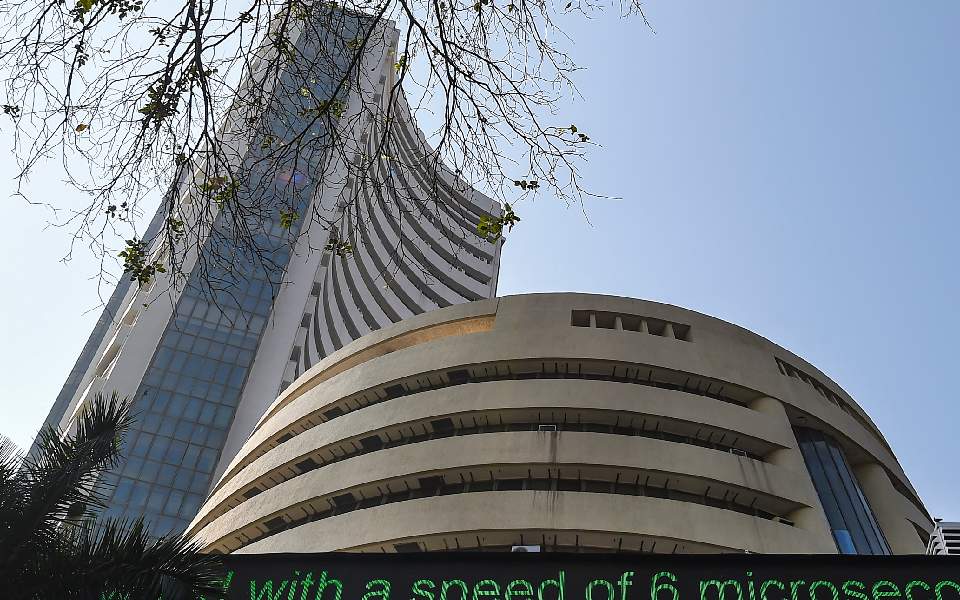
Mumbai, May 27 (PTI): Snapping the two-day gaining streak, benchmark Sensex tumbled nearly 625 points on Tuesday due to profit-taking in banking, IT and auto shares.
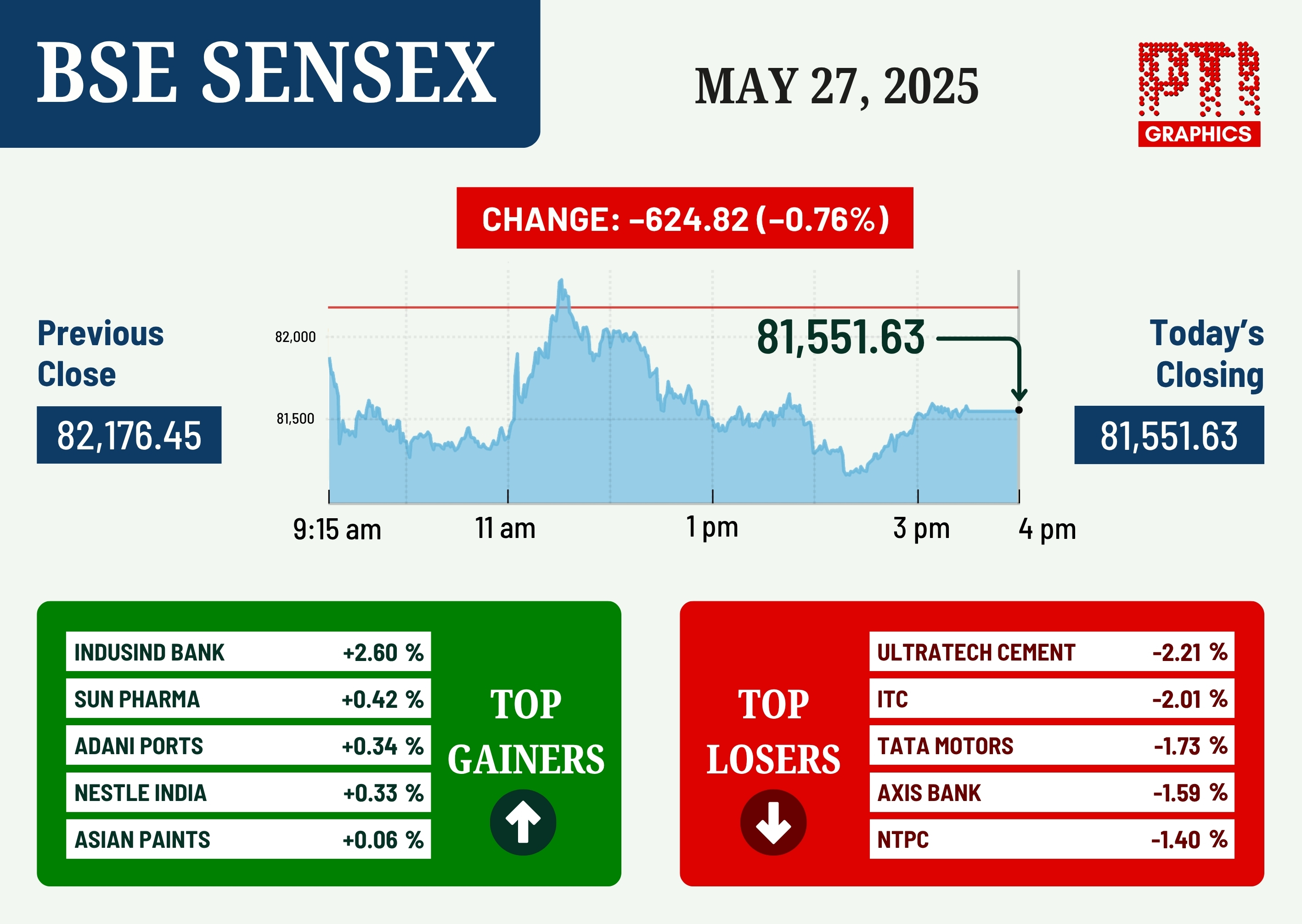
The 30-share BSE Sensex dropped 624.82 points or 0.76 per cent to settle at 81,551.63 in a volatile session. During the day, the barometer tanked 1,054.75 points or 1.28 per cent to 81,121.70. As many as 25 Sensex shares declined while five advanced.
The 50-issue NSE Nifty declined 174.95 points or 0.70 per cent to 24,826.20. The barometer saw sharp swings in both directions in the first half but sustained profit-taking in heavyweight stocks dragged the index down.
Key indices Sensex and Nifty had advanced around 1.5 per cent in the past two sessions.
Analysts said investors turned cautious ahead of the release of industrial and manufacturing production data for April on Wednesday and the first quarter GDP numbers, scheduled to be announced later this week.
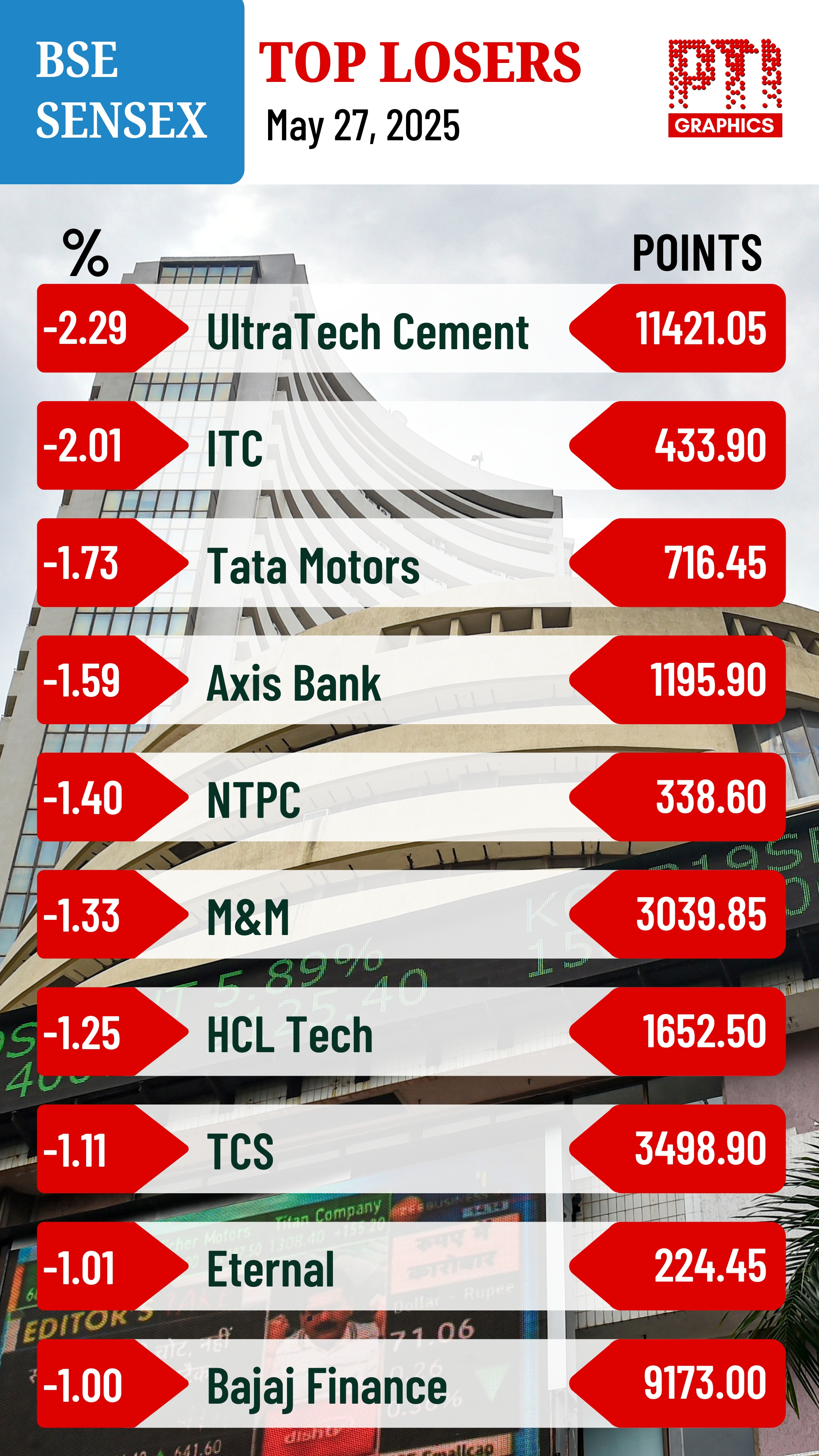
From the Sensex firms, UltraTech Cement fell the most by 2.21 per cent, followed by ITC which declined 2.01 per cent. Tata Motors, NTPC, Axis Bank, HCL Tech, Mahindra & Mahindra, HDFC Bank, ICICI Bank and Eternal were among the laggards.
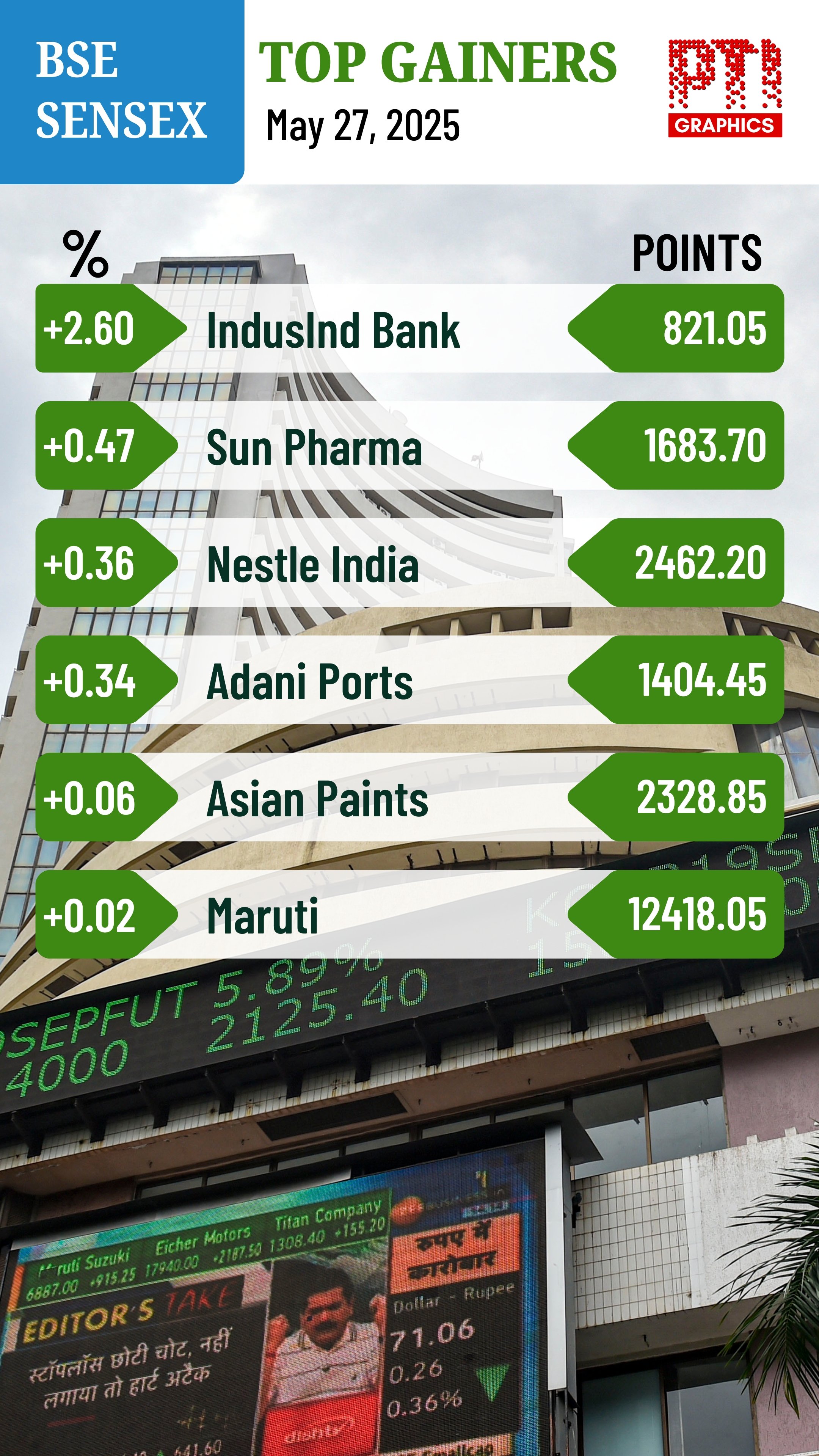
IndusInd Bank, Sun Pharma, Adani Ports, Nestle and Asian Paints were the gainers.
"The domestic market witnessed volatility and snapped a two-day rally, as investors opted for profit booking driven by valuation concerns and weakness across Asian markets," Vinod Nair, Head of Research, Geojit Investments, said.
Mid- and small-cap segments remained relatively resilient, supported by better-than-estimated Q4 earnings and moderation in premium valuation, Nair added.
The BSE smallcap gauge went up by 0.19 per cent and midcap index climbed 0.18 per cent.
Among sectoral indices, FMCG dropped 0.79 per cent, IT declined 0.71 per cent, BSE Focused IT by 0.68 per cent, auto by 0.66 per cent, bankex by 0.60 per cent, utilities by 0.57 per cent and metal by 0.52 per cent.
Healthcare, industrials, telecommunication, capital goods, realty and consumer durables were the gainers.
"We are currently witnessing a tug-of-war between bulls and bears amid mixed global cues. However, favourable domestic factors such as a good monsoon and strong macroeconomic data are helping maintain a positive undertone," Ajit Mishra – SVP, Research, Religare Broking Ltd said.
In Asian markets, South Korea's Kospi and Shanghai's SSE Composite index settled in the negative territory while Japan's Nikkei 225 index and Hong Kong's Hang Seng ended higher. Markets in Europe were trading in the green. US markets were shut on Monday for Memorial Day.
Foreign Institutional Investors (FIIs) bought equities worth Rs 135.98 crore on Monday, according to exchange data.
Global oil benchmark Brent crude climbed 0.51 per cent to USD 65.07 a barrel.
The BSE Sensex jumped 455.37 points or 0.56 per cent to settle at 82,176.45 on Monday. The Nifty climbed 148 points or 0.60 per cent to 25,001.15.
Let the Truth be known. If you read VB and like VB, please be a VB Supporter and Help us deliver the Truth to one and all.
Ordinance issued to increase number of Supreme Court judges from 34 to 38
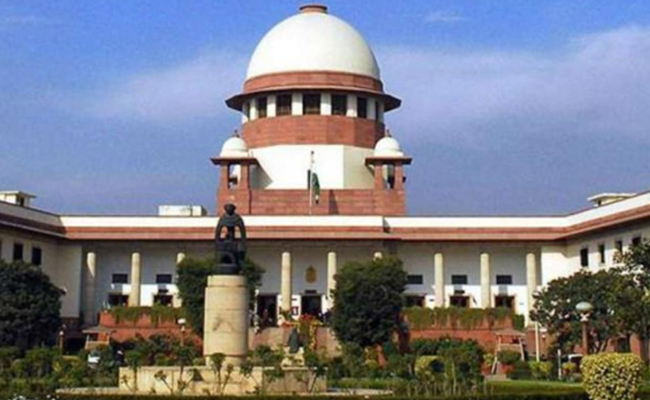
New Delhi (PTI): The government has promulgated an ordinance to increase the strength of the Supreme Court from the present 34 judges to 38, including the Chief Justice of India.
The law ministry notified the ordinance on Saturday, which amended the Supreme Court (Number of Judges) Act, 1956, to increase the sanctioned strength of the top court.
So far, the sanctioned strength of the top court was 34, including the Chief Justice of India (CJI). Now, the number of judges has been increased by four, taking the sanctioned strength to 38.
The top court will now have 37 judges, other than the CJI.
With the apex court having two vacancies at present, and the ordinance coming into force immediately, the Supreme Court Collegium will now have to recommend six names for appointment as judges in the top court.
A bill will be brought in the Monsoon Session of Parliament to convert the ordinance – an executive order – into a law passed by Parliament.
The Union Cabinet had cleared a draft bill on May 5 to increase the number of apex court judges.
The strength of the Supreme Court was last increased from 30 to 33 (excluding the CJI) in 2019.
The Supreme Court (Number of Judges) Act, as originally enacted in 1956, put the maximum number of judges (excluding the CJI) at 10.
This number was increased to 13 by the Supreme Court (Number of Judges), Amendment Act, 1960, and to 17 by another amendment to the law.
The Supreme Court (Number of Judges) Amendment Act, 1986, augmented the strength of judges from 17 to 25, excluding the CJI.
A fresh amendment in 2009 further increased the strength from 25 to 30.
Article 124(3) of the Constitution lists the qualifications required to become a Supreme Court judge.
An Indian citizen who has either served as a high court judge for at least five years, or as an advocate for 10 years, or is a distinguished jurist, can be appointed to the top court.
The strength of the Supreme Court is increased based on the recommendations of the CJI, who writes to the Union law minister. After consulting the finance ministry, the Department of Justice under the law ministry moves the Cabinet with a draft bill.