Did protectors turn felons?
There is no scale to measure sins. But there could be sins that are legally classified as those who can be given harsh punishment and others that’ll be let off with a warning or smaller punishment. Stealing cattle may be an act of stealing, but it is the most gruesome of all. Because those who rear cattle, have the deepest emotional bond with the animal. It is more than an animal to them. That they are also dependent on that for economic means is a very small aspect of cattle rearing. The loss caused by a lost cattle cannot be measured by money alone.
Sangh Parivar has been crying hoarse about cattle stealing in Coastal Karnataka since long. In the recent times they have also come together to form Gorakshak teams. But are cattle being stolen in such numbers that people need to create an alternate to check this menace? How many complaints have been made in police stations against cattle stealing? When one checks in police stations about the rumours of cattle stealing that get floated in WhatsApp and social media, the answer is negative. Most of the rumours are just that. But that does not mean there are no instances of cattle stealing. There are teams that hoodwink the authorities and illegally transport cattle to abattoirs. And the legal system has been treating this issue like any other crime that comes under stealing. Hardly any of the cattle rearing families have gone to Gorakshaks demanding their intervention, stating they have lost faith in the law implementation authorities. The Gorakshaks are an order unto their own, indulging in hafta collection, fanning and spreading communal clashes under the pretext of protecting the cattle. Even Prime Minister Narendra Modi voiced his discontentment against fake Gorakshaks. They pose as protectors during the day and turn into criminals during the night. The secular government in Karnataka has failed to control their unabated rise and activities. The nexus between police and Sangh Parivar has provided conducive atmosphere for the growth of these rowdy elements. The murder of a cattle trader in Hiriyadka confirms this truth yet again.
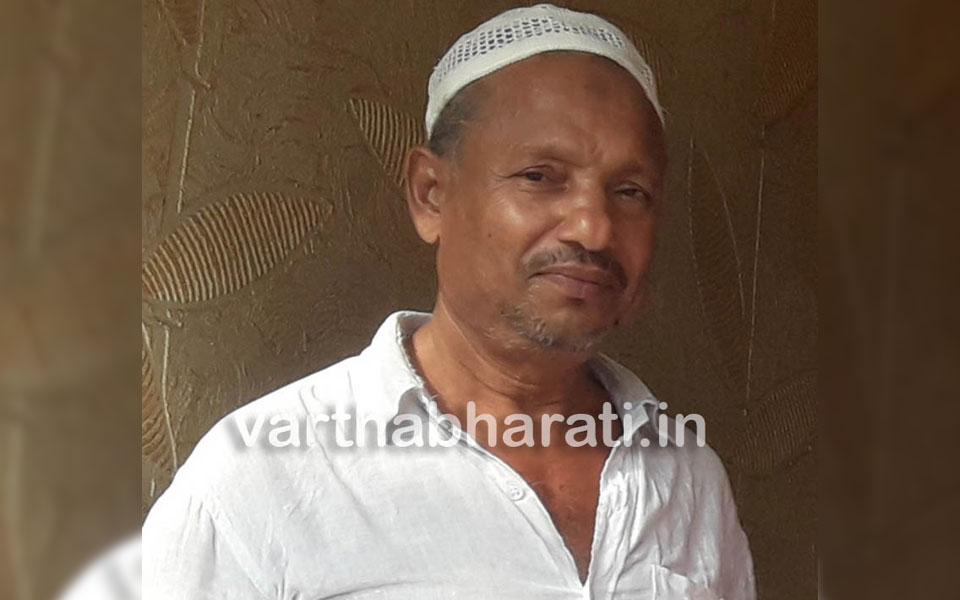
These incidents used to happen in Gujarat and Rajasthan. Now they are breeding in Dakshina Kannada too. A cattle trader went missing from Jokatte close to Mangalore. Following the complaint that was lodged, his dead body was found at a Haadi near Perdur. The police attributed the death due to heart attack, but they recorded it as a death under mysterious circumstances. After family members complained against this hasty conclusion, the investigation was reopened. Shocking facts emerged during this phase. The death did not occur at the spot where the body was discovered, but the man had died in police station and the cops had transported his body and placed it at Kotyaru near Perdur. A Sub Inspector and other subordinates were directly involved in the crime.
Having received a tip off of illegal cattle transportation, some of the Sangh Parivar members had waylaid a Scorpio vehicle on May 30. Having spotted the saffron goondas, two other occupants in the jeep escaped leaving behind the 62-year-old Hussainabba. The old man was beaten up in the presence of police. The brutally attacked man was then taken to cop station, by which time he was dead. The Sangh Parivar members transported the body elsewhere and concocted a story of Husenabba disappearing from the police custody and having been so scared that he suffered a heart attack.
There are many instances where Gorakshaks have assaulted people and sometimes even killed them. The recent death of Praveen Poojary is a testimony to this fact. They assaulted him so brutally that he died. There are strong allegations of a nexus between them and the cops, strong enough make the police force look weak before them. This is the first time cops have been caught joining hands on a case of death with the Gorakshaks. It is a close knit setup between both segments. Who can people go to, for justice if the protectors turn assaulters? But one need not lose all hope. There are some other diligent cops who believe in justice, and are not taken over by the saffron ideology yet. They are the ones who conducted the investigation and gave a report that led to the arrest of the guilty cops. They have to be rewarded for their sense of duty.
The Hiriyadka incident tells us that saffronisation of cops and their inclination towards a particular ideology needs to be kept under check. The BJP is waiting to clinch any opportunity to destabilize the coalition government, starting from Coastal Karnataka. The new government needs to pay attention to this more than the holy rituals that have kept them busy for now.
Let the Truth be known. If you read VB and like VB, please be a VB Supporter and Help us deliver the Truth to one and all.
Axar shifts focus to next IPL after KKR all but end DC's campaign
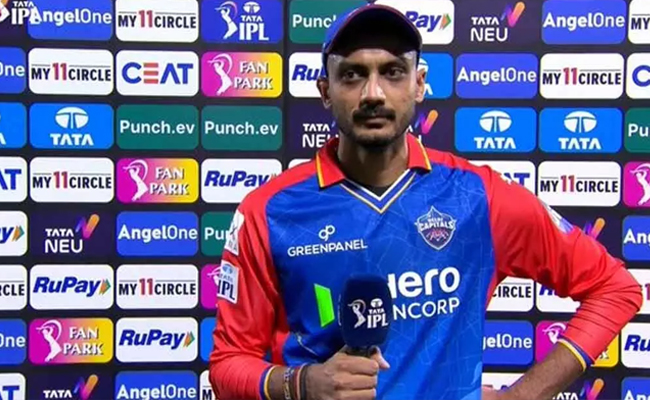
New Delhi (PTI): A beleaguered Axar Patel admitted that both his team's batters and bowlers let the side down after Delhi Capitals suffered a humiliating eight-wicket defeat to Kolkata Knight Riders, virtually ending their IPL 2026 playoff hopes, while indicating the team had already begun looking ahead to the next season.
DC endured a miserable outing at home, managing only 142/8, which Kolkata Knight Riders chased down in just 14.2 overs, powered by a blistering unbeaten 100 from Finn Allen and his destructive stand with Cameron Green (33 not out) as the visitors tore apart the bowling attack.
With just eight points from 11 matches, DC are eighth on the table, while KKR revived their playoff hopes with a resurgent run, moving to seventh with nine points from 10 outings, though their road to the knockouts still remains difficult.
"For now, we'll go back and think about the mistakes we made. After that, obviously there's still a long journey ahead and next year will come too. So we'll think about what plans we can make for next year and what approach we should take," said Axar after the match.
"Based on that, we can also look at the players sitting on the bench and decide who can be given opportunities and what changes we can make," he added, hinting at a possible major overhaul next season.
With 200-plus totals becoming the norm this season, 142 was always going to be inadequate, and Axar admitted the score was well below par while also pointing out at poor judgement shown by the spinners while defending the modest total.
"I think the runs were definitely below par and at the same time the spinners made quite a few mistakes. Looking at the way the pitch behaved, I feel the spinners did make errors.
"At the same time, we lost five wickets in two-three overs, and I think that's where the momentum slipped away from us. That's probably something we need to think about because the same thing happened against CSK...we started well, and then suddenly wickets kept falling," he added.
He admitted the solutions to the issues could be found but players need to show the right mindset and character.
"See, you can't solve it in a complicated way. So, I think it's more about applying the right mindset. Even if you lose one or two wickets, you can still spend time at the crease and play through it. I think that's what needs to be applied, when wickets are falling in clusters, you need to absorb the pressure for an over or two," opined Axar.
KKR skipper Ajinkya Rahane was pleased to see a struggling Finn Allen finally rediscover his touch with the bat.
"I'm really happy for Finn Allen. He was struggling first four or five games, working really hard, but the way he batted tonight was fantastic. But I want to praise our bowlers again.
"We did well because of them. And they've been doing it so well consistently, especially those middle overs and the death overs. Our spinners, Sunil Narine, Varun (Chakravarthy) and Anukul Roy, have been fantastic," he said.
"Fielding-wise, yes, we are working really hard. Our fielding coach has been really strict with us. And that's what has been helping us. The result which you've been seeing about the catches and the ground fielding, credit goes to our fielding coach as well," he added.