Government snoops over common man's right to privacy
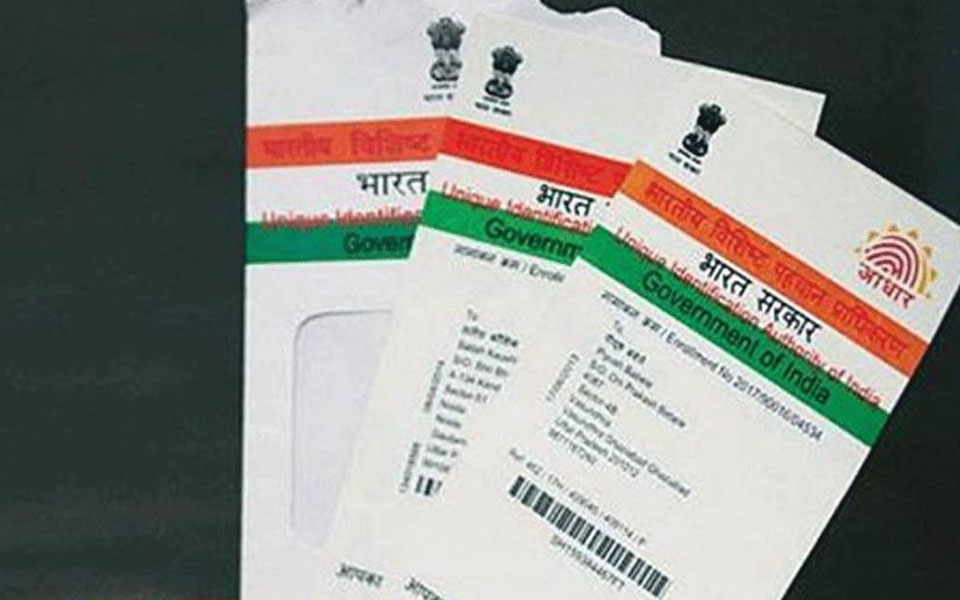
The foremost topic that was deliberated a lot on while the country stood on the threshold of welcoming Aadhar, was about the issues surrounding privacy of individuals. Many experts had expressed their apprehensions about how Aadhar may highly comprise an individual's right to privacy. There were allegations that government was introducing Aadhaar to invade or take control of people's private details and their lives. Now it is out in the open as to how information can be leaked through Aadhaar.
Till now the government would face arguments on the basis that Aadhar was fool proof as far as data is concerned. Now they have gone a step further. The government has now indirectly declared that people's personal information is the right to the government. Hence the government has issued a directive that any information stored on any computer shall be accessed by the government even without the permission of the owner of this information. Legal experts and cyber security professionals have been expressing great concerns about a directive such as this one. This directive empowers intelligence departments, narcotics control units, executive directorate, excise intelligence department, central investigation agency, national intelligence agency, cabinet committee, Jammu and Kashmir, north eastern states, secret code intelligence department in Assam, and Delhi police to monitor, and extract information from any computer whether personal or private. The right to privacy is under threat now. This will enable the government to misuse its powers now. And this will complicate people's lives even further. Defending the decision of the government, union minister Jaitley said this provision exists within the framework of IT act framed by the UPA government, and that the government wasn't misusing its powers in any manner. This way he is trying to absolve his government of any chances of having to shoulder the blame. If UPA government had done everything right, what was the need for the people to choose new government? If UPA had indeed made a mistake Modi government should not use it as defence but try to fix that error through the power and responsibility they have.
Even experts agree that IT Act does have a provision to empower the said agencies with snooping rights for the sake of national security. An act to monitor PCs was introduced in 2008 by the UPA government. Now by implementing it, the NDA government is trying to make this act effective and thus give it the sanctity that's required. Though this provision existed, no one had issued a special order to use it or empowered agencies to use the provisions. Though the IT act was amended in 2008 from the time it was framed in 2000, the rules to use this provision was publicised in 2009.
In a ruling in 2017, the Supreme Court upheld the right to privacy. Hence this directive by the government clashes directly with the Supreme Court's emphasis on privacy pertaining to constitutional rights. Starting from the CBI, the government is interfering with every investigating agency and its works. Instead of working for the welfare of the nation, allegations are aplenty that the agencies are serving the ruling dispensation.
Elements of Sangh Parivar have made a foray into these investigation agencies. Armed with information from private computers, the government and non governmental agencies too can use them against people and exploit them. Those in power may use them to silence their detractors. If the government can peep into your private space, that marks the end of constitution. This directive is an example of how the government is able to use the existing framework to push people around into delicate situations. This needs to be fought against, legally both inside and outside the courts. Or else everyone would lose their right to privacy and kneel before the higher powers. All those voices that could question the government would be silenced with this.
Let the Truth be known. If you read VB and like VB, please be a VB Supporter and Help us deliver the Truth to one and all.
Bridge portion collapses on Jammu outskirts; 3-4 labourers feared trapped, 1 rescued

Jammu (PTI): A portion of a small bridge collapsed in the Bantalab area on the outskirts of Jammu city on Friday, trapping at least three to four labourers under the debris, while one injured worker was rescued, official sources said.
Authorities have closed the road link following the collapse of the portion of the bridge.
The incident occurred when labourers were carrying out repair work on a retaining wall near the bridge that was damaged in last year's flash floods, the sources said.
According to the sources, a section of the bridge suddenly gave way, burying workers engaged at the site under the rubble.
Police, Army and State Disaster Response Force (SDRF) teams launched rescue operations to extricate those buried under the debris. They pulled out one injured labourer and shifted him to a hospital, the sources said.
Family members of the labourers present at the site said around six workers engaged at the site at the time of the incident came under the debris when the structure collapsed. The family members said while two of the labourers managed to escape, four got trapped.
The sources said those trapped included the husband of a woman labourer, a mason, an unmarried labourer and a relative of the contractor.
There was no official confirmation on the exact number of persons trapped under the debris till the filing of this report.
The rescue operations are ongoing.