The boon of death

Temples, places of worship and the beliefs around it are created by man for the sanctity of his life. Many believers live on the faith that a God that protects then exists somewhere in some form. Faith in God helps millions of people get through their lives. But when this trust turns into a business, an enterprise of competition do we understand what a threat it can be for people. Owing to faith, the world is suffering on one hand and, is falling prey to superstitions on another. Though we have churches, temples and masjids dotting every area, people are growing highly intolerant of each other. Devotion is not euphoria. When it becomes something like a drug, a man's downfall begins from right there.
Sometimes, the very faith that guards him turns into a death trap. Indian politics stands in such euphoric religious beliefs. They have led us to Gujarat and Sikh massacres. Tragedies that have occurred on religious occasions aren't any different from these ones either. The incident of crackers having claimed lives of many people in Kerala is still fresh in people's minds. Just a few months ago, people who were watching Ramleela event on railway tracks met a tragic end with a train running over them. Our acceptance of stampedes at village events and fairs are considered nearly normal. Karnataka is now witnessing one man made tragedy that could have been totally avoided.
The number of deaths that are occurring owing to consumption of poison mixed prasada in Sulvadi Maramma temple of Hanur in Chamarajanagar taluk are increasing by the day. Religious institutions organise events not only in the basis of belief, but as a business proposition as well. They add a lot of money to the treasury of the temple under the pretext of such events. This being the case, should any mishaps or tragedies occur in the course of events, the organisers or temple authorities would be held responsible for everything.
It is the responsibility of the organisers to ensure all precautionary measures are in place to avoid any untoward incidents when lakhs of people are assembling for an auspicious event. The mindset that we only need the money donated by devotees but their safety isn't our responsibility is what leads to tragic events like these. Organisers have special responsibility to ensure the Prasada offered at religious events are prepared with great care, hygiene and responsibility, bearing in mind the massive number of devotees who'd be consuming it as part of the ceremony.
But the number of people who are falling ill after consuming the Prasada is increasing these days. With the size of the religious ceremonies getting bigger, the quantity of Prasada prepared at the site is also getting larger. At times like this, the aspect of hygiene takes a backseat. But in case of Chamarajanagar, the issue is albeit different. The tragedy is not owing to lack of hygiene, but because someone has mixed deadly poison into the Prasada that left people dead. A person who can mix poison into Prasada can never be a believer. He or she must surely be a criminal at heart and spirit. Many innocents fell dead over his design.
Hence the incident has to be probed in all aspects to catch the culprits without delay. There were all chances of avoiding the untoward incidents. It was the responsibility of organisers to test the Prasada before it was distributed or served to the people. If this was offered to some animals or birds, so many deaths could have been easily avoided. Or, the cook should have tasted the food before it was served. And they should have waited for an hour or later before it was taken to the devotees for consumption. That could have avoided a few deaths. The police cannot absolve the responsibility of organisers in this in any manner. At the same time, there could be a big conspiracy behind poison being mixed into the Prasada. Those who were waiting to get some plum posts or some position within the temple committee or a fight between two groups wanting to cater for the event could also be behind this mishap.
Hence this incident has to be probed from different angles. At the same time, there are instances where students fall ill after consuming mid day meals that also need to be probed for clarity. Many categories of people are not too happy with the mid day meals being served to poor students and the fact that students of all castes sit together to eat. So chances of that food being adulterated cannot be ruled out. Government needs to exercise extreme care with mid day meals being prepared and served. The area has to be monitored while being oraored and distributed. When we have minds that can add poison to Prasada, a mid day meal being contaminated can never be too far.
Let the Truth be known. If you read VB and like VB, please be a VB Supporter and Help us deliver the Truth to one and all.
UP Cong chief Ajay Rai hospitalised after fainting, stable
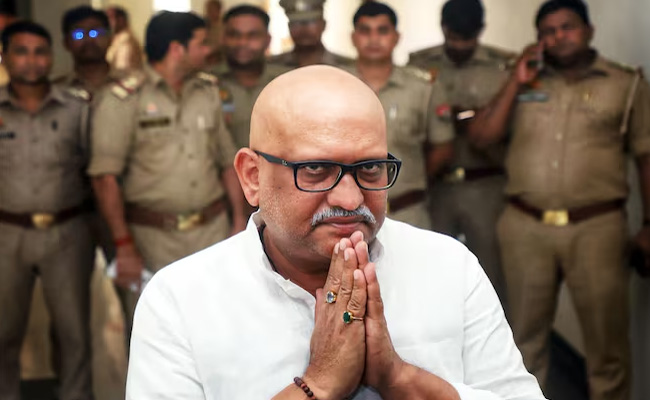
Lucknow (PTI): Uttar Pradesh Congress president Ajay Rai was hospitalised here after he fell unconscious due to low sodium levels, party leaders said on Saturday.
They said he was admitted to Medanta Hospital on Friday evening and is stable.
"Ajay Rai was admitted to Medanta Hospital in Lucknow at around 6 pm on Friday after he fell unconscious as his sodium levels had dropped. He fell unconscious at his residence in Lucknow. For the entire day, he was engaged in party programmes and had also gone to the airport," Uttar Pradesh Congress spokesperson Anshu Awasthi told PTI.
Congress in-charge of Uttar Pradesh Avinash Pande told PTI, "Now, he (Ajay Rai) is stable and I am also reaching Lucknow."
Medanta Hospital Director Dr Rakesh Kapoor told PTI that Rai collapsed at his home on Friday evening and was subsequently admitted to the hospital's emergency ward.
Medical examinations revealed that Rai was suffering from a sodium deficiency and elevated blood pressure. Doctors administered immediate treatment and he is doing significantly better now, Kapoor said.
A team of doctors is monitoring his health. Rai is conversing with others and his condition is stable, he added.
In a post on X late Friday night, Prime Minister Narendra Modi wished Rai a speedy recovery.
Rai hails from Varanasi and had contested the 2024 Lok Sabha elections against Modi from the parliamentary constituency. The Congress appointed him as the Uttar Pradesh unit chief in 2023.