Who should be made to sit in the corner?
There is a practice of making irresponsible students sit in a corner if they violate the class rules or fail to complete their homework. The humiliation this student suffers in front of everyone is simply unfathomable. Sometimes judges follow this to the core. They make some witnesses plundering lies sit in the corner of the court till the workday ends. But these are really given to those small robbers, thieves etc. But in Modi’s India, this punishment has been given to the officer heading one of the most premier institutions of India, the CBI.
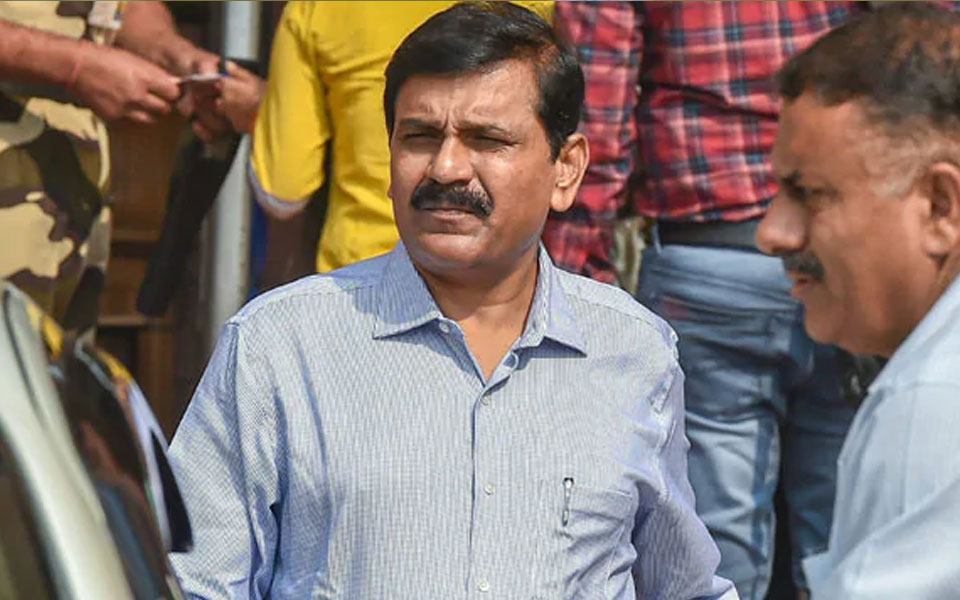
The court had ordered that CBI Joint Director Arun Kumar Sharma who was investigating the case of Bihar Shelter home sexual harassment case should not be transferred. But CBI former Chief Nageswara Rao had violated this. Hence the court not only penalized Rao to the tune of Rs one lakh, but also made him sit in the corner like a petty criminal. Having lost its entire credibility, the CBI was subjected to another humiliating phase with this. This is a big warning to officers in various posts who are trying to circumvent the constitution paying heed to those who are encouraging them to violate.
Who actually sat in the corner over that order? Was it Nageswara Rao or the CBI? Who put CBI in this spot? Is it Narendra Modi? In some ways, it was not Nageswara Rao who was penalized and punished. It was actually a rap on PM Modi. Rao may have been the face of it, but the humiliation was caused to Modi. The country had seen with trepidation the way Modi had made CBI dance to his tunes. Initially he used the IT officers and then began to operate through CBI officers who were used like BJP workers or slaves of the ruling party. But when CBI began to raise its hood against the limited interest of the PM, they set CBI to fight against its own officers. Worried that the then CBI chief Alok Verma would be investigating the Rafale deal, the government brought one of its blue eyed persons to head the institution, despite the opposition even with the CBI. Asthana was facing corruption charges when he was nominated for the post of CBI chief. How can he investigate corruption charges against anyone else? When Alok Verma filed a case against him, it was dubbed as ‘clashes within the CBI’ by the government. Under this pretext, PM Modi sent two officers on leave and brought Nageswara Rao into that chair. Rao also had corruption charges against him.
Eventually Supreme Court reappointed Alok Verma. The government had one chance to rectify its mistakes and uphold the office of CBI. But it took a very narrow bylane without any dignity to spare and transferred Verma again. Verma saved his personal integrity by resigning from the post. Why is the government that claims that the Rafale deal is a clean one, get so petrified of Verma? Looks like PM himself has declared that he is guilty by sending Verma home with the sword of Rafale hanging on his neck. CBI officers began to work like they had extra constitutional powers. They transferred everyone who didn’t heed to their demands and requirements across cases.
In some ways it seemed like they were acting on the instructions of PMO. Because the transfer of CBI joint director A K Sharma who was investigating the Bihar case, couldn’t have been Rao’s independent decision. Without political pressure this couldn’t have been done. Now Rao has to bear the cross for the mistakes made by politicians. He stood guilty before the court and the country saw Modi in his place while he was at it. But then since people are walking without an ounce of shame, to expect that a punishment would bring some change is a tough proposition.
Let the Truth be known. If you read VB and like VB, please be a VB Supporter and Help us deliver the Truth to one and all.
Man arrested with Rs 2.54-crore heroin in Mumbai

Mumbai (PTI): Police have arrested a man and seized over 500 grams of heroin worth Rs 2.54 crore in the illicit market from him in Mumbai, officials said on Friday.
The police's Anti-Narcotics Cell (ANC) made the drug seizure in Santacruz in the western suburbs. The operation was conducted by the Kandivali unit of the ANC on Thursday as part of a special crackdown against drug trafficking in the area, they said.
Acting on specific inputs, an ANC team conducted a raid in Santacruz (East) and intercepted a man. During a search, the team recovered 508 grams of high-grade heroin from his possession, an official said.
The seized contraband, a highly addictive, opioid drug derived from morphine, is estimated to be worth Rs 2.54 crore in the international market, he informed.
Following the seizure, a case was registered against the man under relevant sections of the Narcotic Drugs and Psychotropic Substances (NDPS) Act, 1985, and he was formally placed under arrest in the early hours of Friday.
The police are currently investigating the source of the drug and trying to identify the intended recipients of the consignment, he said.