DUSU President Ankiv Baisoya was registered at DU in 2013-16, how did he attend classes in Chennai?
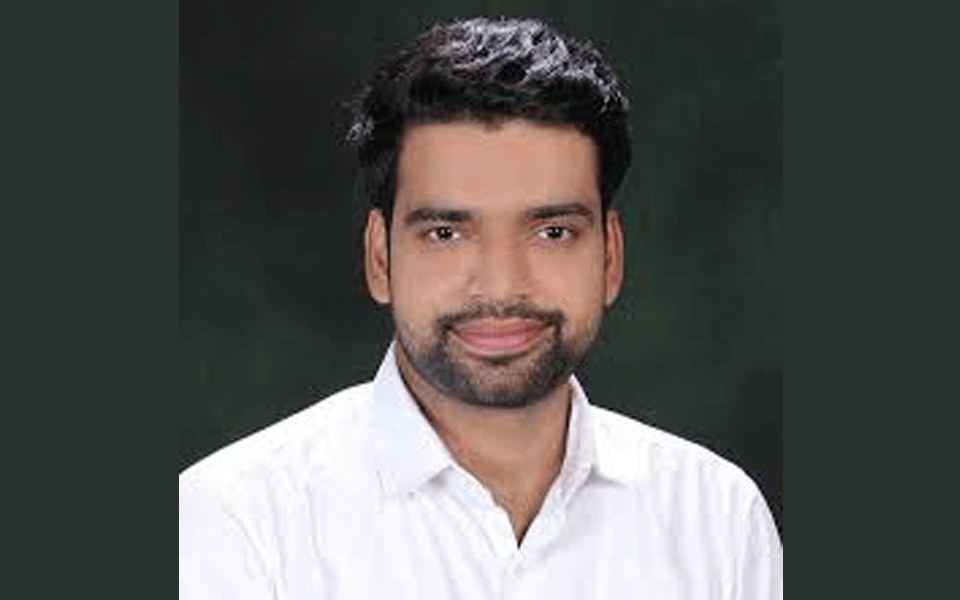
Newslaundry brings the final fact in the entire controversy surrounding newly elected DUSU president and ABVP member Ankiv Baisoya. So far the ABVP had maintained that Baisoya did his graduation from Vellore-based Thiruvallar University, while the NSUI had alleged that the degree was fake. Now, forget TU for a moment. Newslaundry has access to documents which show that Baisoya was a student at the College of Vocational Studies of Delhi University, and was pursuing BA Economic honours. The same information was confirmed by teachers and even the National Media Coordinator of the Akhil Bhartiya Vidyarthi Parishad (ABVP).
Baisoya’s CVS and BA Economics connection
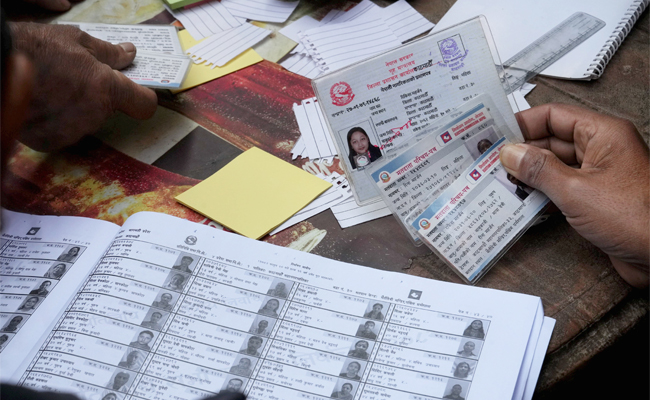
According to the accessed documents, ABVP’s Baisoya was a student with CVS College in Delhi’s Sheikh Sarai area. Two attendance sheets of fifth and sixth semester carry his name. His class roll number for the batch of 2013-2016 was 90. However, he has zero attendance in these papers that are ‘International Trade’ and ‘Political Economy’. The fact that his name was on the attendance list proves that he was a student with CVS. Also, the sixth-semester attendance sheet is from January to April 2016, which indicates that he must be from the batch of 2013-2016.

The CVS attendance sheet accessed by Newslaundry
Several sources at CVS have confirmed to us that Baisoya was a registered student. “I remember him because he had a rather peculiar name,” said one of the teachers from the Economics Department.
“Ankiv was a student here who regularly took part in student protests and demonstrations,” said a Political Science teacher.
Both faculty members have requested to remain unnamed.
Earlier, Baisoya, in conversation with this correspondent, had said that he had studied from “that university which is being referred” (TU).
When we reached out to ABVP in light of these new revelations, Monika Chaudhary, National Media Coordinator, accepted that Ankiv Baisoya was a student of CVS College between 2013 and 2016. “He withdrew his admission in 2016,” she said. “His case doesn’t fall under the dual degree case.”
Interestingly, Chaudhary also accepted that he (Baisoya) did his first and second year from both—DU and TU. She also accepted that it was humanly and legally not possible for a regular student to attend two different universities located at a distance of 1000kms from each other. She said that Ankiv made a “mistake” and has withdrawn his admission from DU in 2016. She also assured of sharing a No Objection Certificate (NOC) issued by the DU administration.
TU fake degree row
On Monday, NSUI shared Baisoya's TU degree, saying that it was a fake. In the last few weeks, NSUI began circulating images of Ankiv Baisoya’s mark sheet from Thiruvalluvar University and alleging that these documents were fraudulent. TU responded to these claims, that the documents were indeed fake, and Baisoya has indeed not graduated from TU. The Hindu and NDTV also ran articles where they claim NSUI received a letter directly from TU, claiming Baisoya’s marksheets were in fact fabricated. In a quote to NDTV, Baisoya said ‘the allegations were false and baseless, and that he was going to file a defamation case against the NSUI. The Hinduverified TU’s claims of a fake certificate by saying they spoke to a controller of examinations at the University who said, “This letter has been sent from our controller’s office. It has been signed by the controller. The certificate is without a doubt fake.”

TU letter being circulated by NSUI
When asked about the details regarding his course, Baisoya said “I kept moving from Vellore to New Delhi between 2013-2016. During this time, I wasn’t a registered student at CVS.” When asked what was his exact date of graduation from Thiruvalluvar, Baisoya fired blanks. If TU out rightly claims that the degree is fake, how can Baisoya's admission in DU still be considered legal? And is the degree remains legitimate, how can Ankiv Baisoya be a registered student at two different Universities, during the same time? This is clearly illegal and is a violation of norms.
The principal of DU'S CVS College, Dr Inderjeet Dagar, has also been informed of the situation. So far, he has remained silent, and all off DU’s administration has not taken any action in response to the clear legal violations made in the Ankiv Baisoya case. Now that there is evidence against the newly elected DUSU President, what action will be taken against him, and when? Will this amount to fraud and a subsequent cancellation of admission?
(With inputs from Jugal Bhinde)
Courtesy: www.newslaundry.com
Let the Truth be known. If you read VB and like VB, please be a VB Supporter and Help us deliver the Truth to one and all.
Baramati plane crash: CID questions VSR Ventures owner
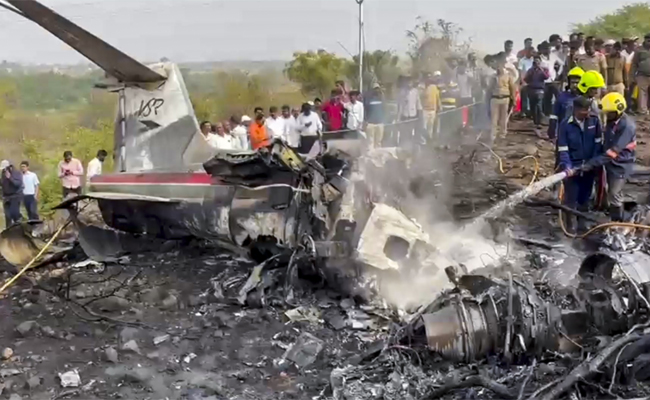
Pune (PTI): The Maharashtra Crime Investigation Department on Thursday questioned V K Singh, owner of VSR Ventures, which operated the aircraft involved in the Baramati crash that killed deputy chief minister Ajit Pawar, a CID officer said.
“The statement of V K Singh is being recorded,” said the CID officer, without disclosing more details about the questioning, which was still underway.
A Learjet 45 aircraft, operated by VSR Ventures, crashed near the Baramati air strip in Pune district on January 28, killing Pawar and four others.
After the plane crash, an accidental death report was registered at the Baramati Taluka police station, and the case was later transferred to the Pune CID. Earlier, the state agency had said that its focus was to ascertain if sabotage or criminal negligence led to the Baramati tragedy.
Days before V K Singh's questioning, the CID had sent a set of questions to VSR Ventures in connection with its investigation into the plane crash, according to a source.
NCP (SP) MLA Rohit Pawar had alleged on Wednesday that someone was trying to save VSR Ventures, and claimed that a preliminary probe by the Aircraft Accident Investigation Bureau (AAIB) vindicated the doubts earlier raised by him.
In its 22-page preliminary report on the air tragedy, the AAIB said the visibility at the time of the crash was below the required level. It also flagged fading marks on the runway and the presence of loose gravel on the runway surface.
A few days ago, Ajit Pawar’s son Jay Pawar had shared a purported video on social media alleging that V K Singh's son Rohit Singh was seen dozing off in the chief pilot’s seat during a flight, and demanded his immediate arrest.
He had also demanded that all aircraft of VSR Ventures be grounded till the inquiry into his father’s plane crash is completed.