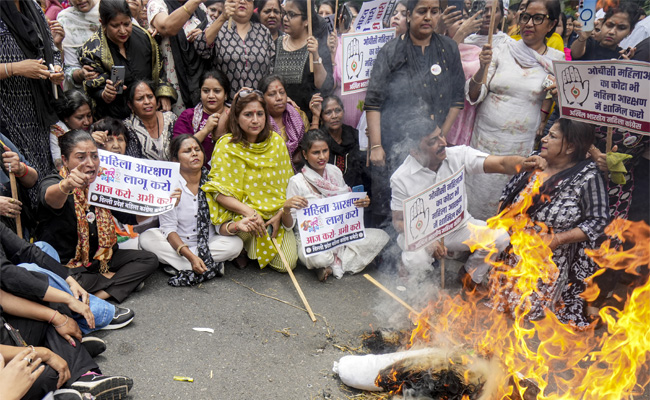
Country coming together against CAA more important than film's collection: Sonakshi Sinha

Mumbai, Dec 23: Actor Sonakshi Sinha says though she is happy with the commercial success of her latest Bollywood film "Dabangg 3", people coming out and protesting against the Citizenship (Amendment) Act was more important to her.
"Dabangg 3", which released last Friday, garnered mixed reviews from the critics and audience, but the Salman Khan-starrer managed to earn Rs 80 crore at the box office, according to reports.
"I think people know what is more important and I am honestly happy about that," Sonakshi said when asked about the film's release amid ongoing protests against the controversial citizenship law.
"The entire country has come together and protested against it (CAA). It is definitely more important than a film," she said at an event on Saturday evening.
The actor underlined that no one can take away the right to protest. "I am very proud about the people who have come out and voiced their opinion. I am with people," she said.
Asked why A-list stars don't express their views on the contentious Act, Sonakshi believes reacting to an issue is a matter of personal choice.
According to her, the entire focus shifts on the celebrities when they become part of the protests.
"If people understand that they (celebrities) have come as part of the crowd, then definitely people would have come, but this doesn't happen. And it becomes inconvenient for those who are present there, so maybe that's why not many (celebrities) come.
"If it was made to be like they are also part of the crowd, then I would also love to be there," Sonakshi added.
Several Bollywood celebrities had voiced their disappointment over the amended Citizenship Act.
Last week, Sonakshi was among the many names from the fraternity who took to social media to react on the police crackdown on the students of Jamia Millia Islamia and Aligarh Muslim University who were protesting against the Act.
"This is what we were, what we are and what we MUST remain! #neverforget," she had written on Twitter alongside a picture of the Preamble of the Constitution.
Protests broke out across the country after the Citizenship (Amendment) Bill was cleared by Parliament and signed by President Ram Nath Kovind into an Act.
According to the Act, people from Hindu, Sikh, Buddhist, Jain, Parsi and Christian communities who have come to India till December 31, 2014, from Pakistan, Bangladesh and Afghanistan due to religious persecution there will be given Indian citizenship.
The protesters claim that the legislation was "unconstitutional and divisive" as it excludes Muslims.
Let the Truth be known. If you read VB and like VB, please be a VB Supporter and Help us deliver the Truth to one and all.
Telangana survey flags 89,000 child labourers, highlights caste disparities in employment
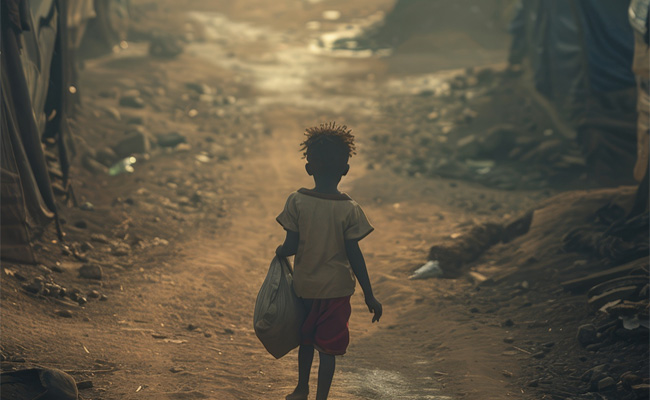
Hyderabad: A caste-based survey conducted by the Telangana government for 2024–25 has identified around 89,000 children engaged in labour across the state, with a large share belonging to Scheduled Caste (SC) and Scheduled Tribe (ST) communities.
The findings are part of the Socio, Economic, Educational, Employment, Political and Caste (SEEEPC) Survey, which covered about 3.5 crore people across 242 caste groups. According to the report, nearly one per cent of individuals below 18 years are involved in daily wage work. While the percentage appears small, officials noted that the absolute number reflects a serious concern.
The survey found that 11 per cent of identified child labourers belong to the ST Lambadi community, while 14 per cent are from the SC Madiga community. The highest incidence was reported among the ST Kolam group, where 7.2 per cent of minors are engaged in daily wage labour.
The data also revealed wider socio-economic disparities. Nearly half of the Scheduled Caste population is dependent on daily wage work, while only around 5 per cent are employed in the private sector, compared to about 30 per cent among General Castes.
State Welfare Minister Ponnam Prabhakar said the findings show that SC and ST communities remain three times more backward than General Castes, while Backward Classes are about 2.7 times more disadvantaged.
The report further noted that, on average, 31.3 per cent of people in the 25–65 age group depend on daily wage work. Among communities, the BC-A Odde group recorded the highest share at 55 per cent. In contrast, only 2.6 per cent of OC Brahmins rely on such work.
Several SC and ST communities, including Kolam, Beda, Madiga, Koya, Gond, Yerukulas and Mala Sale, were found to have among the highest proportions of daily wage earners. On the other hand, most General Caste communities and some Backward Class groups such as Goldsmiths and BC-C Christians showed lower dependence on daily wage employment.
The survey also pointed to inequalities in access to formal employment. Communities such as OC Rajus, OC Brahmins and Kapus were found to have a higher presence in private sector jobs, with up to 27 per cent of their population employed in such roles.