I should not have been a star, I broke all rules and made everything impractical: Aamir Khan
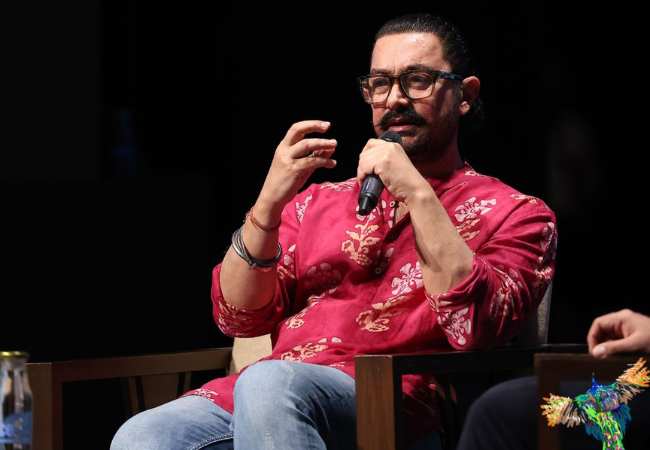
Panaji (PTI): I don't know how I became a star, says actor Aamir Khan, stressing that in his career of over 30 years, he did everything that broke the many "rules" of stardom.
Speaking at a session during the 56th International Film Festival of India (IFFI), the 60-year-old actor said his filmography comprises of films that were "impractical".
"I don't know how I became a star. By all logic, I should not have been a star. I broke all the rules and I made everything impractical. So, I feel grateful that I received so much respect and success. Otherwise, practically speaking, none of the steps I took were from the point of view of achieving success," Aamir said.
Whether it was "Sarfarosh", "Lagaan", "Ghajini", "Taare Zameen Par", or his latest "Sitaare Zameen Par", the actor said all of them were experimental and shouldn't have worked at the box office.
"In fact, almost every film I used to pick, I used to be like, 'I don't know whether this is going to work.' Like 'Sarfarosh' and 'Lagaan', when we were releasing the film, we had no idea if people are going to like it or not.
"Then 'Lagaan', there was even 'Dil Chahta Hai' which was very unusual for its time and now 'Sitaare Zameen Par', all these films that I have picked, they were not meant to be successful," he added.
During the session, titled "The Narrative Architect of Social Transformation", Aamir said he likes to "surprise my audience and myself" as an actor.
"I don't want to do the same thing again and again. It's just out of how I am as a personality that I have picked different scripts. And I have always gone with what excites me, personally."
Aamir said these days a lot of film people tend to try and second guess the audience.
"They are like, 'What is it that I should make today?' The obvious answer is what people are watching and what are the films running nowadays in the market. So, you try and make that genre.
"If it's action, you make action. If it's comedy, you try and pick up a comedy film. But I have never thought that way. I have not been able to think that way. I pick films based on my own personal excitement towards the story. And most often, that goes against what is the norm at that time."
Aamir said when he did "Ghajini" in 2008, action films were not being made in the industry.
"Everyone told me that, 'Man, you are doing action now. Action films are not running nowadays.' So, 'Ghajini' came in and with it, action came in to fashion," he said.
Aamir's last release was "Sitaare Zameen Par", which released in theatres in June, followed by its digital release on YouTube under pay per view model.
Directed by R S Prasanna, the movie featured Aamir as Gulshan, an assistant coach of a major basketball team. After being fired from his job, he is ordered to either go to jail or do 90 days of community service as the coach of a team of specially-abled basketball players.
Aamir said he was surprised by the success of the film, which earned over Rs 250 crore at the box office.
"The audience has proved everyone wrong in the way the film got a reaction. The kind of love and respect the film got was unprecedented. So, I am really happy that audiences don't only want to watch one kind of film.
"At the end of the day, it doesn't matter what genre you are making it, what genre you are working in, but every film that you make has to be really hitting on the right notes. So, even if you are making an action film, at the end of the day, you need a good story for that."
Aamir's films have often been praised for providing entertainment with a dose of message, whether it was "Sitaare Zameen Par", which spoke about neurodivergent children or his earlier films like "Taare Zameen Par", "Dangal" and "3 Idiots".
The actor, however, stressed that he is not someone who picks up social causes actively.
"I am not an activist and nor am I someone who is interested in actively taking up issues. That's not me. What is me is storytelling, what is me is films. That's my world. And I am very sharply aware that when a person comes to a cinema hall, he or she is not coming there for a lesson in sociology. For that, they would go to a college," he said.
His first and primary responsibility is to entertain audiences and Aamir said he is aware of that.
"But the word entertain is not just make you laugh. I can make you cry also and entertain you. Basically, I want to engage you in one way or the other. I can scare you by making a horror film. I can make a suspense thriller. I can make a family drama. I can make different genres."
The actor said he is now looking for his next film.
"I am deciding which one to do. So, I am not thinking and have never thought that which is the next social topic I should pick up. That does not occur to me at all. So, the first attraction for me is the great script. And if that great script is also telling us something which is socially relevant, it's all the better. But I am not trying to look for social themes," Aamir said.
Let the Truth be known. If you read VB and like VB, please be a VB Supporter and Help us deliver the Truth to one and all.
Bhojshala case: Disputed structure built from remains of pre-existing temples, claims ASI
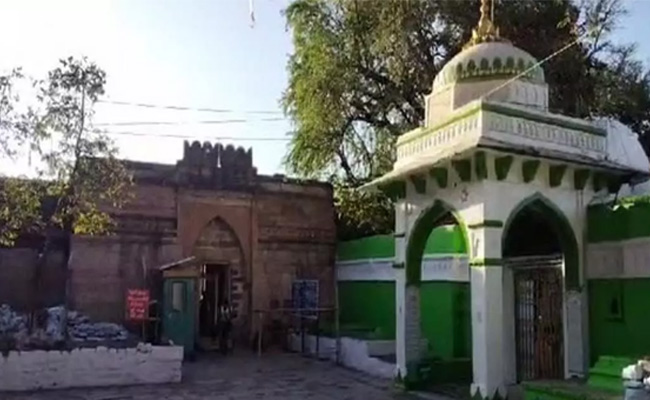
Indore (PTI): The ASI has told the Madhya Pradesh High Court that a massive structure dating back to the Paramara kings' rule existed at the disputed Bhojshala temple-Kamal Maula mosque complex, and the current structure was built from the remains of temples.
The Archaeological Survey of India (ASI) made the claim on Tuesday based on its 98-day scientific survey and over 2,000-page report.
The Hindu community considers Bhojshala a temple dedicated to Vagdevi (Goddess Saraswati), while the Muslim side claims the monument as the Kamal Maula Mosque. The disputed complex is protected by the ASI.
During the hearing before Justices Vijay Kumar Shukla and Alok Awasthi of the HC's Indore bench, Additional Solicitor General Sunil Kumar Jain, representing the ASI, presented a detailed account of the scientific survey conducted two years ago at the complex.
Referring to the ASI's survey report, he said, "Retrieved architectural remains, sculptural fragments, large slabs of inscriptions with literary texts, Nagakarnika inscriptions on pillars, etc, suggest that a large structure associated with literary and educational activities existed at the site. Based on scientific investigations and archaeological remains recovered during the investigations, this pre-existing structure can be dated to the Paramara period."
It can be said that the existing structure was made from the parts of earlier temples, based on scientific investigations, survey and archaeological excavations conducted, study and analysis of retrieved finds, study of architectural remains, sculptures, and inscriptions, art and sculptures, Jain said quoting the report.
Summarising the report, he also drew the court's attention to the fact that the archaeological study identifies that many architectural components, such as pillars and beams, were originally part of temple structures before being repurposed for a mosque.
"The evidence of this transition includes Sanskrit and Prakrit inscriptions that were damaged or hidden, alongside sculptures of deities and animals that were often mutilated or defaced," Jain contended.
The report also states that "all Sanskrit and Prakrit inscriptions are older than the Arabic and Persian inscriptions, indicating that users or engravers of the Sanskrit and Prakrit inscriptions occupied the place earlier".
In light of the Muslim side's earlier objections, the bench wanted to know why there were some discrepancies in the ASI's responses regarding the status of the disputed complex in the cases filed over the years.
The Additional Solicitor General argued that earlier studies of the complex involved only officials, while the current survey involved scientists and the use of advanced technologies such as Ground Penetrating Radar (GPR).
The hearing in the Bhojshala case will continue on Wednesday.
The high court has been regularly hearing four petitions and one writ appeal regarding the religious nature of the Bhojshala temple-Kamal Maula mosque complex since April 6.