'KGF: Chapter 2' team concludes climax shoot, Sanjay Dutt wraps work on film

Mumbai: Filmmaker Prashanth Neel on Sunday said he has finished shooting the climax sequence of his much awaited action drama "KGF: Chapter 2".
The film is a sequel to the 2018 period-action blockbuster "KGF" starring Yash in the lead.
"KGF: Chapter 2" also features actor Sanjay Dutt, making his Kannada debut.
Neel took to Twitter and posted pictures of the film's cast and crew post the shoots wrap.
"Nothing short of a crazy, exhausting and fulfilling shoot. The best team hands down! @duttsanjay sir a true warrior in real life. @TheNameIsYash a treat to work with as always.
"An end to the climax shoot. Can't wait for the world to see 'KGF Chapter2' only on the big screen," he tweeted.
In August, Dutt, 61, had announced that he would be taking a break from his professional commitments to focus on overcoming his battle with cancer.
The actor resumed shooting for the film in November.
"KGF: Chapter 2" cinematographer, Bhuvan Gowda, took to Twitter and shared a picture with Dutt, who features in the film as the antagonist, Adheera.
"End of Hyderabad schedule (climax fight) and end of @duttsanjay sir portion for #kgfchapter2. Had an Amazing experience capturing the legend on camera," he wrote.
Production on the movie was affected due to the coronavirus-induced nationwide lockdown in March. The work on the sequel resumed in August, with actors Prakash Raj and Malavika Avinash joining the team.
"KGF" follows the story of Rocky (Yash) who rises from poverty to become the king of a gold mine.
The sequel also stars Raveena Tandon and Srinidhi Shetty.
Nothing short of a crazy, exhausting and fulfilling shoot? The best team hands down!!!!@duttsanjay sir a true warrior in real life ⚔ @TheNameIsYash a treat to work with as always?
— Prashanth Neel (@prashanth_neel) December 20, 2020
An end to the climax shoot?Cant wait for the world to see #KGFChapter2 only on the big screen? pic.twitter.com/7EZSAnWehY
Let the Truth be known. If you read VB and like VB, please be a VB Supporter and Help us deliver the Truth to one and all.
Ordinance issued to increase number of Supreme Court judges from 34 to 38
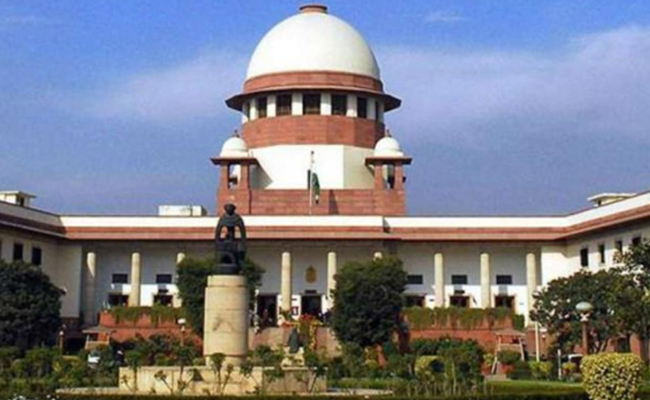
New Delhi (PTI): The government has promulgated an ordinance to increase the strength of the Supreme Court from the present 34 judges to 38, including the Chief Justice of India.
The law ministry notified the ordinance on Saturday, which amended the Supreme Court (Number of Judges) Act, 1956, to increase the sanctioned strength of the top court.
So far, the sanctioned strength of the top court was 34, including the Chief Justice of India (CJI). Now, the number of judges has been increased by four, taking the sanctioned strength to 38.
The top court will now have 37 judges, other than the CJI.
With the apex court having two vacancies at present, and the ordinance coming into force immediately, the Supreme Court Collegium will now have to recommend six names for appointment as judges in the top court.
A bill will be brought in the Monsoon Session of Parliament to convert the ordinance – an executive order – into a law passed by Parliament.
The Union Cabinet had cleared a draft bill on May 5 to increase the number of apex court judges.
The strength of the Supreme Court was last increased from 30 to 33 (excluding the CJI) in 2019.
The Supreme Court (Number of Judges) Act, as originally enacted in 1956, put the maximum number of judges (excluding the CJI) at 10.
This number was increased to 13 by the Supreme Court (Number of Judges), Amendment Act, 1960, and to 17 by another amendment to the law.
The Supreme Court (Number of Judges) Amendment Act, 1986, augmented the strength of judges from 17 to 25, excluding the CJI.
A fresh amendment in 2009 further increased the strength from 25 to 30.
Article 124(3) of the Constitution lists the qualifications required to become a Supreme Court judge.
An Indian citizen who has either served as a high court judge for at least five years, or as an advocate for 10 years, or is a distinguished jurist, can be appointed to the top court.
The strength of the Supreme Court is increased based on the recommendations of the CJI, who writes to the Union law minister. After consulting the finance ministry, the Department of Justice under the law ministry moves the Cabinet with a draft bill.