Our voice curtailed more & more everyday: Filmmaker Haravoo on docu being dropped from film festival
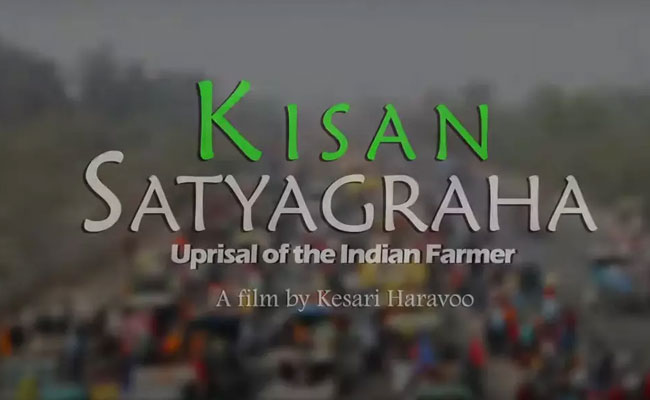
Bengaluru (PTI): With his 2021 documentary on the farmers' protest being dropped from this year's Bangalore International Film Festival, Kannada filmmaker Kesari Haravoo on Saturday said that for the last two years, "our voice was being curtailed more and more with every passing day."
"Kisan Satyagraha", Haravoo's documentary on the farmers' protest against the erstwhile three farm laws, was dropped from this year's Bangalore International Film Festival (BIFFES) after failing to get a clearance from the Information and Broadcasting ministry.
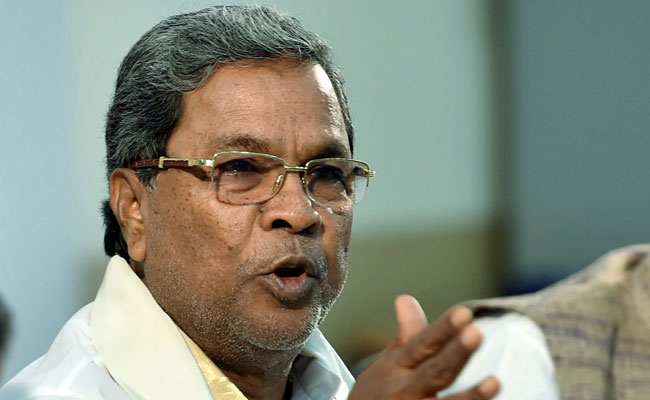
The 15th edition of the film festival was inaugurated on February 29 by Karnataka Chief Minister Siddaramaiah. Films are being screened from March 1-7.
Haravoo said he came to know about his film being dropped from the festival only when the schedule was released.
"My film is there in the catalogue released by the BIFFES 2024. But when I checked the schedule, I could not find it, so I called the artistic director of the festival, N Vidyashankar, who told me that the film did not get clearance from the ministry of information and broadcasting and had to be dropped at the last minute. I find that our voice is being curtailed more and more with every passing day if wa say anything against the establishment," he said.
Festival director Thrilok Chandra K V said they were not given any reason for the decision by the I&B ministry.
"We must send all the films that we are showcasing for clearance. We sent 200 films to the ministry. Initially, six films did not get cleared. We sent them again, of which two films one from Haravoo and one from Ukraine (20 Days in Mariupol) were denied permission. Haravoo's film, being a documentary, did not have any certification," Chandra said.
But Haravoo said there is no rule that only certified films should be showcased at international film festivals in the country.
"Documentaries usually are not certified, and many such films have opened at the international film festivals," he added.
Meanwhile, reacting to Haravoo's post about the ban on his Facebook page, another filmmaker from Karnataka's Udupi, and former head of the direction and screenplay department of Annapurna College of Film and Media in Hyderabad, Ramachandra P N said I&B ministry has the authority to stop screening only when public order is disturbed.
"A few years back, the Kerala FF went to the courts and won the case in two of the three uncertified films that were not given permission. It took 6 months from the film festival for the courts to decide that. But the refusal order was termed as illegal as the reason given by the govt was the possible disturbance of law and order- which the court said that the state is duty bound to maintain. Point is--will the Karnataka govt go to the courts as its own freedom of expression is at stake? (sic)," he wrote.
In 2017, I&B ministry had banned the exhibition of three documentaries "In the Shade of Fallen Chinar" "March, March, March" and the "Unbearable Being of Lightness" at the 10th International Documentary and Short Film Festival of Kerala (IDSFFK). The Kerala HC heard the writ petition filed by the Kerala State Chalachitra Academy, the organiser of the festival.
While "Unbearable Being of Lightness" talks about the suicide of Dalit scholar Rohith Vemula in Hyderabad, "March, March March" is about the protests at Jawaharlal Nehru University and "In the shade of Fallen Chinar" is a short documentary giving a glimpse into the lives of a group of young Kashmiri artists.
Ramachandra told PTI, of the three films, the court did not take a stand on the one on Kashmiri students. "But the other two films were allowed to be screened," he recalled.
Incidentally, in 2019 too, Kerala State Chalachitra Academy filed a writ petition against the banning of Anand Patwardhan's "Vivek/Reason" by the I&B ministry, again at (IDSFFK), stating that screening of the film could cause law and order problems. But the Kerala High Court held the Centre's claim cannot be upheld and that the screening was permissible according to the guidelines framed by the ministry.
Haravoo also said, a few years ago, when the Central government brought the rule that documentaries submitted for National awards must be certified, several filmmakers, including Patwardhan, protested and finally stopped submitting for the award.
Let the Truth be known. If you read VB and like VB, please be a VB Supporter and Help us deliver the Truth to one and all.
Wanted criminal carrying Rs 15,000 reward injured in encounter, arrested: Delhi Police
New Delhi (PTI): A wanted criminal carrying a Rs 15,000 reward was arrested following a brief exchange of fire near southeast Delhi's Amar Colony, police said on Tuesday.
According to the police, information was received that Mohammad Rizwan, who is wanted by Uttar Pradesh Police, was in Amar Colony area, and a trap was laid to intercept him.
However, when the police team attempted to apprehend Rizwan, he opened fire in a desperate bid to escape.
The team retaliated and Rizwan sustained a bullet injury in his right leg, and was subsequently overpowered by the police team, a senior officer said.
He was immediately taken into custody and provided medical assistance.
Police said Rizwan had come to Delhi with the intention of committing a crime, but was apprehended before he could execute his plan.
A case has been registered under relevant provisions, and further investigation is underway to ascertain his involvement in other criminal cases, the officer said.