Regional films dominate 51st IFFI's Indian Panorama line-up

New Delhi: The 51st International Film Festival of India (IFFI) has announced the list of Indian Panorama films for the year 2020, with regional language movies reigning the feature section and having a significant presence in the non-feature category.
The nine-day film gala, which takes place in Goa from November 20-28 every year, was postponed due to the coronavirus pandemic and will now be held from January 16 to January 24.
Information and Broadcasting Minister Prakash Javadekar on Saturday unveiled the titles of 20 non-feature and 23 feature films, to be screened during the festival.
The line-up of the feature category in the Indian Panorama comprises 18 regional language films including "Bridge" (Assamese), "Avijatrik" (Bengali), "A Dog And His Man" (Chattisgarhi), "Pinki Elli?" (Kannada), "Safe" (Malayalam), "Eigi Kona" (Manipuri), "Prawaas" (Marathi), "Kalira Atita" (Oriya), "Thaen" (Tamil) and "Gatham" (Telugu).
"Saand Ki Aankh" (Hindi), directed by Tushar Hiranandani and starring Taapsee Pannu and Bhumi Pednekar, will be the opening movie for the feature film section at the festival, which will also see the screenings of Vetri Maaran's Tamil film "Asuran" and Govind Nihalani's English animation "Up, Up & Up".
Sanskrit language movie "Namo" is also part of the list of features selected by a jury headed by filmmaker-writer John Mathew Matthan.
Nitesh Tiwari's Hindi feature "Chhichhore", starring actor Sushant Singh Rajput who died in June this year, has been included as part of three mainstream films, which also consists of "Asuran" and Malayalam movie "Kappela".
The movies were selected by an internal committee of Directorate of Film Festivals (DFF) based on the recommendations of Film Federation of India (FFI) and Producer's Guild.
The non-feature section includes eight regional names -- "Highways Of Life" (Manipuri), "Jhat Aayi Basant" (Pahari/Hindi), "Oru Paathiraa Swapnam Pole" (Malayalam), "Paanchika" (Gujarati), "Radha" (Bengali) and Marathi titles "Still Alive", "Khisa" and "Pandhara Chivda".
Ankit Kothari's "Paanchika" will be the opening non-feature film section of Indian Panorama 2020.
Other titles to be showcased under the category are "100 Years Of Chrysotom - A Biographical Film", "Ahimsa- Gandhi: The Power Of The Powerless", "Justice Delayed But Delivered", and "Investing Life".
Regional titles were also the centre focus of IFFI during its golden jubilee edition in 2019. Various regional films were screened as part of Indian Panorama and over 12 films, made in different languages about 50 years ago, were also showcased during last year's gala.
National Award-winning Gujarati movie "Hellaro", directed by Abhishek Shah, was the opening film of the feature section in 2019.
Malayalam film "Uyare" by Manu Ashokan and Lijo Jose Pellissery's "Jallikattu", India's international feature film Oscar entry for 2020, were also also part of last year's line-up along with "Ek Je Chhilo Raja" (Bengali), "Iewduh" (Khasi/Garo) and "OththaSeruppu Size 7" (Tamil).
Let the Truth be known. If you read VB and like VB, please be a VB Supporter and Help us deliver the Truth to one and all.
Ordinance issued to increase number of Supreme Court judges from 34 to 38
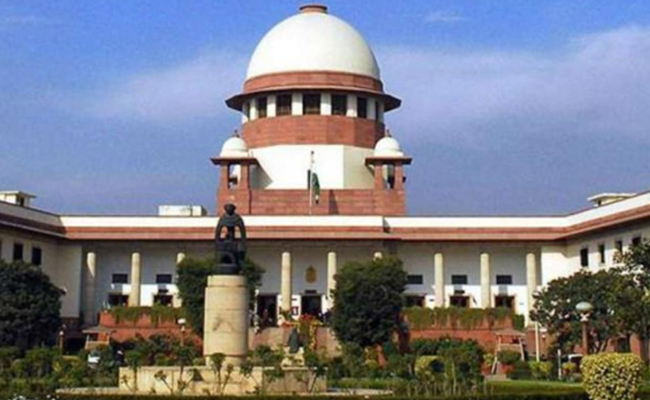
New Delhi (PTI): The government has promulgated an ordinance to increase the strength of the Supreme Court from the present 34 judges to 38, including the Chief Justice of India.
The law ministry notified the ordinance on Saturday, which amended the Supreme Court (Number of Judges) Act, 1956, to increase the sanctioned strength of the top court.
So far, the sanctioned strength of the top court was 34, including the Chief Justice of India (CJI). Now, the number of judges has been increased by four, taking the sanctioned strength to 38.
The top court will now have 37 judges, other than the CJI.
With the apex court having two vacancies at present, and the ordinance coming into force immediately, the Supreme Court Collegium will now have to recommend six names for appointment as judges in the top court.
A bill will be brought in the Monsoon Session of Parliament to convert the ordinance – an executive order – into a law passed by Parliament.
The Union Cabinet had cleared a draft bill on May 5 to increase the number of apex court judges.
The strength of the Supreme Court was last increased from 30 to 33 (excluding the CJI) in 2019.
The Supreme Court (Number of Judges) Act, as originally enacted in 1956, put the maximum number of judges (excluding the CJI) at 10.
This number was increased to 13 by the Supreme Court (Number of Judges), Amendment Act, 1960, and to 17 by another amendment to the law.
The Supreme Court (Number of Judges) Amendment Act, 1986, augmented the strength of judges from 17 to 25, excluding the CJI.
A fresh amendment in 2009 further increased the strength from 25 to 30.
Article 124(3) of the Constitution lists the qualifications required to become a Supreme Court judge.
An Indian citizen who has either served as a high court judge for at least five years, or as an advocate for 10 years, or is a distinguished jurist, can be appointed to the top court.
The strength of the Supreme Court is increased based on the recommendations of the CJI, who writes to the Union law minister. After consulting the finance ministry, the Department of Justice under the law ministry moves the Cabinet with a draft bill.