Sanjay Dutt's early release from jail okay, says Bombay HC
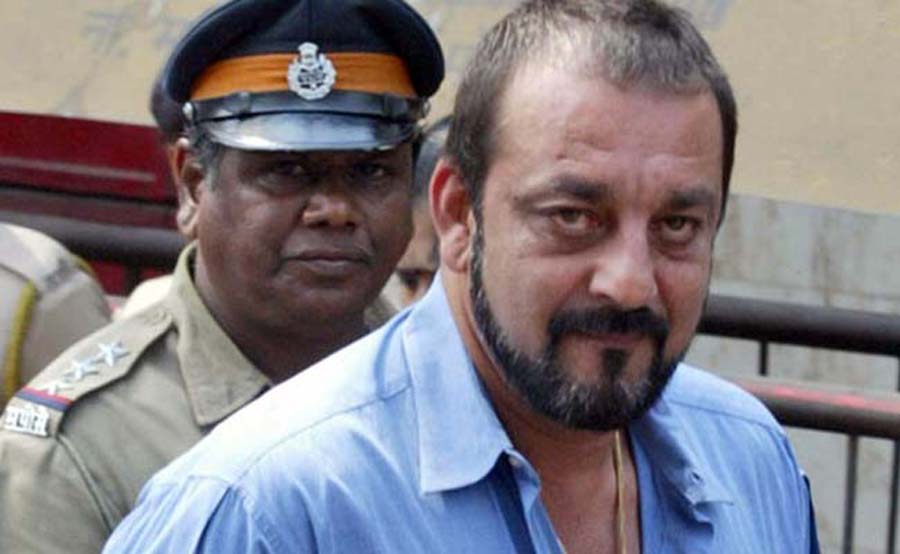
Mumbai: The Bombay High Court on Thursday ruled that there was no violation of rules by the Maharashtra government in releasing actor Sanjay Dutt over eight months before completion of his five-year jail sentence in a case related to the March 1993 Mumbai blasts.
The court also said that the state government had successfully backed its claims on impartiality in the case with valid documents submitted by the Home Department.
A division bench of Justice S.C. Dharmadhikari and Justice Bharati Dange delivered the verdict while disposing off a PIL challenging the remission in Dutt's sentence, as also the "frequent parole and furlough" leaves granted to the actor while serving his sentence in Yerawada Central Jail, Pune.
"We found nothing contrary in the records submitted by the Home Department and the explanation offered. No violations or abuse of discretionary powers were detected," the bench said.
Dutt, who was sentenced to undergo the jail term after being convicted under the Arms Act for illegal possession and destruction of an AK-56 rifle, had spent around one year and four months in prison before trial and another two and half years as a convict between June 2013-February 2016.
During his incarceration in Yerawada Central Jail, the actor was granted bail or furlough for a little over five months on various grounds.
Finally, he walked out a free man on February 25, 2016, eight and half months before completion of his sentence, with the remainder remitted on the basis of his "exemplary conduct" while in jail.
SOCIAL ACTIVIST’S STAND
Mumbai activist Pradeep Bhalekar, who filed the PIL, had claimed that while there were many other inmates with exemplary conduct, only Dutt was favoured by the jail authorities for granting parole/furlough.
Even as the state government denied the charge by the petitioner, the court said the state government must come up with a scheme to ensure that henceforth all convicts' applications for parole or furlough are decided expeditiously and in a transparent manner.
It pointed out that the public or the inmates should not gather the impression that the authorities grant favours in allowing them parole and furlough.
COURT WARNS
The court also warned that PILs must not target any individual or become a "publicity" interest litigation, since the allegations made in the PIL were not substantiated and the matter deserved to be closed.
The state government had already submitted full details of the dates and number of days Dutt stayed out of jail on parole or furlough, the reasons for granting the leave and the procedures followed.
Let the Truth be known. If you read VB and like VB, please be a VB Supporter and Help us deliver the Truth to one and all.
Centre spent Rs 76.13 lakh on print media ads for RSS centenary, reveals RTI
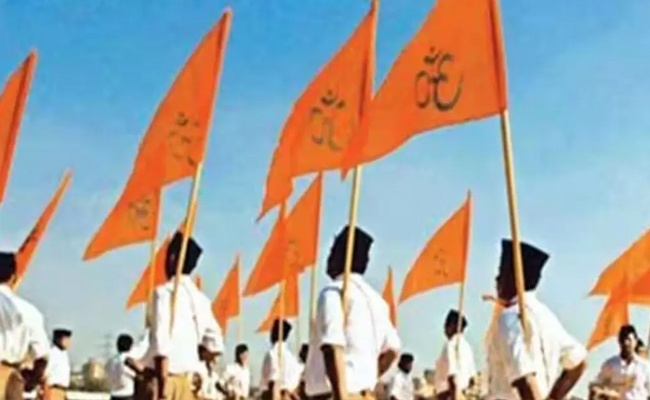
New Delhi: The Union Ministry of Culture allegedly spent Rs 76.13 lakh on print advertisements marking the 100-year celebrations of the Rashtriya Swayamsevak Sangh (RSS), according to a Right to Information (RTI) reply.
The information was sought by RTI activist Ajay Basudev Bose, who filed an application seeking details on expenditure incurred by the ministry for advertisements commemorating the RSS centenary.
Bose shared a picture of the reply from the ministry on his official ‘X’ handle.
“It is informed that an amount of Rs 76,13,129 has been spent on advertisement given in various print media by the Ministry of Culture on the occasion of the completion of 100 years of RSS,” the government’s reply stated.
RTI reply shows Min of Culture Govt of India spent a Whopping Rs 76L,13K,129 on Advertisement in Print Media on occasion of 100 yrs of #RSS
— AJAY Basudev Bose (@AjayBos93388306) April 16, 2026
When Everyone knows RSS is Not Registered & Does not Pay any Tax is it justified to spend Tax Payers Money on such Private event??@RSSorg… pic.twitter.com/dW4IUtdNCg
Bose questioned the expenditure in the post X, “when Everyone knows RSS is Not Registered & Does not Pay any Tax is it justified to spend Tax Payers Money on such Private event??”
Reacting to the development, Karnataka’s IT-BT and Panchayat Raj Minister Priyank Kharge also criticised the spending.
In a post on X, he asked why public money was being used for what he described as a “private ideological project.”
"Modi Sarkar spent Rs 76,13,129 of public money on newspaper advertisements to celebrate 100 years of the RSS. Why is Government spending taxpayers money on an unregistered, non-tax-paying organisation to celebrate their centenary?," he added.
Why is public money being used to serve a private ideological project?
— Priyank Kharge / ಪ್ರಿಯಾಂಕ್ ಖರ್ಗೆ (@PriyankKharge) April 16, 2026
Modi Sarkar spent ₹76,13,129 of public money on newspaper advertisements to celebrate 100 years of the RSS.
Why is Government spending taxpayers money on an unregistered, non-tax-paying organisation to… pic.twitter.com/EoZ6Pim3IM
According to reports, the RSS describes itself as a volunteer-based organisation and has stated that it functions as a body of individuals rather than a registered entity.
Founded by Keshav Baliram Hedgewar in 1925, the organisation is marking its centenary year beginning from Vijaydashami in 2025, with the milestone observed on October 2.