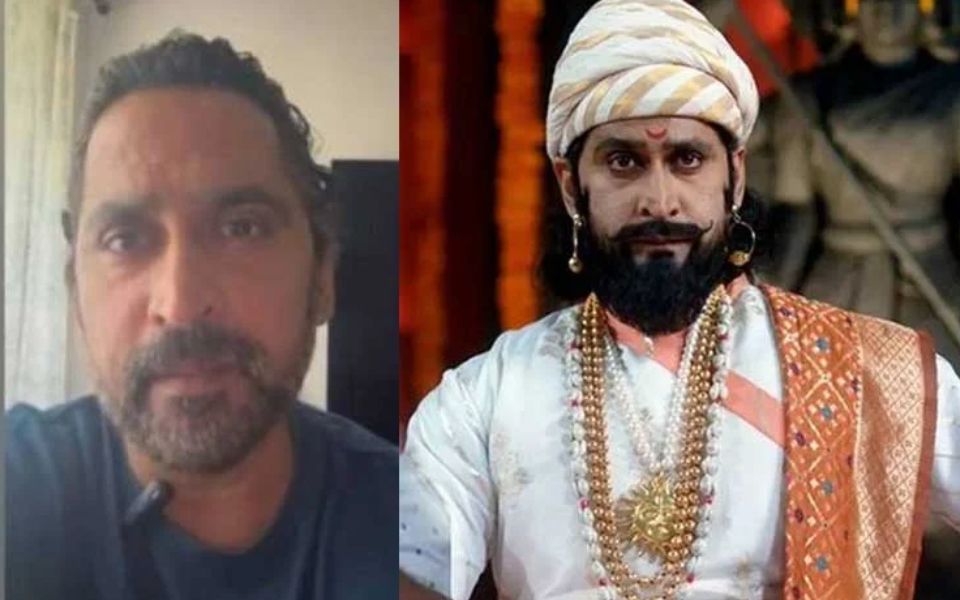
Pune, Apr 22: Trolled over his son's name, "Jehangir", noted Marathi actor Chinmay Mandlekar has announced he would not play the character of Chhatrapati Shivaji Maharaj as his family is being mentally harassed on social media.
Mandlekar said his son is 11-year-old but trolling over his name started only recently.
The actor and his wife Neha claimed they have been subjected to mental harassment over their son's name.
"My wife Neha had talked about the trolling of our family over our son's name yesterday through a social media post. After clarifying the views over the name, the trolling and comments did not decrease. In Fact, the bad comments have increased and the trollers are now raising doubts over them and as a person, this is annoying me (sic)," Mandlekar stated on social media.
The actor said he was open to criticism about his work as an actor but trolls have no right to comment on his personal life.
Mandlekar also said he had clarified why he named his son"Jehangir" multiple times on social media.
Jehangir was the fourth Mughal emperor, who ruled from 1605 till his death in 1627.
"The tone of the trolling is that I have played the character of Chhatrapati Shivaji Maharaj in multiple movies and still the name of my son is Jahangir. My son was born in 2013 and today he is 11 years old. I did not face the trolling then. It is happening now," the actor said.
Mandlekar has written, directed or acted in successful plays such as "Bechaki" and "Sukhanshi Bhandto Aamhi". He had essayed the character of Chhatrapati Shivaji in Marathi movies "Farzand", "Pawankhind", "Subhedar" and "Sher Shivraj".
He had also starred in Marathi movies - "Zenda", "Morya or Gajaar: Journey of the Soul", and also played supporting roles in Hindi films including "Tere Bin Laden" and "Shanghai".
Mandlekar said he was appreciated a lot for playing the role of the Maratha king.
"But because of that role, if my family is being harassed, I announce here with great humility that I will not play that character. This decision has saddened me. The role was an expression of my devotion and love for Chhatrapati Shivaji Maharaj," he stated.
Hitting back at trolls, the actor wondered whether they will change the name of the iconic Jehangir Art Gallery in Mumbai.
"The Government of India conferred Bharat Ratna on Jehangir Ratanji Dadabhoy Tata. Do we think about his name when we use the products and services by his company Tata," he said.
View this post on Instagram
Let the Truth be known. If you read VB and like VB, please be a VB Supporter and Help us deliver the Truth to one and all.
New Delhi (PTI): With the Lok Sabha likely to take up next week a notice seeking Speaker Om Birla's removal from office, the Congress on Friday said the resolution follows the rules and conventions, with opposition MPs having cited specific instances of “partisan behaviour” by the speaker, which call for a debate.
As Parliament meets for the second phase of the Budget session on March 9, the Lok Sabha is likely to take up the notice to move a resolution to remove Birla from office for allegedly acting in a “blatantly partisan” manner.
Speaking with PTI, Congress general secretary in-charge of communications, Jairam Ramesh, said, “All the opposition parties other than the Trinamool Congress have signed the motion for the removal of the speaker. Let us see. They have said it's going to be taken up on March 9.”
He added that 118 opposition MPs belonging to all political parties, barring the Trinamool, signed the notice.
“It’s a healthy, democratic practice. We have submitted a motion, which is according to the rules, according to the conventions… There have been previous occasions, for example, in 1954, when the combined opposition strength was hardly 50, and the Congress had 364 MPs in a House of 489. A no-confidence motion was brought against the speaker, the great G V Mavalankar," Ramesh said.
“These are democratic instruments, instruments of parliamentary democracy. The opposition has every right. We'll have a debate, let's see what happens after that," the Congress leader said.
“We had given specific instances of partisan behaviour (by the speaker), while false allegations were levelled against the opposition members. We have given the context, and a debate should take place,” Ramesh said.
The Congress has issued a whip for its MPs, mandating them to be present in the Lok Sabha from March 9 to 11, when the notice seeking Birla's removal is likely to be taken up.
The Lok Sabha will witness a rare moment, most likely next Monday, when Birla will not chair the proceedings but will be seated among the members as the House takes up the notice seeking his removal from office.
According to the rules and laid down procedures, Birla will have the right to defend himself when the resolution is discussed by the Lower House.
He will also have the right to vote against the resolution, Constitution expert P D T Achary said.
He said that while Birla will not chair the proceedings when the resolution comes up before the House, he will be seated in the prominent rows in the Treasury benches.
In fact, Birla had stopped chairing the House the day the notice was submitted, taking a stand.
At least 118 opposition members had submitted the notice to move a resolution to remove Birla from office for not allowing Leader of Opposition Rahul Gandhi and other opposition leaders to speak in the House on the motion of thanks to the president's address, as well as for suspending eight opposition MPs.
Congress deputy leader in the Lok Sabha, Gaurav Gogoi, chief whip K Suresh and whip Mohammed Javed submitted the notice to the Lok Sabha Secretariat on behalf of several opposition parties, including the Samajwadi Party and the DMK. Trinamool MPs, however, did not sign the notice.
Article 96 of the Constitution bars a speaker or a deputy speaker from presiding over the House while a resolution for his removal from office is under consideration.
The speaker has a constitutional right to defend himself if the resolution is discussed in the Lok Sabha.
At least two Lok Sabha members have to sign the notice to move a resolution for the speaker's removal. Any number of members can sign the notice, but a minimum of two is mandatory.
The speaker can be removed from office if a resolution is passed by the House by a simple majority. Article 94C of the Constitution has provisions for such a move.
Article 96 allows the speaker to defend himself or herself in the House.
The language of the proposed resolution is usually examined by the deputy speaker, but since the present Lok Sabha does not have a deputy speaker, it may be examined by the senior-most member of the panel of chairpersons.
The panel helps to run the House in the speaker’s absence.
The opposition resolution has alleged that Speaker Birla acted in a "blatantly partisan" manner in conducting the business of the House and "abused" the constitutional office he occupies.
Three Lok Sabha speakers – G V Mavlankar (1954), Hukam Singh (1966) and Balram Jakhar (1987) – faced no-confidence motions in the past, which were all negatived.