550 Hajj pilgrims die amid scorching heat in Mecca: Reports
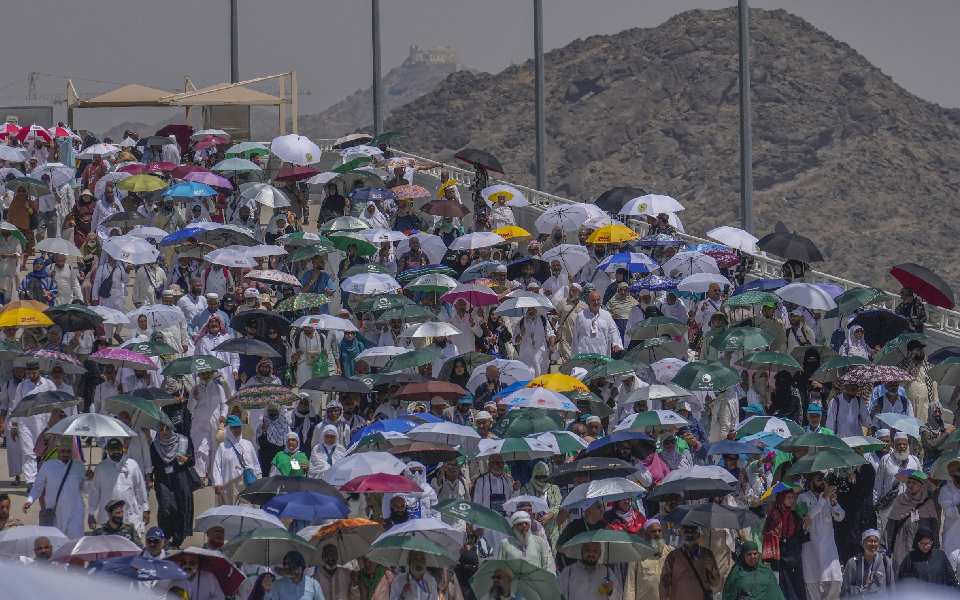
Mecca, Jun 19: Hundreds of people died during this year's Hajj pilgrimage in Saudi Arabia as the faithful faced intense high temperatures at Islamic holy sites in the desert kingdom, officials said on Wednesday as people tried to claim their loved ones' bodies.
Saudi Arabia has not commented on the death toll amid the heat during the pilgrimage, required of every able Muslim once in their life, nor offered any causes for those who died.
However, hundreds of people had lined up at the Emergency Complex in Al-Muaisem neighbourhood in Mecca, trying to get information about their missing family members.
One list circulating online suggested at least 550 people died during the five-day Hajj. A medic who spoke to The Associated Press on condition of anonymity to discuss information not released publicly by the government said that the names listed appeared genuine. That medic and another official who also spoke on condition of anonymity said they believed at least 600 bodies were at the facility. The list offered no cause of death.
Each year, the Hajj draws hundreds of thousands of pilgrims from low-income nations, “many of whom have had little, if any, pre-Hajj health care,” an article in the April edition of the Journal of Infection and Public Health said. Communicable illnesses can spread among the gathered masses, many of whom saved their entire lives for their trips and can be elderly with preexisting health conditions, the paper added.
However, the number of dead this year suggests something caused the number of deaths to swell. Already, several countries have said some of their pilgrims died because of the heat that swept across the holy sites at Mecca, including Jordan and Tunisia.
Temperatures on Tuesday reached 47 degrees Celsius (117 degrees Fahrenheit) in Mecca and the sacred sites in and around the city, according to the Saudi National Center for Meteorology. Onlookers saw some people faint while trying to perform the symbolic stoning of the devil.
Others, including many Egyptians, lost track of their loved ones in the heat and the crowds. More than 1.83 million Muslims performed the Hajj in 2024, including more than 1.6 million pilgrims from 22 countries, and around 222,000 Saudi citizens and residents, according to the Saudi Hajj authorities.
On Wednesday at the medical complex in Mecca, an Egyptian man collapsed to the ground when he heard the name of mother among the dead. He cried for some time before grabbing his cellphone and calling a travel agent, shouting: “He left her to die!” The crowd tried to calm the man.
Security appeared tight at the complex, with an official reading out names of the dead and the nationalities, which included people from Algeria, Egypt and India. Those who said they were kin of the dead were allowed inside to identify the deceased.
The AP could not independently confirm the cause of death at the complex. Saudi officials did not respond to questions seeking more information.
The kingdom's ruling Al Saud family maintains a major influence in the Muslim world through its oil wealth and management of Islam's holiest sites. Like Saudi monarchs before him, King Salman has taken the title of the Custodian of the Two Holy Mosques, referring to the Grand Mosque in Mecca home to the cube-shaped Kaaba that Muslims pray towards five times a day, and the Prophet's Mosque in the nearby city of Medina.
Saudi Arabia has spent billions of dollars on crowd control and safety measures for those attending the annual five-day pilgrimage, but the sheer number of participants makes ensuring their safety difficult.
Climate change could make the risk even greater. A 2019 study by experts at the Massachusetts Institute of Technology found that even if the world succeeds in mitigating the worst effects of climate change, the Hajj would be held in temperatures exceeding an “extreme danger threshold” from 2047 to 2052, and from 2079 to 2086.
Islam follows a lunar calendar, so the Hajj falls around 11 days earlier each year. In 2030, the Hajj will occur in April, and over the next several years it will fall in the winter, when temperatures are milder.
A 2015 stampede in Mina during the hajj killed over 2,400 pilgrims, the deadliest incident to ever strike the pilgrimage, an AP count showed. Saudi Arabia has never acknowledged the full toll of the stampede. A separate crane collapse at Mecca's Grand Mosque, which preceded the Mina disaster, killed 111 people.
The second-deadliest incident at hajj was a 1990 stampede that killed 1,426 people.
Let the Truth be known. If you read VB and like VB, please be a VB Supporter and Help us deliver the Truth to one and all.
CSOH founder urges US panel to act on persecution of Muslims, Christians in India
Says BJP, RSS enabling persecution of Muslims, Christians
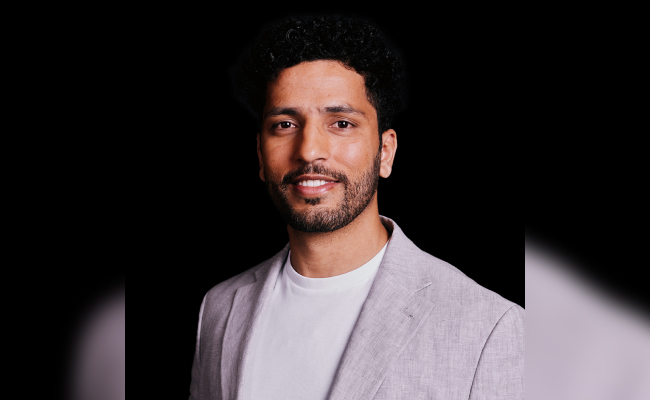
Washington, D.C.: Raqib Hameed Naik, founder and executive director of the Center for the Study of Organized Hate (CSOH), has urged the United States government to consider sanctions against certain Indian political leaders and Hindu nationalist organisations, alleging systematic persecution of Muslims and Christians in India.
Naik made the remarks while testifying before the United States Commission on International Religious Freedom (USCIRF) on the condition of religious minorities in India.
In his testimony, Naik alleged that the persecution of Muslims and Christians in India is being enabled by senior leaders of the Bharatiya Janata Party and networks linked to the Rashtriya Swayamsevak Sangh (RSS).
“The persecution of Muslims and Christians in India bears the sanction of the country’s top political leadership led by Prime Minister Modi and is implemented through both the state and the militant networks of the Hindu nationalist movement anchored by the RSS,” he said.
Naik named Narendra Modi, Himanta Biswa Sarma and Yogi Adityanath while discussing demolitions, hate speech and alleged discrimination against minorities.
He alleged that “this persecution is now embedded in bureaucracy, codified in law, shielded by absolute impunity, and steadily more ruthless in execution.”
Referring to Assam, Naik claimed that over the last five years the state government had demolished more than 22,000 structures and displaced nearly 100,000 people, mostly Bengali Muslims who were “falsely labelled as Bangladeshi infiltrators.”
“Forty per cent of those displaced lost their homes in 2025 alone,” he said, adding that there were documented cases of Muslims allegedly being taken to the Bangladesh border and forced across.
Naik also raised concerns over bulldozer demolitions in other BJP-ruled states, saying they continued despite a 2024 order of the Supreme Court of India prohibiting such punitive actions.
He named several companies, including JCB, Caterpillar Inc., Tata Motors and Mahindra & Mahindra, alleging that their machinery was used in demolition drives targeting Muslim homes.
The testimony also highlighted alleged violence linked to beef consumption and cattle transport.
“Organized cow vigilante groups now operate in almost 17 states,” Naik said.
He further alleged a rise in public events where swords and knives are distributed and in programmes where Hindu nationalist recruits receive firearms training.
Speaking about Christians, Naik said they face “assaults on pastors and worshippers, the forcible closure of churches, denial of burial rights, and arrests on fabricated conversion charges.”
Naik also criticised social media platforms, stating that “US-based social media platforms like Facebook, Instagram, YouTube and X serve as a central infrastructure for spreading this hate and bigotry and incitement to violence.”
According to CSOH’s 2025 report, Naik said the organisation documented 1,318 in-person hate speech events targeting Muslims and Christians in 21 Indian states.
“That is a shocking four hate speeches per day, and a 97 per cent increase over 2023,” he said.
During his testimony, Naik called on the US government to consider sanctions against certain BJP leaders and organisations such as the RSS, Bajrang Dal and Vishwa Hindu Parishad (VHP).
He also urged greater scrutiny of social media platforms and companies whose equipment he alleged had been used in demolition operations.